
Nevada will pay $19M more for SNAP this year. It's taking steps to avoid further costs.

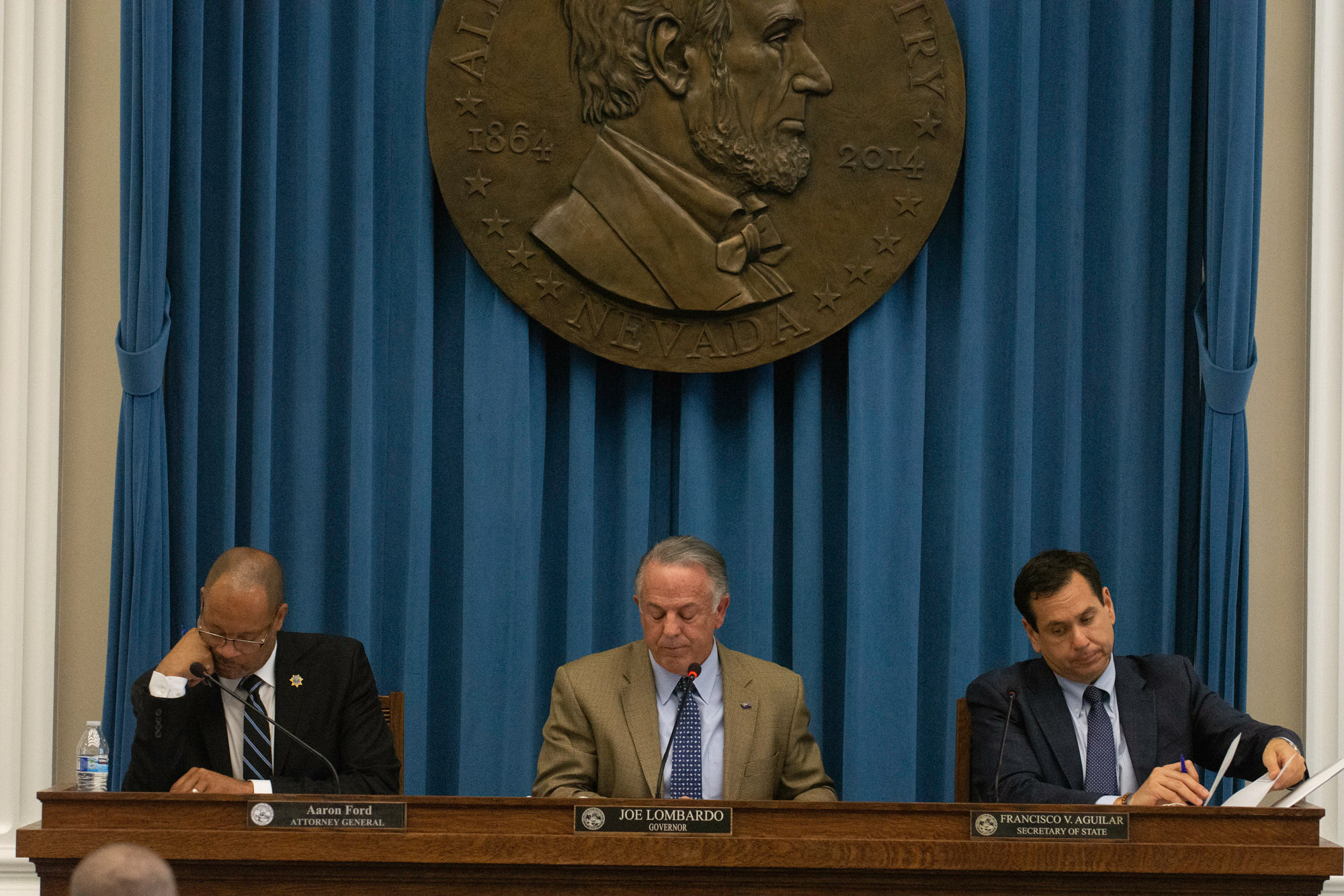
In an effort to comply with new federal regulations or pay millions of dollars more each year for food assistance programs, Nevada officials approved a $2.1 million contract on Jan. 13 to help reduce errors in its Supplemental Nutrition Assistance Program (SNAP) payments.
Under the One Big Beautiful Bill Act passed last year, states must cover significantly more of SNAP administrative costs beginning in October 2026 and may need to cover a portion of the benefits themselves if they cannot bring payment error rates below 6 percent by October 2026.
Nevada's error rate is already among the lowest nationwide, fluctuating between 6 percent and 7 percent. It was approximately 6.5 percent in fiscal year 2025, the 10th-lowest rate among states.
But if the state fails to bring that number below 6 percent in fiscal year 2026, which began last October, Nevada will need to cover 5 percent of the food assistance benefits that flow to Nevadans — approximately $50 million annually.
"I'm always for cleanup, I'm always for accuracy, I'm always for doing things better, quicker, smarter," said Kelly Cantrelle, the deputy administrator who oversees SNAP for Nevada's Division of Social Services (DSS). "It's just that the money is tough."
The agency's efforts to reduce already-minimal SNAP errors include requiring residents to provide proof of rent and utility costs, reviewing recipients' eligibility twice a year rather than once and using new technology to verify benefit levels. Cantrelle said many of the changes were implemented in June, before the bill's July passage.
States are also in the process of implementing narrower eligibility restrictions for SNAP, also passed through last year's Republican-led bill. Thousands of Nevadans could lose access to food assistance starting Feb. 1.
The contract approved by Nevada's Board of Examiners earlier this month is with the technology firm Carahsoft. It will fund services with two outside companies: one to flag anomalies in residents' reporting of rent, income and other information, and another to track residents' income and working hours to ensure they remain eligible.
"It's the first time we're taking technology to try and help reduce our error rate," Cantrelle said, explaining that staff usually conduct error reviews internally.
Nevada is one of several states to authorize emergency funding or contract with firms to help agencies reduce SNAP errors, alongside Arizona, New Mexico, Rhode Island and more. Other states already had more comprehensive error-review systems in place.
Liz Farmer, a fiscal policy researcher at the nonprofit Pew Charitable Trusts, said the shifts are some of the most significant in SNAP history and reflect the Trump administration's broader goal of limiting federal involvement in state affairs. States will need to compensate, she said, by tapping into rainy day funds, cutting programs or rethinking their long-term planning.
Gov. Joe Lombardo's office did not respond to multiple requests for comment.
Cantrelle said reducing Nevada's error rate will be difficult given how low it already is. Farmer said it's also complicated because adjusting to new SNAP eligibility rules could increase the odds of making mistakes.
"Our error rate has never not been a concern, and we have fought for every percentage point we've ever had," Cantrelle said. "This is no different. … We just need to be more innovative."
What are the new SNAP costs facing states?
For decades, the federal government covered 50 percent of SNAP administrative costs and 100 percent of benefits. But beginning in fiscal year 2027, states must pay 75 percent of the administrative costs.
That change will cost Nevada $19.4 million in its first year. Lawmakers appropriated those funds through SB4, passed during November's special session.
By fiscal year 2028, administrative costs are expected to rise to approximately $25 million per year, Cantrelle said.
Also in 2028, more states will be penalized for SNAP error rates than ever before.
Previously, only states with high error rates two years in a row could be fined, and the terms of those fines were more forgiving (states could, for example, submit appeals or dedicate half of the fines toward quality management).
The new penalties also mark the first time the federal government will punish states' errors by requiring they cover a portion of food benefits themselves.
The share of SNAP benefits states must pay will be determined on a sliding scale, increasing as errors increase. States with error rates above 10 percent must cover 15 percent of benefits, the maximum.
The error rates measure the share of payments that give residents more or less food assistance than they're entitled to. Inaccuracies typically result from accidental misreporting of income, rent or dependents, or from agency mistakes. Genuine fraud is rare, according to SNAP's quality management website.
The SNAP error rate nationwide in 2024 was 11 percent, approximately double Nevada's. That year, Nevada was one of just eight states nationwide to fall below the 6 percent threshold.
Federal authorities have not explained why 6 percent is the cutoff, Cantrelle said.
When the penalties take effect in October 2027, states can choose between their 2025 or 2026 error rates to determine their contribution.
Since Nevada's 2025 rate exceeded 6 percent, it's especially important to get below that threshold this year.

Eligibility changes could increase errors
Advocates warn that efforts to reduce errors will be complicated by new eligibility rules.
The federal law significantly narrowed who qualifies for SNAP benefits, changes that took effect last October. The most significant shift was a new definition of able-bodied adults without dependents, a group subject to special work requirements.
That category now includes adults aged 55-64 and parents of children older than 14, and no longer provides exemptions for homelessness, veteran status or time in foster care.
Qualifying adults must spend at least 20 hours per week working or in work training programs. Otherwise, they can only receive three months of SNAP benefits over every three-year period.
Farmer, the Pew researcher, said many states are concerned that the timeline for compliance is too tight and that adjusting to new work requirements will cause mistakes, triggering costly penalties.
Cantrelle said adjusting to the new rules was a "heavy undertaking," especially since Nevada's higher-than-average unemployment rate has kept the state exempt from SNAP work requirements since 2008.
Under prior rules, local governments could request to waive work requirements due to persistently high unemployment. The One Big Beautiful Bill Act dramatically limited states' and counties' capacity to apply for these waivers, allowing work exemptions only in areas with unemployment rates above 10 percent.
The Center for Budget and Policy Priorities found that under these terms, only 10 counties nationwide qualify for waivers. None are in Nevada.
Nevada's work requirements waiver was set to expire in February, but Cantrelle said federal officials informed the state in late October that it would instead expire Dec. 1.
It's one of several instructions concerning SNAP enrollment changes issued late or last minute by the federal government.
Asked about SNAP implementation, U.S. Department of Agriculture spokesperson Julie Yee told The Indy in a written statement that "the Food and Nutrition Service is currently in the process of releasing guidance" and "stands ready to assist states and provide technical assistance as needed to operate SNAP."
"We had to scramble really fast and get training done, let the community partners know, let the public know," said Cantrelle.
The 30-day turnaround was a "heavy lift" for workers who had never before navigated the complex math of work requirements, which can factor in activities as varied as participation in drug and alcohol programs, time spent job searching and enrollment in school. It required hours of new training for caseworkers and longer interviews with SNAP recipients, Cantrelle said.
"It takes more time, more effort, more explaining," she said. "It's incredibly administratively burdensome."
When Nevada last enforced SNAP work requirements, Cantrelle estimated that difficulties verifying eligibility led error rates to rise 1 percentage point.
"With two major technology initiatives, hopefully we can balance that out and gain a little ground," Cantrelle said. "We just need a half percent."
At an Interim Finance Committee meeting last August, DSS administrator Robert Thompson said the agency may leave positions vacant to limit staffing expenditures and redirect funds toward implementing the new SNAP rules.
Senate Majority Leader Nicole Cannizzaro (D-Las Vegas) warned at that meeting that the changes could burden state employees.
"We are not only going to ask them to do more, we are going to leave vacancies open in order to manage part of this shortfall," she said.
What about people losing benefits?
Beyond administrative challenges, community partners are concerned about the thousands of residents who could lose access to food assistance.
Nevada has approximately 133,000 able-bodied adults without dependents on SNAP, more than a quarter of the state's 500,000 total recipients. Of this group, 78,000 do not meet the new work requirements.
State welfare authorities are working to communicate with these residents as well as to all recipients that they must start submitting proof of rent and utilities. But Cantrelle said it's a steep learning curve.
Shane Piccinini, who manages government relations for the Food Bank of Northern Nevada, said asking residents for greater documentation may be especially difficult in a state where many residents work via contract or in the unofficial gig economy and lack robust proof of their labor.
He said he wished that Nevada could first help residents navigate the new rules, then deal with reducing errors and covering more administrative costs.
"We should deal with one problem at a time," Piccinini said. "So that we're not trying to fight a five-alarm fire in 120 days."
Beth Martino, president of Three Square, Southern Nevada's largest food bank, told The Indy she is bracing for eligibility changes to take effect Feb. 1.
"We're very concerned the people we serve are not fully aware of all of these eligibility changes," Martino said, predicting "concern and a lot of confusion" when families realize what the new rules could mean.
Food banks will fill part of the gap left by federal SNAP cuts. But Martino emphasized that SNAP is the most effective hunger reduction program, providing residents greater autonomy than food bank programs.
She also said organizations such as Three Square will struggle to meet additional demand, in part because last year the Trump administration slashed money for food distribution.
"We need these federal food programs to be fully funded," Martino said. "It is impossible for nonprofits to fully meet that need."
Support Independent Elections Coverage and Journalism in Nevada
You’ve enjoyed unlimited access to our reporting because we’re committed to providing independent, accessible journalism for all Nevadans.
But sustaining this work — informing communities, holding leaders accountable, and strengthening civic life — depends on readers like you.
Nevada needs strong, independent journalism. Will you join us?
A gift of any amount helps keep our reporting free and accessible to everyone across our state and funds our elections coverage.
Choose an amount or learn more about membership