


Nevadans are choking on California's overreliance on prison labor

One week. 771,000 acres. 1,205 square miles.
That's how much of California went up in flames over the past week. To put it into perspective, that's nearly twice the size of Douglas County. More than four times the size of Storey County. Over eight times the size of the City of Las Vegas. More than eleven times the size of Henderson or Reno. Over 161 times the size of West Wendover.
That sounds like a lot, in no small part because it is, but context matters. California is big. 1,205 square miles works out to a little more than 0.07 percent of the state, which doesn't sound like much — until you try to breathe outside. Once outside, no matter where in Nevada you might happen to be — and it's a rare natural disaster that affects our entire state — you learn very quickly that California's annual acres burned per year in a single week produces far too much smoke, haze and dust for anyone's good health.
The good news, at least for those of us in Nevada, is our air is still cleaner than most of California's. In much the same way California's myriad mountain ranges keep most of the Pacific's moisture from precipitating on our deserts, they also keep most of California's fire smoke in its state of origin. This might not be much comfort to those of us immediately downwind from the Loyalton Fire northwest of Reno, but at least our smoke wasn't thick enough to ground the airplanes used to fight our nearby fires; the same can't be said for Chico.
The bad news, however, is that California relies upon prison labor to do much of the heavy lifting with its wildfire control, and, thanks to an outbreak of COVID-19 in the California Correctional Center in Susanville, fewer than half of California's inmate fire crews are currently available to fight fires.
Leveraging prison labor is not unique to California, of course.
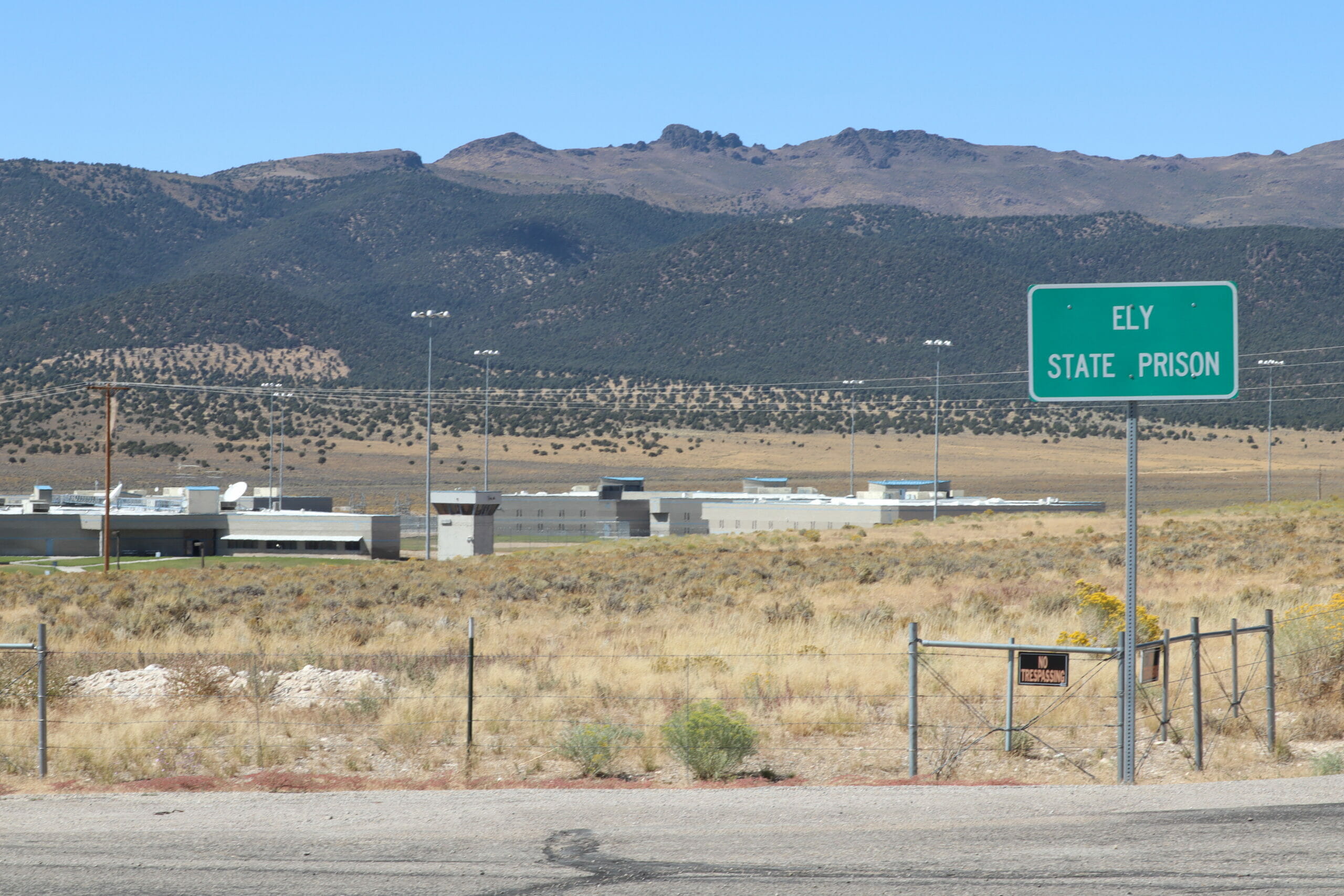
The 13th Amendment of the Constitution, which nominally abolished slavery, specifically allows it "as a punishment for crime whereof the party shall have been duly convicted." Six years after the 13th Amendment's ratification, the original Nevada Capitol was constructed out of sandstone mined from the Nevada State Prison quarry. Nowadays, meanwhile, you can visit Silver State Industry's website and order a wide variety of products produced by Nevada's inmates. If you would rather purchase products produced by federal inmate labor, on the other hand, you can order from UNICOR instead. Oh, and yes, Nevada uses prison labor to fight fires, too.
In theory, the furniture produced by Silver State Industries and UNICOR, as well as the firefighting services provided by CAL FIRE's convict fire teams and Nevada's Conservation Camp Program, are the products of voluntarily provided labor. Prisoners aren't conscripted into any of these programs — quite the contrary. Even if a prisoner chooses to voluntarily participate in one, the ability to do so is conditional on good behavior. Additionally, prisoners are paid for each day they participate and — again, in theory — they learn valuable job skills which will serve them well after they are released.
In practice, getting paid less than $10 per day to fight fires or build furniture is only attractive when you've been stripped of all other options. Paying someone more than $10 per day to fight fires or build furniture, meanwhile, isn't necessary when there is a large captive labor pool coerced at the point of a gun into working for only $10 per day. Additionally, by conditioning access to even these meager opportunities to only those inmates considered "best-behaved" by prison administration staff, prisoners are discouraged against complaining about substandard labor or living conditions within their prisons.
The result is a system of prison labor that might not be quite as maliciously cruel as, say, chattel slavery or the forced labor performed in Soviet gulags, but still shares far too many of the same problems.
To start with, when prisoners are actually doing work valuable enough to hire non-convict laborers to perform, they're competing directly against those laborers. Take firefighting, for example.
Because felons are largely prohibited from becoming certified Emergency Medical Technicians, they are functionally prohibited from being hired by or volunteering for urban fire departments, which not only fight fires but also frequently provide paramedic and other life saving first responder services. On the other hand, because EMT services are seldom required to fight wildfires, released felons can get jobs fighting wildfires for the Bureau of Land Management or other federal agencies and, of course, convict crews work alongside hired fire teams to fight wildfires.
The result? Starting pay for an EMT-certified firefighter in Reno is $52,673.75 per year. BLM wildland firefighters, on the other hand, earn a maximum of $16.73 per hour, or, assuming a 40 hour workweek, a little less than $35,000 per year. Starting pay? Less than $30,000 per year.
This isn't a new problem. As Keri Leigh Merritt's Masterless Men, Poor Whites and Slavery in the Antebellum South explains, wage laborers in the South not only competed against slaves for wages, they also competed for working conditions. As a result, they were paid less than they would have been in the North, where slavery was illegal.
While few historians and economists have extensively studied wage rates in the antebellum South, these preliminary figures do show that wage rates were lower in areas where slavery thrived. Just as Helper had so forcefully argued, southern wages remained lower than northern wages throughout the entire antebellum period. As Stanley Lebergott tabulated, in 1850 a farm laborer residing in New England could expect to earn $12.98 per month, while the same worker in Georgia would only be earning $9.03, or $7.72 in South Carolina, or $7.21 in North Carolina. These wage differentials cannot be explained solely by regional differences in the cost of living, as there was also a sectional divide between real wages, an estimate of money's purchasing power.
Where today's prison labor competes against free labor, we still see the very same dynamics in play, as the severe difference in wages between convict-permissible wildland firefighting and convict-prohibited urban firefighting demonstrates.
Working and living conditions in prison are also an issue.
Though Nevada's prisons are reportedly safer than most — while deploying increased staff testing protocols following six employees testing positive for COVID-19, the Nevada Department of Corrections stressed it has one of the lowest official positivity rates among inmates in the country — the outbreak at the California Correctional Center was triggered by only three infected inmates, who swiftly infected more than 150 inmates in less than a month. That's not to say COVID-19 outbreaks at non-convict fire departments are unheard of. A recent outbreak at the Chicago fire academy shut the academy down until further notice. In Florida, meanwhile, nearly half of Oakland Park's fire department has been infected by COVID-19. The difference, however, is that infected firefighters can quarantine at home; infected convicts, meanwhile, remain in prison where they're surrounded by prisoners and prison staff.
Finally, there's the issue of incentives.
Democratic vice-presidential candidate Kamala Harris' presidential campaign was derailed, in part, because she was successfully painted as a politically opportunistic prosecutor who cared more about looking tough on crime than she did about advancing criminal justice reform. One story which helped paint that picture was the story of her office arguing in court that they could not release nonviolent convicts because doing so would adversely affect California's ability to fight wildfires.
Being charitable, even if we grant that now-former Attorney General Kamala Harris was well and truly shocked her employees made such a cold-blooded argument, California has the power to decide who shall be an inmate and who shall be eligible to serve on fire crews and relies far too much upon inmate crews to fight wildfires. As the attorney general's office ostensibly represents the interests of California's government, the only surprising part should be that the state so frankly expressed its interest in cheap, disposable firefighting inmates.
Thankfully, Nevada seems to be less attached to prison labor for wildfire fighting than our neighbor to the west. Even so, we should use the disaster in the making created by California's overreliance on prison labor as a cautionary tale and a good excuse for self-reflection. We decisively concluded over 150 years ago that slave labor was immoral; locking people up and making them choose which form of slave labor to "volunteer" for is only slightly less so. Even if it weren't immoral, it's dangerous, unreliable, and impoverishes anyone forced to compete against it.
Prison labor is a moral, practical and economic mistake. It's well past time for Nevada to be done with it.
David Colborne has been active in the Libertarian Party for two decades. During that time, he has blogged intermittently on his personal blog, as well as the Libertarian Party of Nevada blog, and ran for office twice as a Libertarian candidate. He serves on the Executive Committee for both his state and county Libertarian Party chapters. He is the father of two sons and an IT professional. You can follow him on Twitter @DavidColborne or email him at [email protected].
Support Independent Elections Coverage and Journalism in Nevada
You’ve enjoyed unlimited access to our reporting because we’re committed to providing independent, accessible journalism for all Nevadans.
But sustaining this work — informing communities, holding leaders accountable, and strengthening civic life — depends on readers like you.
Nevada needs strong, independent journalism. Will you join us?
A gift of any amount helps keep our reporting free and accessible to everyone across our state and funds our elections coverage.
Choose an amount or learn more about membership