


OPINION: Amodei was fine at 'customer service,' but he folded in the face of MAGA
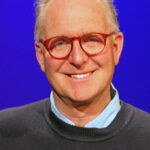

Rep. Mark Amodei's (R) retirement marks the end of more than a decade representing Nevada's 2nd Congressional District. It also invites an important question every public servant should ask when leaving office: Did the people who entrusted you with power end up better off because you served?
For Amodei, the answer is more complicated than his supporters or his critics might admit.
By every traditional measure of congressional success, Amodei did the job well. He secured federal appropriations, helped move projects through the federal bureaucracy, attended local events, responded to constituent concerns and maintained a visible presence throughout rural Nevada.
There was something comfortably familiar about seeing his unmistakable red pickup parked at the Elko County Fair, hearing his typically reasonable observations on federal issues during interviews on local radio or listening to his trademark smart-ass riffs at community and political gatherings. He understood Nevada's 2nd Congressional District because he seemed to genuinely enjoy spending time in it.
For generations, that was exactly what constituents expected from a member of Congress. Good legislators built relationships, delivered resources, solved problems and quietly kept the government functioning. In many respects, Amodei represented that tradition well.
Then history changed the job.
During the years Amodei served, the demands placed upon Congress became fundamentally different from those faced by previous generations. Maintaining rural Nevada's infrastructure, securing grants, helping veterans navigate federal agencies and bringing home appropriations remained essential. But they were no longer sufficient.
Congress increasingly confronted challenges not simply of legislation, but of constitutional governance itself. Rural Nevadans such as myself wanted answers about the separation of powers, congressional oversight, executive authority, political violence, democratic norms and America's place in the world because these questions had moved from civics textbooks into everyday life.
The office came to require something beyond effective constituent service. It required a different kind of courage — not the performative courage of partisan combat or cable television appearances, but constitutional courage: the willingness to defend Congress as a coequal branch of government, to exercise independent judgment and, when necessary, to disappoint allies in service of the Constitution.
Then something changed.
Amodei largely stopped talking to us. Town halls, we were told, had become unproductive. His last interview on local radio was in April 2025. He didn't come to the Elko County Fair. Like many members of Congress in an increasingly polarized era, he retreated into more carefully managed public appearances.
I spent years trying to persuade Amodei that this moment demanded more.
I called his Washington, D.C., office. I contacted district staff. I reached members of his team at the highest levels and, on occasion, Amodei himself. After one particularly memorable exchange in the Reno-Tahoe International Airport — where I apologized to him for a previous comment suggesting in a vulgar metaphor that he might more easily find his political courage in President Donald Trump's pocket than in his own pants — Amodei surprised me by giving me his personal cellphone number. We disagreed profoundly, but we never stopped speaking to one another.
My message never changed. Rural Nevada needed not only an effective legislator but a constitutional leader — someone willing to explain difficult issues, defend Congress as a coequal branch of government and occasionally spend political capital in defense of constitutional principle rather than partisan convenience.
Amodei was content to walk up to the door of defending the Constitution, but he never came close enough to knock. When he had the opportunity to support a full investigation of the Jan. 6 attack, he voted no. After voting against the impeachment of Trump, he made this statement: "Joe Biden will be inaugurated next Wednesday. There is much facing the federal government right now. … But first — the House agenda will deal with settling political scores and the politics of revenge."
Which makes Amodei's chagrin over the nomination of Dave Flippo for his seat even more ironic. In reference to Trump's endorsement of a candidate Amodei calls "not my cup of tea" he said, "that's a heck of a way to say thank you."
That was the moment I gave up on giving Amodei the benefit of the doubt. How could anyone be surprised or disappointed that Trump would do anything other than throw them under the bus when the time was right?
The next representative of Nevada's 2nd Congressional District will inherit a different office than the one Amodei has abruptly decided to leave.
Rural Nevadans still need someone who understands agriculture, mining, public lands, veterans' issues, water policy and economic development. Constituents still deserve someone who returns phone calls, shows up at county fairs, speaks with local media and understands the communities they represent.
Those qualities remain essential. They simply are no longer enough.
Tomorrow's representative must understand the political history of rural Nevada. It is rich. The roots of the Sagebrush Rebellion — the movement I believe was the genesis of modern American conservatism — run deep in the Great Basin. Rural Nevadans have long valued independence, practical judgment and a healthy skepticism of distant power. Those qualities remain among our greatest political strengths — and carpetbaggers need not apply.
The next representative must embody those same values. Rural Nevadans know the Constitution demands a genuine separation of powers. They deserve someone with the courage to exercise independent judgment, defend the institutional independence of Congress regardless of which party controls the White House and speak honestly when political pressure points in another direction.
That is not partisan courage. It is constitutional courage.
The district also faces persistent challenges that have resisted incremental solutions. Rural Nevadans still struggle with affordable housing, access to healthcare and mental health services, workforce shortages, infrastructure, water, economic diversification and ensuring that young people can build successful and meaningful lives without leaving the communities where they were raised.
Specifically, northeastern Nevadans have been struggling with critical infrastructure and institutional needs for more than 30 years. Wildfire escape routes between Elko and Spring Creek remain a critical public health and safety issue. While the Reno-Tahoe International Airport is enjoying a $1 billion expansion, in order to go anywhere by air in Nevada, Elko travelers must first fly to Utah.
Union Pacific Railroad controls more than 100 acres of commercial property in the middle of downtown Elko, preventing investment in the heart of the city. Mining revenue distribution is horribly outdated, providing tens of millions of dollars in annual revenue to Elko County's sparsely populated neighbors, but leaving the City of Elko and Elko County to care for the thousands of employees of the mining industry without equitable revenue.
Perhaps there is also an opportunity to begin planning for the long-term future of Great Basin College and the higher educational needs of rural Nevadans beyond associate and bachelor's degree programs.
The Elko City Council and the Elko County Commission have laid the groundwork for all of these projects, but state and federal elected officials have been unable to solve these problems in more than three decades.
History will remember Amodei as a capable member of Congress who faithfully practiced the craft of traditional legislating. There is honor in that record.
But history may also conclude that the nation entered a new political era while Congress and Amodei were still operating according to the expectations of days gone by, or by an edict delivered from the party leader. That observation is intended less as criticism than as caution.
The lesson of the Amodei years is not that traditional legislating no longer matters. It matters enormously.
The lesson is that today's Congress requires something previous generations of legislators were seldom asked to demonstrate with such consistency: constitutional courage.
That is no longer an extraordinary expectation. It is now part of the job.
John Patrick Rice is a professor of fine arts and humanities at Great Basin College in Elko. He served three terms on the Elko City Council, including his final term as mayor pro tem.
Support Independent Elections Coverage and Journalism in Nevada
You’ve enjoyed unlimited access to our reporting because we’re committed to providing independent, accessible journalism for all Nevadans.
But sustaining this work — informing communities, holding leaders accountable, and strengthening civic life — depends on readers like you.
Nevada needs strong, independent journalism. Will you join us?
A gift of any amount helps keep our reporting free and accessible to everyone across our state and funds our elections coverage.
Choose an amount or learn more about membership