


OPINION: It's harder than ever for Nevadans to avoid Big Brother

Another week goes by, and there's yet another story about government finding a "loophole" to use some form of intrusive surveillance apparatus plucked from the pages of a dystopian sci-fi novel.
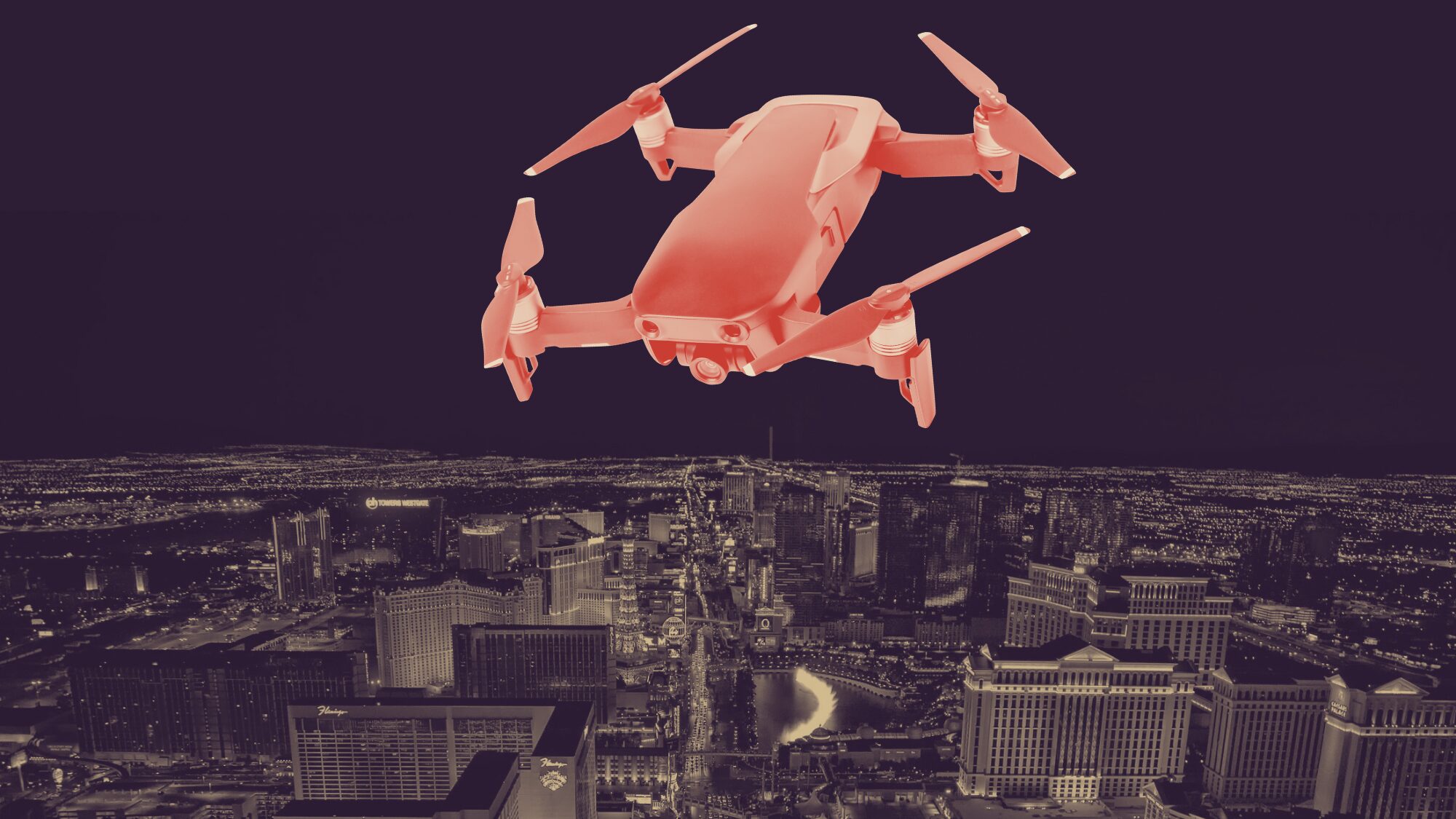
Despite legal restrictions on the use of drones for general surveillance by law enforcement, the Las Vegas Metropolitan Police Department (LVMPD) has managed to dramatically increase its use of such airborne technology, with an eye toward a "24/7 aerial response infrastructure capable of responding within seconds" to anywhere in Clark County.
And with more than 10,000 drone missions flown last year, it certainly seems the department is well on its way to building such an impressive aerial dragnet.
In much the same way the department has leveraged the use of commercial data brokers to circumvent Fourth Amendment protections, or the way it has sidestepped public input with its use of automated license plate readers, Metro has navigated legal loopholes and statutory gray areas to pursue its latest surveillance ambitions.
By using the drones only in "exigent circumstances" as a first responder to 911 calls, the department has been able to circumvent Nevada's law prohibiting agencies from flying drones over private property without a warrant. However, given the vast surveillance power of such technology, and the near impossibility of ensuring its usage doesn't overstep the immediate mission requirements of a particular "call for service," there's plenty of reasons for civil libertarians to worry about the department's aggressive expansion of the program.
Beside the obvious concerns of incidental invasions of privacy as drones fly over properties on the way to a call, the mere potential for misuse is enough to raise a few red flags, considering government's track record of civil rights abuses. As director of the American Civil Liberties Union of Nevada Athar Haseebullah pointed out to The Nevada Independent, for example, the mere presence of such drone activity could very well have a chilling effect on First Amendment rights.
Indeed, combined with other surveillance technologies Metro has adopted in recent years, the surveillance capabilities aerial drones offer in the event of a large-scale protest or demonstration are hard to overstate — as are the potentially endless ways such surveillance could be used against such political speech.
In other words, the technology needed for the radical abuse of constitutional rights has largely already been adopted by Metro — drones being just one of many. And if there's one thing we can learn from the actions of other law enforcement agencies around the country, it's that where there's the possibility for abuse, such abuse almost always seems to occur.
Immigration and Customs Enforcement (ICE) officers, for example, have been using advanced facial recognition software from the private sector to not only identify individuals suspected of immigration violations, but also to identify and harass those who have protested their enforcement actions.
In one case, agents arrived at a protester's house where they informed her, "This is a warning. We know you live right here." In another instance, the federal government revoked the Global Entry and TSA PreCheck status of an individual who was scanned by agents using such technology at a local protest.
Immigration enforcement agents have even used a system called Penlink to "geofence" entire protest areas and track individuals suspected of taking part in political demonstrations, claiming (as Metro does with its license plate readers and private data brokers) that the commercial availability of such information negates the need to obtain warrants or adhere to ordinary due process practices.
To be sure, the actions of ICE are separate from the actions of LVMPD — but it should serve as a warning that law enforcement agencies are often eager to evade the sort of privacy protections we expect as ordinary citizens. Indeed, agencies, regulators and lawmakers from both major parties have routinely enabled the erosion of constitutional rights for the supposedly lofty purpose of promoting "public safety," the Orwellian implications of such infringements notwithstanding.
Look no further than the egregious civil rights violations spawned by the "war on drugs," the sort of warrantless surveillance methods made possible by the "war on terror" or even the sort of mundane surveillance technology being mandated as a way to battle drunk driving. In 2021, for example, lawmakers included a mandate in a massive infrastructure bill that will require automakers to include "passive performance monitoring" systems in all new cars — technology that will surveil and evaluate drivers for signs of impairment, and render their vehicle inoperable if intoxication is suspected.
For many in government, apparently, the promise of robust public safety made possible through an unrestrained tech-driven surveillance state is simply too alluring to resist. Supposedly petty concerns about privacy or constitutional limits are viewed as mere obstacles for regulators and agencies to overcome, rather than bedrock principles to be protected and revered.
And, unfortunately, much of that Orwellian overreach isn't happening with robust public input or informed voter consent. Instead, it's taking place in murky legal waters where governments and private businesses conspire to subvert constitutional or legal privacy protections with little (or no) oversight from the very people they're planning to surveil.
While Big Brother is finding yet more new and inventive ways to keep eyes on all of us through our phones, in our cars or with the help of high-flying drones, it does so while hiding behind an opaque curtain of loopholes and constitutional workarounds — making it harder than ever for us ordinary citizens to return the gaze.
Michael Schaus is a communications and branding expert based in Las Vegas and founder of Schaus Creative LLC, an agency dedicated to helping organizations, businesses and activists tell their story and motivate change. He has more than a decade of experience in public affairs commentary, having worked as a news director, columnist, political humorist and most recently as the director of communications for a public policy think tank. Follow him on Twitter @schausmichael or on Substack @creativediscourse.
Support Independent Elections Coverage and Journalism in Nevada
You’ve enjoyed unlimited access to our reporting because we’re committed to providing independent, accessible journalism for all Nevadans.
But sustaining this work — informing communities, holding leaders accountable, and strengthening civic life — depends on readers like you.
Nevada needs strong, independent journalism. Will you join us?
A gift of any amount helps keep our reporting free and accessible to everyone across our state and funds our elections coverage.
Choose an amount or learn more about membership