


OPINION: Wildfire prevention isn't cheap — now NV Energy wants to stick you with the bill

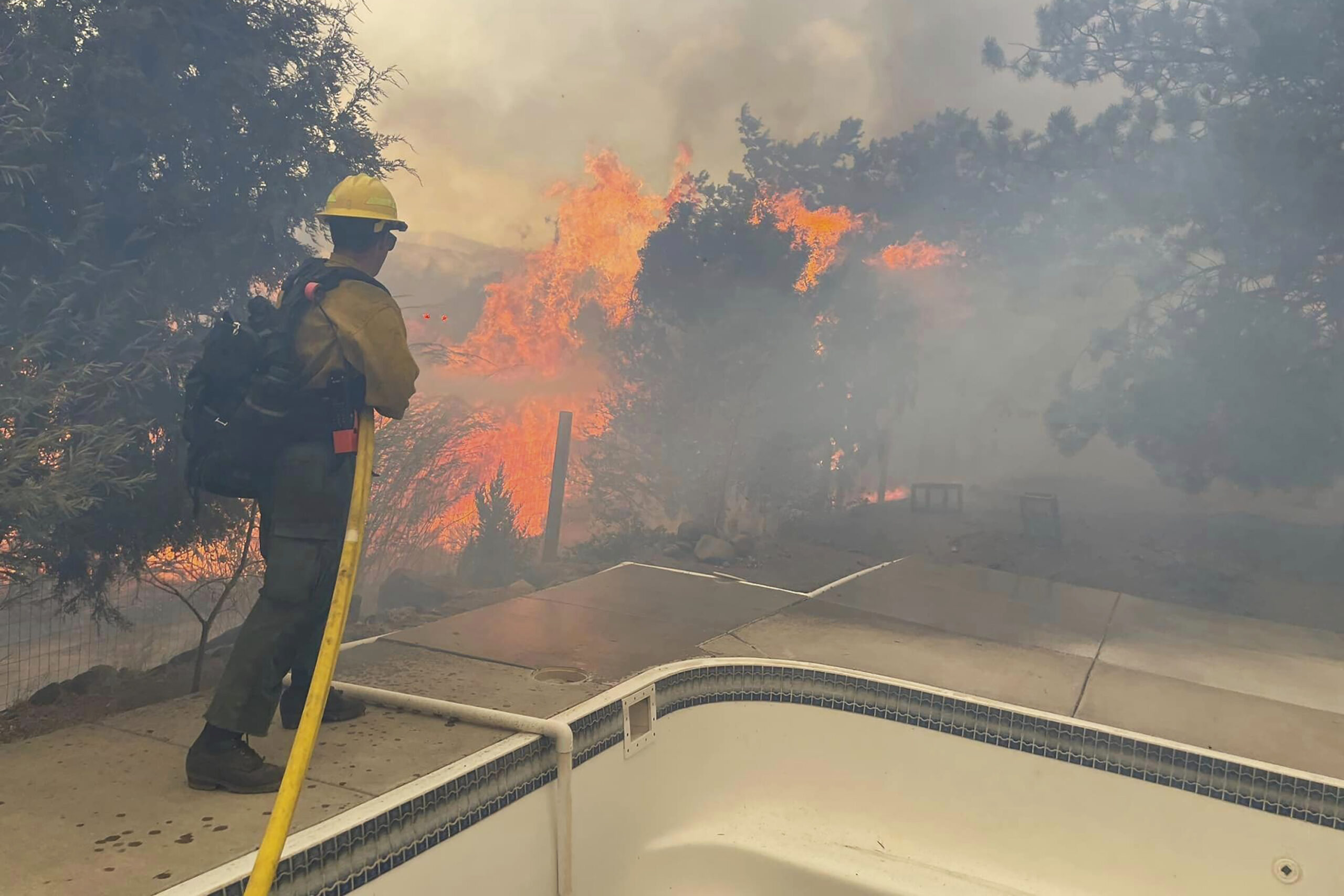
In July 2021, California's Dixie Fire ignited after a Douglas fir tree fell onto energized Pacific Gas and Electric Company (PG&E) power lines. The deadly blaze that engulfed nearly 1 million acres and wiped out entire communities was one of the largest wildfires the state has ever seen.
After the smoke cleared, the fight was not just about rebuilding. It was about responsibility. Who pays when utility equipment sparks a catastrophe? Who gets protected?
Following an investigation, California regulators penalized PG&E $45 million for its role in the fire and raised additional concerns about the energy company's inspections, vegetation management and infrastructure oversight.
That case was not isolated. Over the past several years, California regulators have fined and sanctioned PG&E for wildfire-related safety failures tied to the Zogg, Kincade and Easy fires, as well as for violations involving inspections.
In submitting to penalties and sanctions, PG&E took responsibility.
Here in Nevada, NV Energy is looking for ways to avoid responsibility.
In January 2025, NV Energy proposed a wildfire self-insurance program that would increase our utility bills to help cover the expenses of catastrophic wildfires. NV Energy frames the proposal as a way to provide "protection and stability for customers," but should Nevadans be asked to help absorb wildfire liability costs before NV Energy can show us it's doing everything possible to prevent catastrophic fires in the first place?
Recently, NV Energy went before the Legislature's Joint Interim Standing Committee on Growth and Infrastructure to discuss the proposal, which was met with public opposition and pointed questions from lawmakers. Currently in Nevada, utility companies can be held liable for damages if their equipment is deemed to have triggered a wildfire. NV Energy argues that its new proposal is not "immunity," but rather a wildfire self-insurance framework designed to stabilize costs and reduce financial exposure.
Under the proposal, ratepayers would fund a $500 million reserve through utility bill add-ons, while NV Energy would only be responsible for a limited co-insurance payment if the fund is exhausted. In practical terms, this shifts much of the financial burden for catastrophic wildfire damages away from shareholders and onto customers — even in scenarios when utility equipment is responsible for starting a fire.
That distinction matters.
Traditional self-insurance generally means a company assumes risk using its own reserves. Here, however, NV Energy is asking customers to finance the reserve itself. This arrangement weakens accountability by insulating the utility from the full financial consequences of infrastructure failures while still allowing it to operate as a state-sanctioned monopoly.
It is unclear when the Public Utilities Commission of Nevada will decide on NV Energy's wildfire-self insurance proposal. But based on the public comments, it is clear that Nevadans are not in favor of funding a financial buffer for the utility giant — whose parent company, Berkshire Hathaway, has been working hard in other markets to shield its utilities from legal liabilities arising from wildfires caused by its equipment. This proposal could be NV Energy's first step toward seeking legal immunity from wildfire liability altogether.
When you give a monopoly utility a customer-funded cushion, you remove its strongest incentive to actually maintain and upgrade its infrastructure. What incentive would NV Energy have for maintaining and upgrading its equipment to protect against fires? That is a dangerous way to think about wildfire prevention in the nation's driest state.
We know how fast conditions can turn in Nevada. Wind changes fast. Heat intensifies fast. Vegetation dries out fast. Fire risk is not theoretical, and it does not care whether a utility filed a mitigation plan on time.
Northern Nevadans lived through it during the September 2024 Davis Fire near Reno. Although the Davis Fire was not caused by utility equipment, it served as a stark reminder of how quickly wildfires can escalate in Nevada's dry and windy conditions. What began as a wildfire threat rapidly turned into evacuations, destroyed homes, hazardous air and fear for entire communities across Washoe County. It was a reminder that in Nevada, wildfire risk is not some distant possibility. It is immediate and capable of changing lives in a matter of hours.
The consequences do not end when the flames are out. As wildfires grow more frequent and destructive across the West, insurance companies have increasingly started dropping homeowners or denying coverage in fire-prone areas or dramatically raising premiums. Families are now facing the possibility of losing coverage altogether simply because they live in areas insurers consider too risky. That affects housing prices, property values and whether people can even afford to stay in the communities they call home.
And, again, wildfire self-insurance for NV Energy customers could be just the start of a more systemic shift of responsibility from the utility to ratepayers, a shift already happening across the West. In Utah, a 2020 law now makes it more difficult to pursue negligence claims against utility companies and puts a cap on damages victims can collect. Idaho and Wyoming have followed suit with similar legislation, and Arizona and Oregon aren't far behind. This doesn't just change legal standards. This shrinks the consequences for utilities' failure to account for their equipment's safety and soundness.
When consequences shrink, urgency shrinks right along with them.
If a utility wants more legal protection, fine. Earn it. Prove it. Show the public measurable results concerning power line clearance and upkeep to ensure their lines do not spark a wildfire. Show strong audits of the money spent on upkeep of power lines and the money spent to ensure equipment is up to date. Show transparent reporting to government agencies and the public on their efforts to mitigate wildfire danger. Show real safety benchmarks that are clear enough for regular people to understand.
But Nevada should not hand out legal shields first and hope that safety follows later. That is backward. The public interest is best served by ensuring that utility companies have every possible incentive to prevent a catastrophe before it starts.
In wildfire country, the stakes are too high to play games with accountability.
Taylor Burke is the press secretary for Battle Born Progress, where she leads communications strategy, media relations and digital messaging.
Support Independent Journalism in Nevada
You’ve enjoyed unlimited access to our reporting because we’re committed to providing independent, accessible journalism for all Nevadans.
But sustaining this work — informing communities, holding leaders accountable, and strengthening civic life — depends on readers like you.
Nevada needs strong, independent journalism. Will you join us?
A gift of any amount helps keep our reporting free and accessible to everyone across our state.
Choose an amount or learn more about membership