
Tahoe's bears can get too comfortable with humans. These dogs help bring back healthy fear

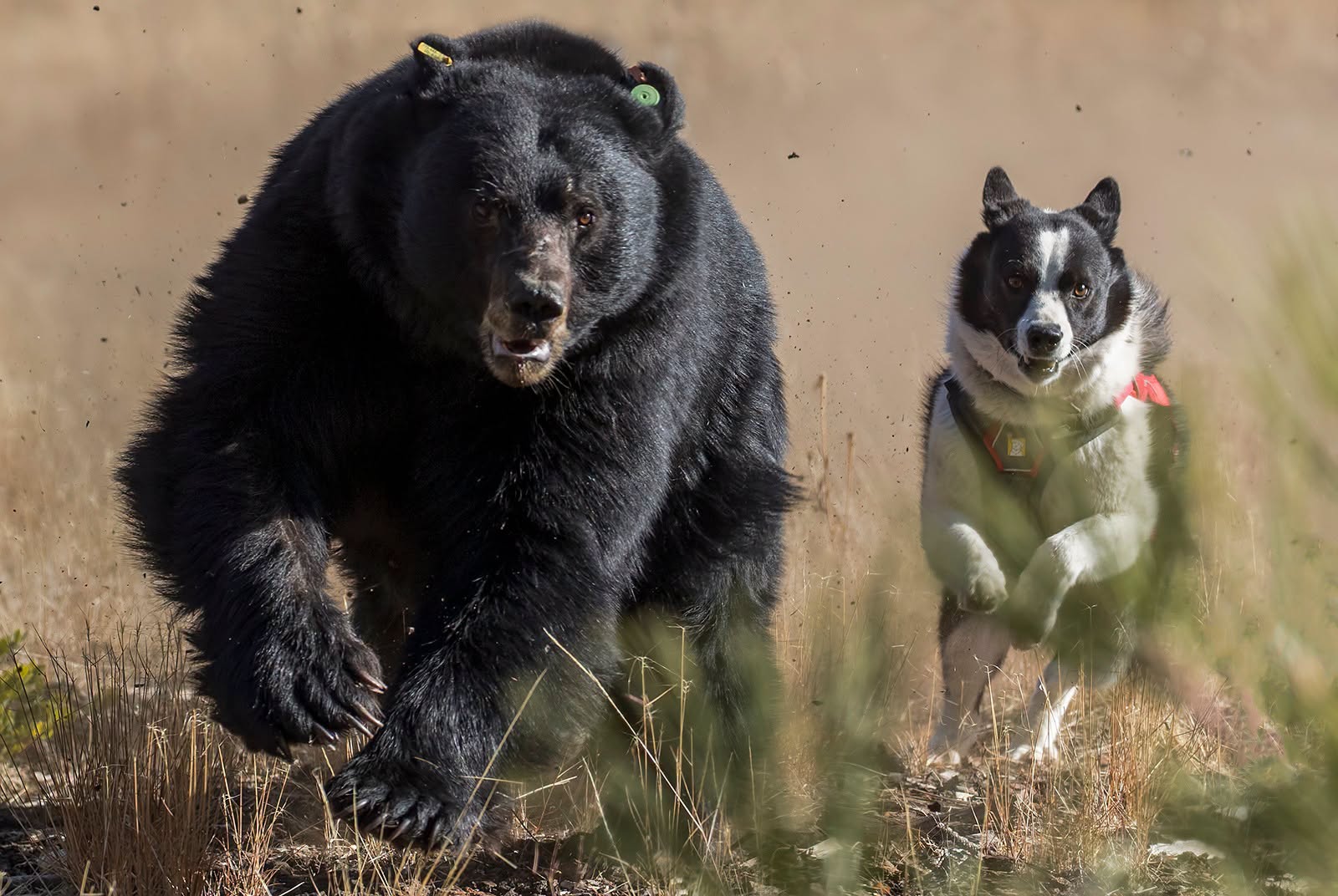
Two of Nevada Department of Wildlife's (NDOW) top employees look a little shaggy. They wear long fur coats year-round, and they don't collect a salary.
Meet Badger and Banjo, Karelian Bear Dogs that assist the department's bear team — Carl Lackey and Becca Carniello — in managing Nevada's recovering black bear population and intervening when there is a human-bear conflict.
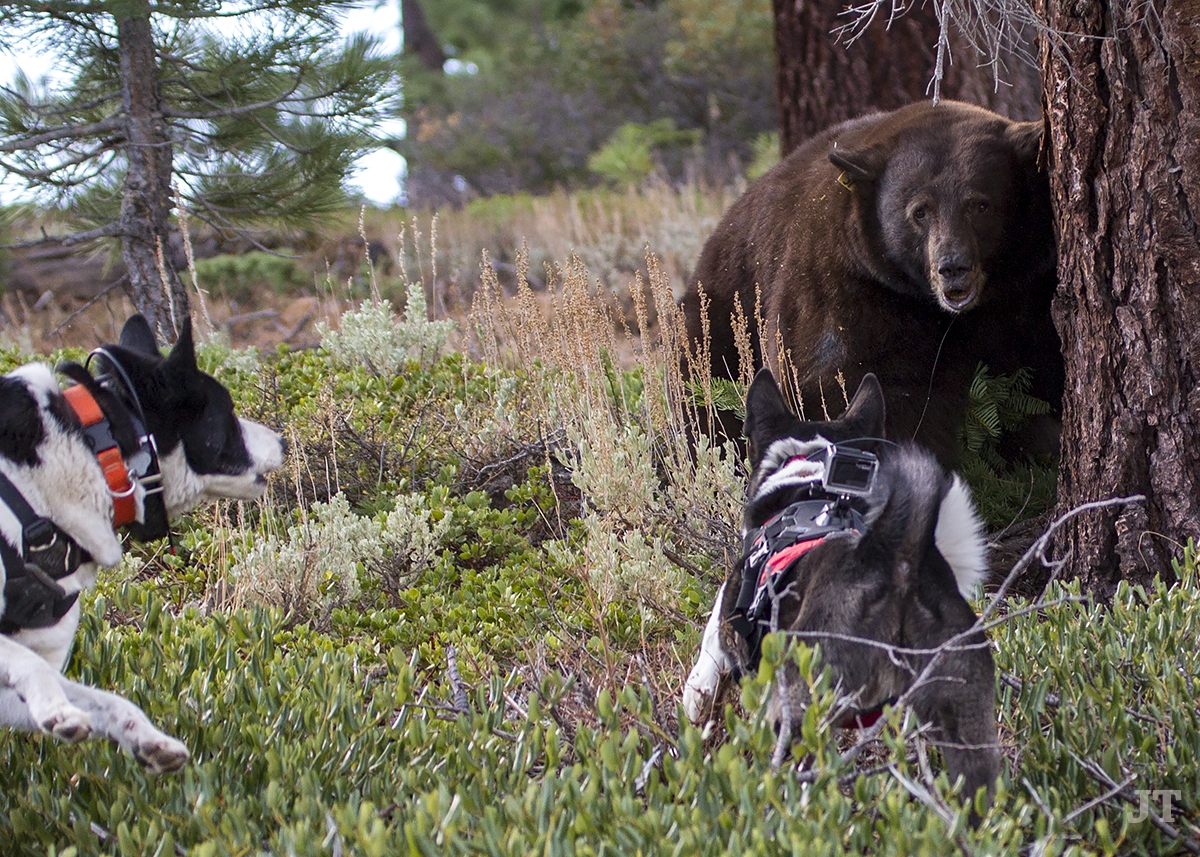
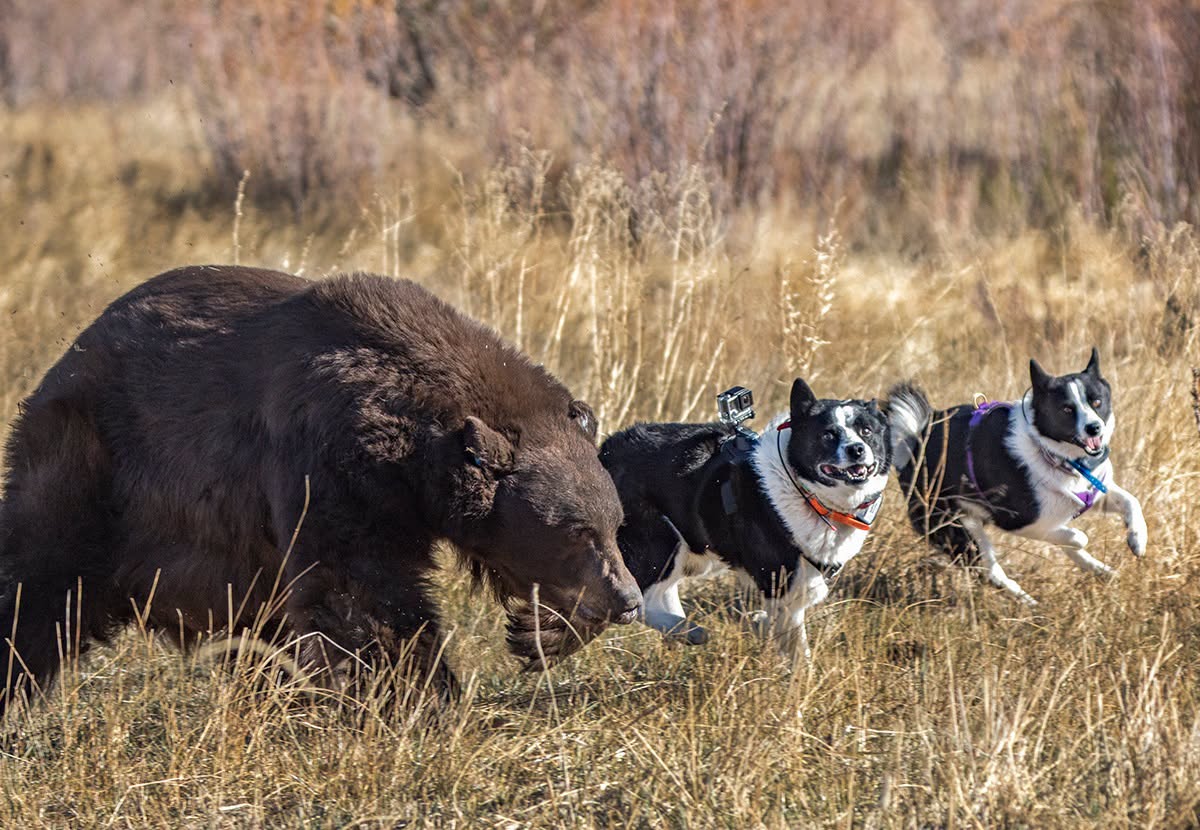
The dogs have become indispensable components of the department's operations, flushing bears from urban dens, locating injured bears and hazing human-habituated bears by chasing and nipping at them as they are released back into the wild. The goal is to ensure bears can still live in places such as Tahoe that are now teeming with humans, but maintain a natural fear of interacting with people rather than focusing on the tasty food that humans leave behind.
"[The bears'] experiences for the most part around people have been positive," Lackey said. "We're just trying to give them a bad experience around people."
The dogs also assist in hazing other wildlife such as mountain lions and deer, wriggle beneath houses with Lackey and Carniello to remove bears in crawl spaces and serve as ambassadors for NDOW and the biologists as they work to educate people about how to make their properties less attractive to bears.
NDOW is one of just a few state wildlife agencies that has adopted Karelian Bear Dogs for hazing as human-bear conflicts have increased as the mammals search in urban settings for reliable food and safe shelters.
"They're a tool that a lot of agencies just haven't endorsed. You can't just assign somebody a dog," Lackey said. "It has to be somebody who wants one of these dogs and is willing to put in the time."
Lackey and Carniello purchased the dogs as puppies. Karelian Bear Dogs can cost several thousand dollars, although donors have helped. Using on-the-job training, Badger and Banjo were introduced to bears' scents, then tranquilized bears, working up to participating in bear releases.
Black bears once lived across most of Nevada, except for the southernmost part of the state. Habitat destruction at a landscape scale and illicit hunting extirpated them from all but the very western edge of Nevada by the late 1800s, and by the 1980s, Nevada only had about 30 bears.
Conservation efforts and habitat restoration regeneration worked, and in the 1990s, Nevada's bear population exploded. Nevada's bear population now hovers between 600 and 700 across western Nevada, from far northern Washoe County down to the state line around Topaz and east to near Walker Lake.
Lackey and Carniello, along with Badger and Banjo, respond to dozens of bear-related incidents across Northern Nevada each year when bears exhibit unusual behavior or are somewhere they shouldn't be, such as inside a house. Most of the bears are captured and released back into the wild, near where they were picked up, with Badger and Banjo's help.
"They really add a level of comfort and safety for us when we're in some of these close situations," Carniello said. "This can be a really challenging job … and it's really cool to have someone with you who adores you."

Boxing with bears
Twenty-five years ago, as the state's once nearly decimated black bear population was rebounding, Lackey, then a one-man team, realized he needed help. He didn't ask the agency to add a position to assist him; instead, he followed up on an idea he'd seen on a National Geographic program featuring Karelian Bear Dogs.
"I saw these guys working a bear, and I thought 'this is a great idea,'" Lackey said. "They have this innate ability to work with the bear on the ground, more or less boxing with the bear."
The dogs were originally bred in Finland and Russia to hunt large game, but their use eventually spread to assisting with hazing human-habituated wildlife. Lackey purchased his first Karelian Bear Dog on his own, and NDOW's dog-assisted bear program took off.
Lackey, who just retired, spent almost 33 years at NDOW. Nearly the entirety of his tenure involved working with bears. Banjo, 9, was the fourth dog Lackey worked with; Carniello, who has been with the agency three years, is working with her first dog, Badger, 4.
"He is the reason that the Nevada Department of Wildlife has one of the best bear programs in the country," Carniello said of Lackey. "We have 30 years of continuous data … He has advanced this program so much and is the reason it is so renowned."
Prior to Lackey starting with the department, there was no protocol for how to field calls or handle human-bear conflicts, and no data was collected about the bears that were being relocated.
Crafting policies was one of Lackey's first duties. He also implemented on-site releases and pushed to tag, and eventually collar, captured bears to gather data on them.
Bears had previously been moved out of the Tahoe Basin to less populated areas. One was relocated as far away as the Hawthorne area, roughly 90 miles from the Tahoe Basin as the crow flies. One of the first studies he did was tracking the bears that were moved out of the Basin.
"Every single one of those bears returned," he said.
Several years later, he implemented the department's bear dog program. Some wildlife agencies use rubber bullets, bean bag rounds or tasers to haze bears as they are released back into the wild, giving the bears a negative association with people.
At NDOW, Banjo and Badger do the hazing, and the department hasn't had to resort to other forms of hazing in several years, Lackey said.

Whitesnake, the Rat Pack and bears
Sometimes, the most stubborn bears return to the same location over and over.
Lackey once responded to a call from Tahoe, where the lead singer of the 1980s hair band Whitesnake had a house. A bear had broken into the house, swam in the indoor pool and was ambling down the hall toward the recording studio.
By the time Lackey made it up there the bear was gone, so he set a trap. A couple days later, a bear was caught.
When Lackey arrived at the property and looked in the trap, he noticed it was a different bear than the prior one. As Lackey was dealing with the trapped bear, the bear he intended to trap walked past, ignoring Lackey and his bear dogs, and headed for the house. Lackey released the dogs, and they immediately chased the bear up a tree.
In another situation, Lackey and Carniello were searching for a bear that had been wandering into the famed Tahoe Biltmore in Crystal Bay on a daily basis while the historic casino and hotel underwent renovations. They found the bear wandering through a hallway — Badger cornered the bear next to the Breeze Bar, the famous nightspot where the Rat Pack — Frank Sinatra, Dean Martin and Sammy Davis Jr. — would hang out.
On average, about 40 bears per year are captured and released back into the wild. Releasing the bears in the same location not only keeps the wildlife on the landscape, but pushes people to adopt responsible bear management practices such as using bear-resistant garbage cans, Lackey and Carniello said.
The department works hard to frame the narrative around human-bear conflicts because placing the blame on bears doesn't address the root cause of conflicts, Lackey said — human attractants left out by people.
"We're trying to change the narrative," he said. "People are the issue, not the bear."
Black bears generally do not harm people.
There have been injuries in Nevada, but no recorded deaths from bears. Even those injuries are just bears "doing what is natural," Lackey said. "It happens so rarely."
"The dogs are amazing tools to haze the bears, but they aren't going to make a permanent behavior change," Carniello added. "The only permanent long-term solution comes from people securing their attractants."
Support Independent Elections Coverage and Journalism in Nevada
You’ve enjoyed unlimited access to our reporting because we’re committed to providing independent, accessible journalism for all Nevadans.
But sustaining this work — informing communities, holding leaders accountable, and strengthening civic life — depends on readers like you.
Nevada needs strong, independent journalism. Will you join us?
A gift of any amount helps keep our reporting free and accessible to everyone across our state and funds our elections coverage.
Choose an amount or learn more about membership