
'This agency kind of raised me': Nevada's first female forester reflects on 24-year career

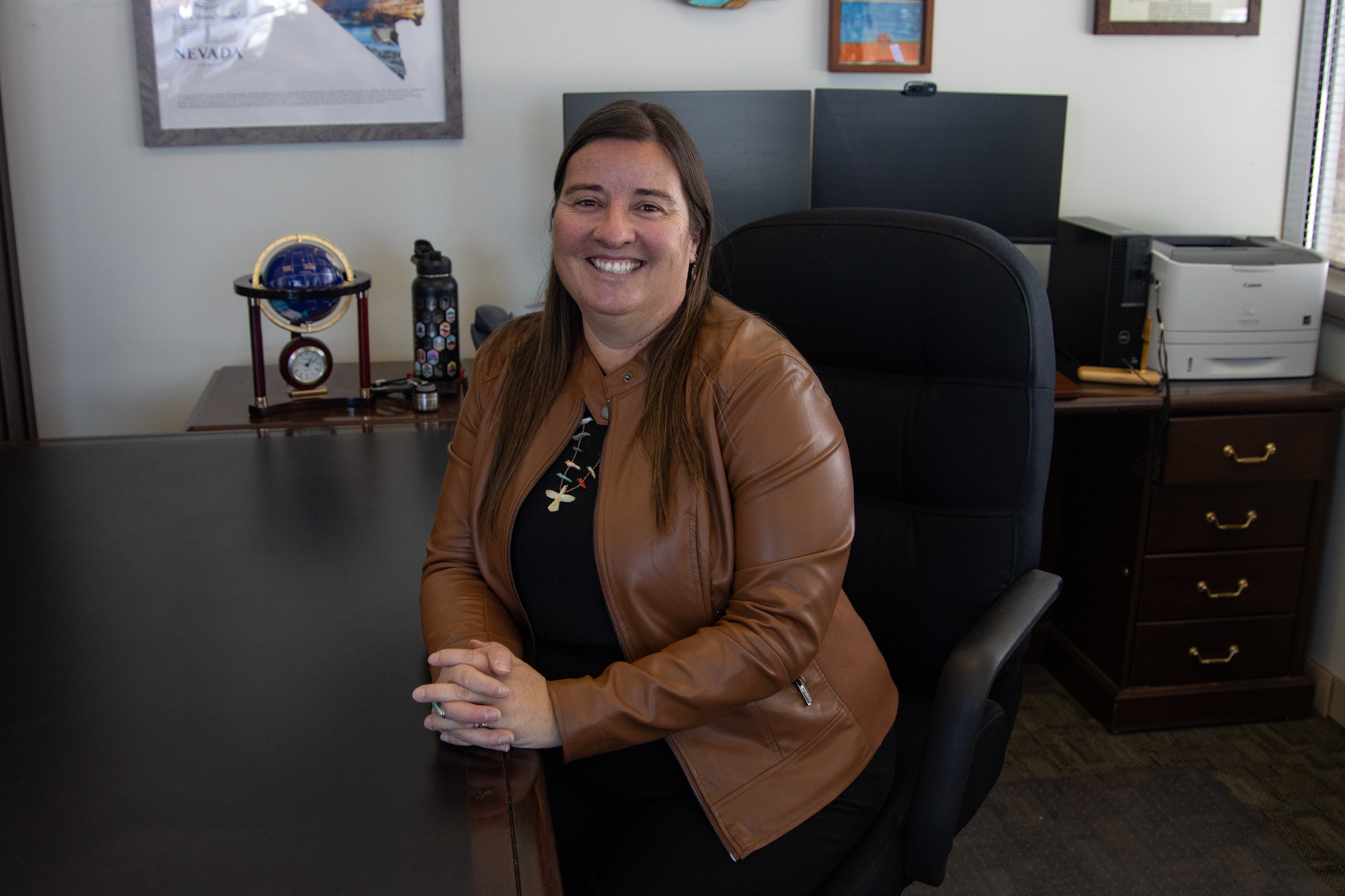
As a kid, Kacey KC wasn't sure what she wanted to do after high school. Growing up in a family that loved camping, hiking and biking, she knew one thing, though — she wanted to work outside.
"I thought well, I'll go into forestry," she told The Nevada Independent. "I didn't really have any thought of where it might take me."
The Gardnerville native went on to turn her love of the outdoors into a decades-long career with the state of Nevada, including eight years as the Nevada State forester and fire warden, a position that includes overseeing the state's firefighting and wildfire prevention and restoration efforts, often working with federal agencies.
After 24 years of working for the state, KC left the Nevada Division of Forestry (NDF) Feb. 20 to take over as head of the Oregon Department of Forestry. KC assumed her new role, based in Salem, March 2.
The change means she will up her management from a staff of about 300 people in Nevada to roughly 1,400 people in Oregon. Oregon has a much higher percentage of state-owned land (nearly half) and is much more heavily forested than Nevada — its "working forests" add about $12 billion to the state's economy each year.
"Kacey KC has shown unwavering professionalism and dedication throughout her years of service to Nevada," Gov. Joe Lombardo (R) said in an email. "As the state's first woman State Forester and Firewarden from 2018 to 2026, she strengthened wildfire response, championed responsible use of state funds, built strong partnerships, and elevated Nevada's role in national forest policy."
KC will also be the first female to lead the Oregon Department of Forestry. The forestry industry is historically male dominated, as is firefighting. As of 2022, less than a quarter of all state foresters were women. In 2020, less than 10 percent of all local and municipal firefighters were female.
"I definitely think it's empowering for women in this field," she said. "If they see this and think 'I can do that,' then great. I love the conversation."
KC joined NDF in 2002 as a seasonal employee at its nursery and seedbank program before moving to the state office. She briefly worked at the Nevada Department of Conservation and Natural Resources as the program manager for Nevada's Sagebrush Ecosystem program before moving back to NDF in 2015 to serve as deputy administrator of operations.
KC served as acting state forester for about a year before officially being appointed to lead the division in 2018.
"This agency kind of raised me," she said. "I've been so grateful for all the leaders who saw things in me I didn't always see in myself and gave me the opportunities."
Career highlights
In 24 years with the state, KC has seen a lot of changes, some of them spearheaded by her. She pointed to the Nevada Shared Stewardship Agreement, a plan for how the state will treat high-risk wildfire areas at scale, as one of her career highlights.
The agreement between the state and multiple federal agencies identified 13 priority landscapes across the state, outlined wildfire risk mitigation and ecosystem restoration steps — and then acted on it. The plan was originally signed in 2019 by former Gov. Steve Sisolak, a Democrat, and renewed by Lombardo, a Republican, in 2024.
The success of the agreement isn't just measured by the amount of acreage that is treated for wildfires through measures such as mechanical thinning or controlled burns, she said — it's that the agreement is supported across political party lines.
"Wildfires don't stop at jurisdictional boundaries, and neither does Nevada's shared effort to create fire-resilient landscapes and communities," Lombardo said in a press release at the time. "The success of the Nevada Shared Stewardship Agreement demonstrates that partnerships and collaboration are vital for advancing solutions that promote the sustainable health of Nevada's critical resources."
KC also pointed to the formation of Nevada's first-ever type 2 initial attack crews — specialized wildfire response teams — as well as the state's entrance into two interstate wildfire compacts as career highlights.
For decades, the state had operated under a messy web of agreements with individual states for shared wildfire fighting services, but by entering into interstate compacts — agreements that let states more easily transfer resources across state lines during emergencies — the process is more streamlined. Lombardo signed SB19, approving the interstate compacts, following the 2025 legislative session.
An active wildfire season for Nevada?
On Feb. 23, longtime NDF employee Ryan Shane assumed the role of acting state forester. Shane previously served as NDF's deputy administrator of operations, overseeing safety, training, conservation camps, natural resource management and support services.
He takes over as Nevada enters what could be a challenging wildfire season, KC said.
While it's still early in the year, KC predicts Nevada is "going to have a fairly active fire season this year unless we get a miracle March" because of the below-average snowpack across much of the state. It is the second consecutive year the state has had little low-elevation snow, and many areas are seeing consecutive years of below-average snowpacks.
"I don't know if this one storm will do it," she said of the huge, mid-February storm that dropped feet of snow in the Sierra and blanketed western Nevada in snow, only for much of that snow to melt during an ensuing warm rainstorm. "We were looking fairly droughty up until this storm."
Wildfires burn an average of between 400,000 and 450,000 acres per year, although less has burned the last two years. But this year's lack of low-elevation snow to tamp down leftover growth from the past couple years, combined with frequent rain the state has seen this year spurring growth of what fire officials call "fine flashy fuels" — quick-burning fuels such as invasive cheatgrass — could mean an active fire season in Nevada.
But KC is optimistic Shane and other NDF staff are prepared.
"I know that I leave this [division] in good hands," KC said. "We are in a very good spot as an agency."
Support Independent Elections Coverage and Journalism in Nevada
You’ve enjoyed unlimited access to our reporting because we’re committed to providing independent, accessible journalism for all Nevadans.
But sustaining this work — informing communities, holding leaders accountable, and strengthening civic life — depends on readers like you.
Nevada needs strong, independent journalism. Will you join us?
A gift of any amount helps keep our reporting free and accessible to everyone across our state and funds our elections coverage.
Choose an amount or learn more about membership