
Why did Nevada stop licensing new hospice providers?


Last month, Nevada became the latest state to temporarily pause licensing and Medicaid enrollment for new hospice and home healthcare providers.
The reason?
"Bad actors who use hospice and home-health programs as vehicles to steal public funds," Gov. Joe Lombardo (R) said in a statement announcing the six-month pause.
Though his opponent in the 2026 governor race, Attorney General Aaron Ford (D), slammed it as a "despicable ploy of taking away dying Nevadans' healthcare to appease Donald Trump," state health officials and industry representatives said a pause is long overdue.
Over the last five fiscal years, Nevada Medicaid saw a 161 percent increase in spending on hospice providers and a 65 percent increase in spending on home health providers.
Simultaneously, the number of licensed hospice providers in Southern Nevada jumped by more than 350 percent since 2020.
"People have politicized this, unfortunately, but it's been a real thing for us," Nevada Health Authority Director Stacie Weeks said in an interview with The Nevada Independent, adding that the agency doesn't make decisions lightly and, because fraud is such an issue, the pause was "extremely necessary."
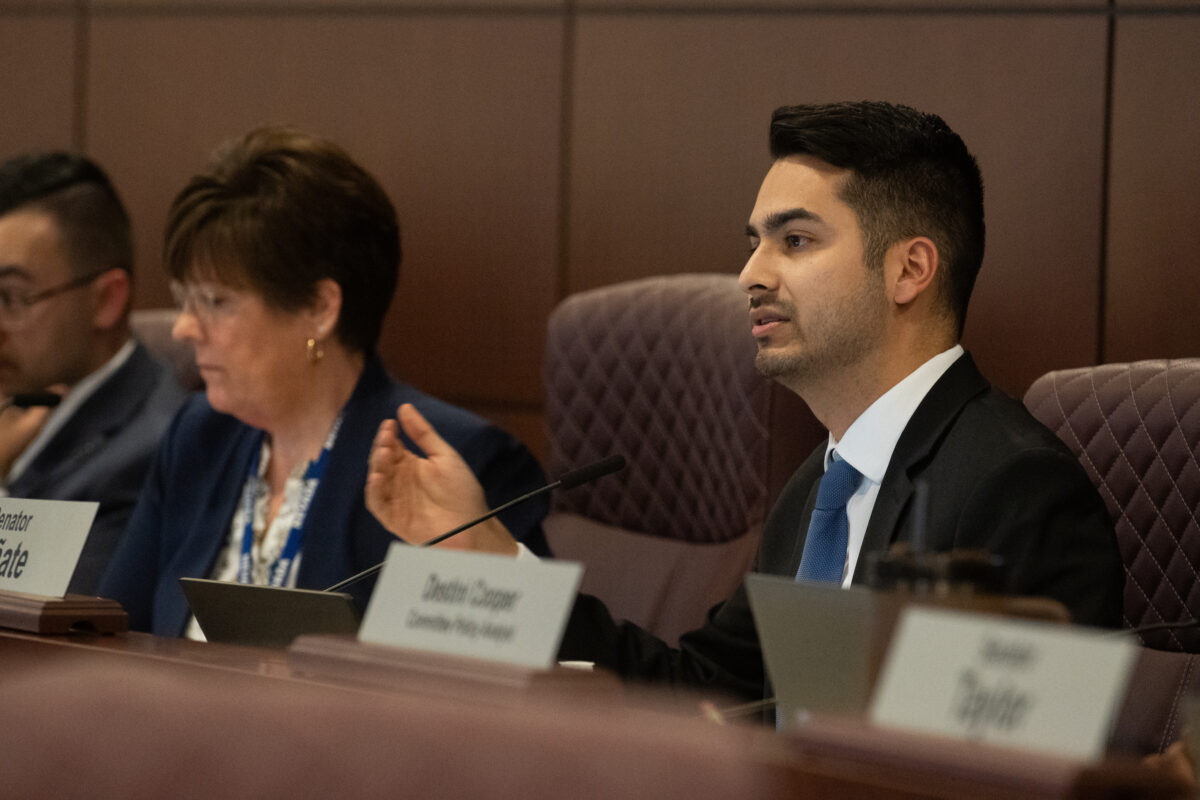
State Sen. Fabian Donate (D-Las Vegas), who chairs the Senate Health and Human Services Committee, characterized the pause as "good," saying that for too long the state has had "an influx of bad actors entering our healthcare system with no prior background or clinical experience, all while profiting and taking advantage of consumers."
Here's what you need to know about it.
Why implement a licensure pause now?
Weeks said the health authority's Office of the Medicaid Inspector General is working on four cases that show more than $50 million in potential fraudulent payments. Though she declined to share additional details because the investigation is ongoing, she noted that the extent of fraud was broad and sophisticated.
She said the increase in Nevada's Medicaid spending on hospice and home health providers, the number of licensed hospices and home health providers enrolled in Medicaid and suspicious billing and fraudulent business came after California's 2021 implementation of a state licensure moratorium on hospice providers. It's common for fraudulent providers to cross state lines after another state puts a stop to their ability to defraud Medicaid or Medicare, she said.
Weeks added that Centers for Medicare & Medicaid (CMS) data indicates that Nevada has the highest per capita rank for hospice providers enrolled in the Medicaid program. She added that new tools available to the state have also validated fears surrounding the prevalence of fraud.
The state pause followed a federal crackdown on fraud in hospice and home health agency enrollment, with CMS implementing its own six-month moratorium on adding new Medicare-funded providers in those fields. National experts told The Nevada Independent that it makes sense to leverage what the Medicare program is doing to promote integrity in Medicaid.
State officials said coordination between states and the federal government — as well as aligning actions in Medicare and Medicaid — ensures that providers flagged in one program face similar barriers across all licensing and reimbursement channels.
The federal moratorium was intended to block operators acting in bad faith from relocating to new states and restarting fraudulent operations. A temporary state-level licensure freeze of six months that's aligned in scope and timing, Weeks said, reinforces this.
"By locking down both federal and state entry points simultaneously, states effectively reduce the risk that fraudulent or noncompliant hospice providers will migrate to more permissive jurisdictions," Weeks said.
How do hospice and home healthcare work?
Home healthcare is designed to help patients recover, rehabilitate and become independent after an illness or injury at home. Hospice is end-of-life care that focuses on comfort and pain management rather than averting death.
A patient has to have a life expectancy of six months or less to receive hospice through Medicare, the federal health insurance program primarily designed for people who are 65 or older or have certain disabilities. Hospice includes services such as at-home visits by nurses and doctors, administration of pain medications, spiritual support and temporary relief for primary caregivers. Medicare pays the hospice provider a bundled per diem rate, regardless of the number of services provided that day.
Medicare also covers home health services, but one key difference, aside from serving people expected to live more than six months, is that home health service recipients need to be homebound while hospice patients do not. Patients receiving home health services may require intermittent skilled nursing care, physical therapy, speech-language pathology services or occupational services.
Dr. Johanna Koch, a family, hospice and palliative care physician based in Incline Village, noted that life expectancy is estimated based on diagnosis and a patient's health status. There's no way to know when a patient will actually die, she said, and so at the end of the first three months on hospice, a patient has to be reevaluated in detail. The reevaluation must document changes and assess whether a patient continues to qualify for the program.
Patients who opt to go on hospice, Koch noted, do not want to continue to seek treatment for their illness.
"It's a personal choice," she said. "People who elect home hospice generally do it because they want to be surrounded by things that they love and are familiar to them — their plants, their animals, their favorite foods, whatever those things are."
Are hospice and home health services vulnerable to fraud?
Alice Burns, an associate director with the health policy and research organization KFF's program on Medicaid and the Uninsured, said that research shows most Medicaid fraud is driven by providers, not patients. That fraud, she cautioned, doesn't extend to accidental errors but rather criminal intent or a consistent pattern of behavior.
Hospice fraud by providers can involve billing for unnecessary services, falsifying patient records, billing for intensive levels of hospice care when the patient isn't receiving that treatment and other practices with the intent of stealing money from the programs.
Koch noted that unethical hospices will keep patients on for six months, whether they continue to qualify or not.
"That's the easy part where they make money for doing little," she said, adding, "and then they'll only take patients who are low maintenance."
Burns added it's difficult for states to closely monitor home-based care as opposed to nursing facilities or hospitals. Some states, she said, have implemented electronic visit verification for care provided at home as a way to help mitigate the issue.
Home care is a growing source of healthcare spending, Burns added, but states must balance fraud concerns with the fact that many of the services are actually needed.
"The easier it is to get into the system, the easier it is for providers to enroll, the more readily you can respond to a case," Burns said. "But that does also make it easier for bad actors to get into the system."
What does Nevada's moratorium do?
Approved June 11, the temporary pause on new state licenses for hospice and home-health providers, as well as new provider enrollments for Nevada Medicaid, will be in effect for at least six months.
Medicaid is allowing some providers to apply for an exemption if they are addressing gaps in care in an underserved area of the state.
State officials say that during the six-month temporary pause, staff will conduct extensive on-site reviews of all Medicaid-enrolled hospice and home health providers to identify potential Medicaid payment and billing fraud.
Among the things the temporary pause does not affect:
- Medicaid eligibility for recipients
- Medicaid coverage for hospice and home-health services
- Hospice and home-health providers enrolled in, and in good standing with, Nevada Medicaid, including those in the renewal process for enrollment

What have other states done?
Burns said every state is approaching the issue of Medicaid fraud differently.
"We know that there's been a renewed emphasis on program integrity, fraud, waste and abuse of Medicaid and some states have put moratoriums on certain providers," she said. "But the provider types that they are placing moratoriums on are going to be different in different states."
The California Legislature imposed a moratorium on new hospice licenses to crack down on fraud, and it's been in effect since Jan. 1, 2022. Gov. Gavin Newsom (D) has touted the more than 280 hospice licenses that have been revoked in the last two years and 300 providers under investigation.
Ohio, alongside Nevada, appears to be among the first states to adopt the Medicaid provider enrollment restriction around the same time as the federal announcement.
Have state lawmakers tried to regulate the industry?
Yes. Nevada lawmakers last year passed legislation to raise the bar for hospice providers and protect patients.
Sponsor Assm. Rebecca Edgeworth (R-Las Vegas) described AB161 as essentially a hospice patient's bill of rights. It requires hospice providers to inform patients of their rights to certain care and obtain and document the informed, written consent of a patient or their representative for all treatment and care. It also required hospice programs to notify patients and representatives if it filed claims for benefits on behalf of patients.
Sen. Angie Taylor (D-Reno) co-sponsored the legislation, and it passed out of both chambers with near-unanimous support.
Karen Rubel, the president and CEO of Nathan Adelson Hospice and one of the backers of the legislation, said the trouble with the current regulatory system for hospice providers is that it's complaint-driven. Many people don't want to go through that formal process when a loved one is dying.
She applauded the legislation and the decision to pause licensing, saying it will give the state enough time to fully understand the proliferation of hospice centers.
She said amid the licensure pause, Nathan Adelson Hospice has been conducting business as usual. It can heighten the potential for audits, she said, but it's not affecting the services provided or the ability to treat and care for patients.
"Anything we can do to protect seniors, to protect the most vulnerable, because these folks are dying," she said. "Their families are going through a lot and to be mismanaged or treated poorly or not to get the best care that you can, I think that's just a shame for our community."
Support Independent Elections Coverage and Journalism in Nevada
You’ve enjoyed unlimited access to our reporting because we’re committed to providing independent, accessible journalism for all Nevadans.
But sustaining this work — informing communities, holding leaders accountable, and strengthening civic life — depends on readers like you.
Nevada needs strong, independent journalism. Will you join us?
A gift of any amount helps keep our reporting free and accessible to everyone across our state and funds our elections coverage.
Choose an amount or learn more about membership