
Despite low error rate, Nevada may still need to pay millions to continue SNAP benefits

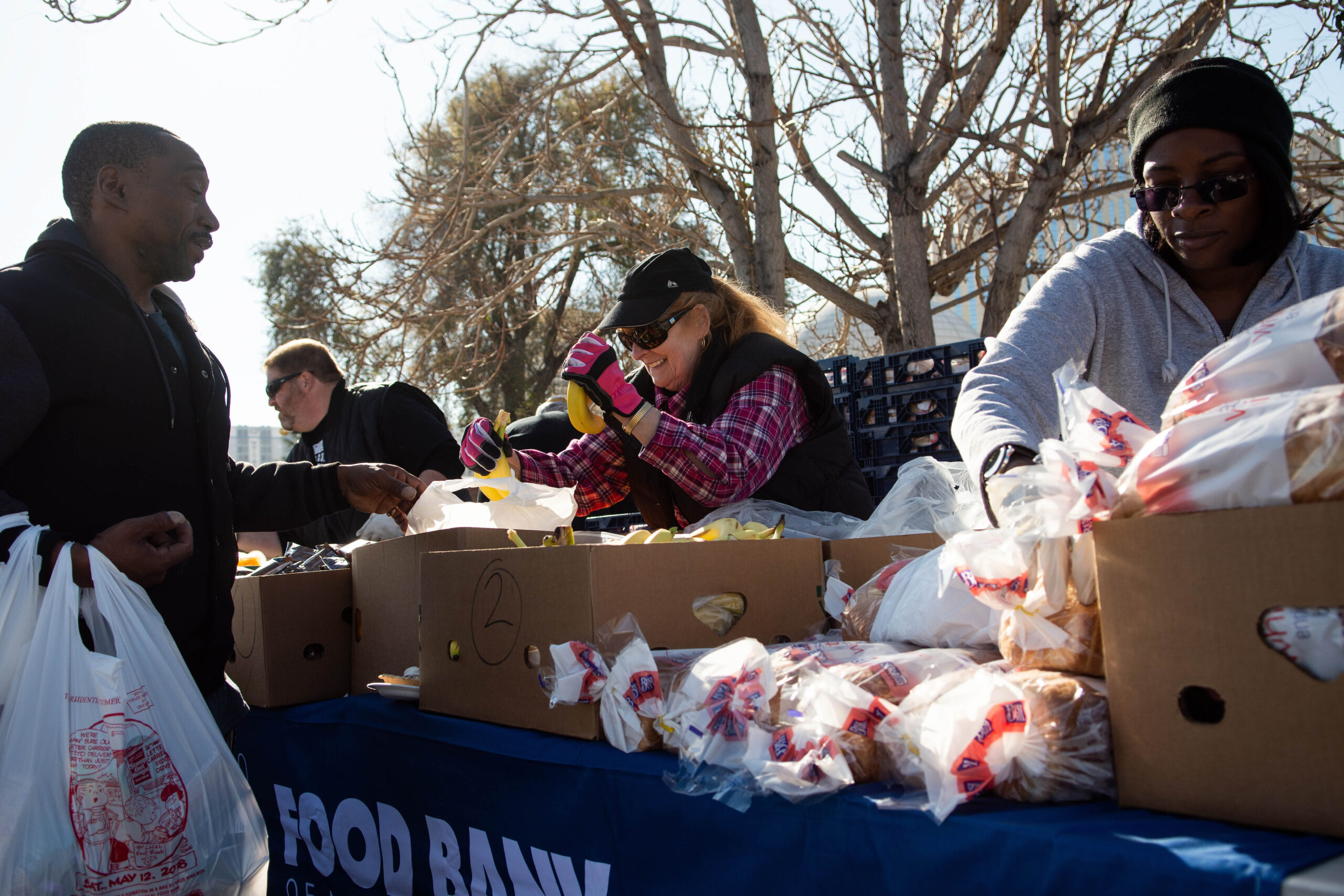
Nevada's food stamp program is, by national standards, one of the best run in the country.
Last year, only 10 states made food assistance payments to residents more accurately than Nevada, an error rate that was the 11th-lowest in the nation. But according to data the U.S. Department of Agriculture released in late June, Nevada landed at 6.22 percent, just above the new 6 percent threshold Congress set as the line between states that pay nothing extra for the program and states that will need to start covering part of the bill themselves.
"Our last calculation put that right at $44 million per year," said Kelly Cantrelle, deputy administrator over program and field operations at Nevada's Division of Social Services (DSS), which administers Nevada's Supplemental Nutrition Assistance Program (SNAP).
The state has until the end of September to bring the payment error rate under 6 percent. If it can't, Nevada would join the large majority of states now bracing to cover part of their SNAP benefit costs starting in October 2027.
The cut to federal funds, according to DSS officials, would most likely mean hiring freezes or downsizing within the agency, layered on top of a program already losing participants under new requirements. DSS has spent the last year overhauling how it verifies cases and rolling out new anomaly-detection technology in hopes of getting the error rate under 6 percent.
The Trump administration casts the numbers differently. Over the past year, it said the state "wasted" more than $63 million in taxpayer resources because of incorrect SNAP benefit determinations, U.S. Department of Agriculture spokesperson Michael Abboud said in a statement to The Indy.
"The provisions of H.R. 1 … hold states accountable to years of program mismanagement and apathy toward the American taxpayer funding SNAP," Abboud said.
Cantrelle disputes the mismanagement framing, but not the underlying math. Nevada's errors, she said, mostly trace back to a deliberate tradeoff: trusting resident's word on things like rent and mortgage payments instead of requiring paperwork, in order to get benefits out the door faster.
"We took calculated risks to help customers and to be able to process cases faster," Cantrelle said. "The error rate being at 6 percent was always better than the national average. It was a risk that we took knowingly, because it was worth it to get benefits faster to the customer. We're not in that world anymore."
How the penalty works
The federal government has traditionally covered all SNAP benefit costs and half the administrative costs. Under the tax and spending law President Donald Trump signed last July — H.R. 1, or the One Big Beautiful Bill Act — states must now cover 75 percent of administrative costs, which will cost an additional $19.4 million for Nevada, and those with payment error rates at or above 6 percent have to start covering part of the benefits themselves.
The share increases on a sliding scale: 5 percent of benefits for states between 6 percent and 8 percent, up to 15 percent for states whose error rates are more than10 percent. States can use whichever of their 2025 or 2026 error rate is lower.
That puts Nevada in the lowest penalty tier if it can't do better this year. Its rate has bounced around — 6.71 percent in 2023, down to 5.94 percent in 2024, back to 6.22 percent last year — so better results aren't guaranteed. So far this year, though, Nevada has been running under 6 percent, Cantrelle said.
"I am cautiously optimistic," she said. "It's too soon to say where we're at today, because we know how much it's going to fluctuate before the end of the year."
What's actually causing the errors
The agency's quality control team pulls a sample of about 160 SNAP cases every month and reviews them for accuracy. Any case where the benefit amount is off by $50 or more, in either direction, counts as an error.
The most common causes, Cantrelle said, are shelter expenses that weren't verified, income that changes between recertification periods and clerical errors by caseworkers.
"Most of it is simple mistakes," she said. "Nine times out of 10, it's human error, and sometimes a customer will forget to report something, because let's be honest, if you get a raise, the last thing you're going to think is, 'Oh, I need to call my worker.'"
Genuine fraud does happen, Cantrelle said. Nevada, like other states, has seen benefit trafficking and card skimming. By the United States Department of Agriculture's own definition, though, the payment error rate measures how accurately states determine who is eligible for SNAP and how much they should receive.
Beth Martino, president and CEO of Three Square, Southern Nevada's largest food bank, also pushed back on the idea that it has anything to do with fraud.
"The error rate is a reflection of the administrative burden of this program," she said.

What Nevada is doing about it
The state started making changes before H.R. 1 was even signed, Cantrelle said. Starting in June 2025, the agency began requiring documentation — such as a lease, mortgage statement or utility bill — for shelter expenses caseworkers had previously taken on the applicant's word. It also began interviewing applicants at every application or recertification instead of once a year, and moved the timing of supervisor case reviews to before approval instead of after.
This year, using money the Legislature appropriated during a special session last November, DSS also brought on two new technology platforms — one that flags cases at high risk of error and another that cross-checks reported income against wage data between recertifications to catch changes earlier.
Lawmakers appropriated roughly $19.4 million for SNAP administrative costs this fiscal year, plus about $1.3 million more for the tail end of the prior one. Cantrelle estimated $2 million to $3 million of that went specifically toward the tech systems, which launched in March and April.
"We haven't seen the fruits of those labors yet," Cantrelle said, "but we fully expect those to really impact [the error rate] in the coming months."
One thing DSS says it won't do is tighten who qualifies for SNAP in Nevada as a way to bring the error rate down. States have essentially no authority to change federal eligibility rules on their own, Cantrelle said.
"It's not really within our purview to be able to do that," she said. "It all has to go through the feds."
The backdrop: fewer Nevadans on SNAP
Nevada's push to bring down its error rate is unfolding as SNAP rolls shrink for reasons that have little to do with payment accuracy. Nationally, SNAP participation fell more than 4 million people, or about 10 percent, between H.R. 1's enactment in July 2025 and March 2026, according to the Center on Budget and Policy Priorities, a left-leaning think tank tracking the law's rollout.
Nevada's decline over the same window was about 15 percent — among the steeper drops nationally, driven largely by new work requirements and narrowed eligibility for noncitizens.
Read More: Tens of thousands of Nevadans are losing food stamps benefits. Here's what to know.
Shane Piccinini, government relations director for the Food Bank of Northern Nevada, pointed to a 14 percent drop in SNAP usage between December 2024 and December 2025 that the food bank can't fully explain.
"We do think that federal policy is having some effect on people not accessing SNAP," Piccinini said.
Martino said nearly half of Nevada's SNAP recipients were already working as of 2024, complicating the rationale for expanded work requirements.
"For every meal that Three Square puts into the community, SNAP provides nine," Martino said.
Neither food bank can absorb what SNAP provides at that scale, Martino and Piccinini said. Piccinini estimated Nevadans receive roughly $1 billion a year in SNAP benefits overall. Martino added that her bigger worry isn't Three Square's own capacity, but that of the smaller nonprofits it partners with, some of which have already cut programs or staff.
USDA won't finalize Nevada's 2026 error rate until next June, around the same time the Legislature will be wrapping up the next budget. Cantrelle said the agency expects a "pretty good idea" of where Nevada stands by January.
"We rise and fall as a state," Cantrelle said. "We are very closely related with each other, all the way from quality control to the field offices. We're really one team."
Support Independent Elections Coverage and Journalism in Nevada
You’ve enjoyed unlimited access to our reporting because we’re committed to providing independent, accessible journalism for all Nevadans.
But sustaining this work — informing communities, holding leaders accountable, and strengthening civic life — depends on readers like you.
Nevada needs strong, independent journalism. Will you join us?
A gift of any amount helps keep our reporting free and accessible to everyone across our state and funds our elections coverage.
Choose an amount or learn more about membership