
'Everybody jumped in.' Legendary bookmaker says sports betting grew too fast
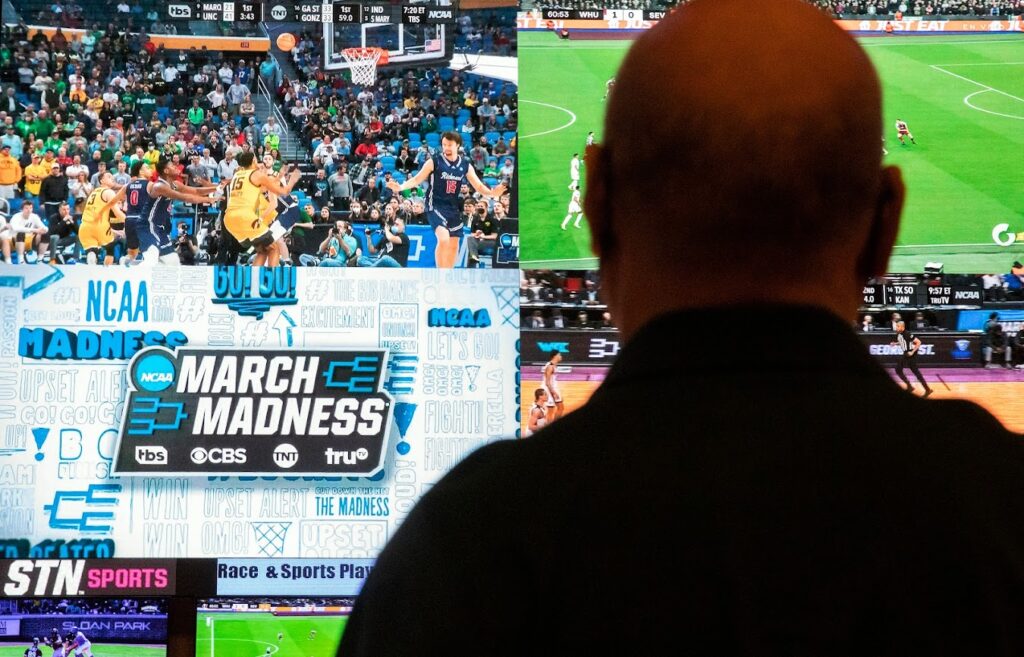
When Art Manteris moved to Las Vegas to join the legal sports betting business, wagers were written by hand behind the counter at a casino. Today, on average, 70 percent of all sports bets in Nevada are made on an app through a mobile phone.
Three months after the U.S. Supreme Court opened the nation to legal sports betting in May 2018, Art Manteris stood behind the counter at the newly remodeled Palace Station sportsbook and offered advice for states considering the opportunity.
"Any state looking to get into sports gaming would be making a foolish mistake not to look at Nevada and how we do it here," Manteris said at the time.
Eight years later, Manteris said many states didn't follow that advice.
"Everybody jumped in with both feet overnight," Manteris said of a gambling business now legal in 40 states and Washington, D.C. "It's been too fast, and there are mistakes being made."
In the past 12 months, several gambling scandals have been uncovered, including a pitch-tipping scheme involving members of Major League Baseball's Cleveland Guardians and an illegal sports betting ring involving NBA players, coaches and gamblers.
He said he expected the floodgates would open once the court threw out the Professional and Amateur Sports Protection Act (PASPA), which had limited full-scale sports betting to just Nevada since 1992. It's why he offered his advice.
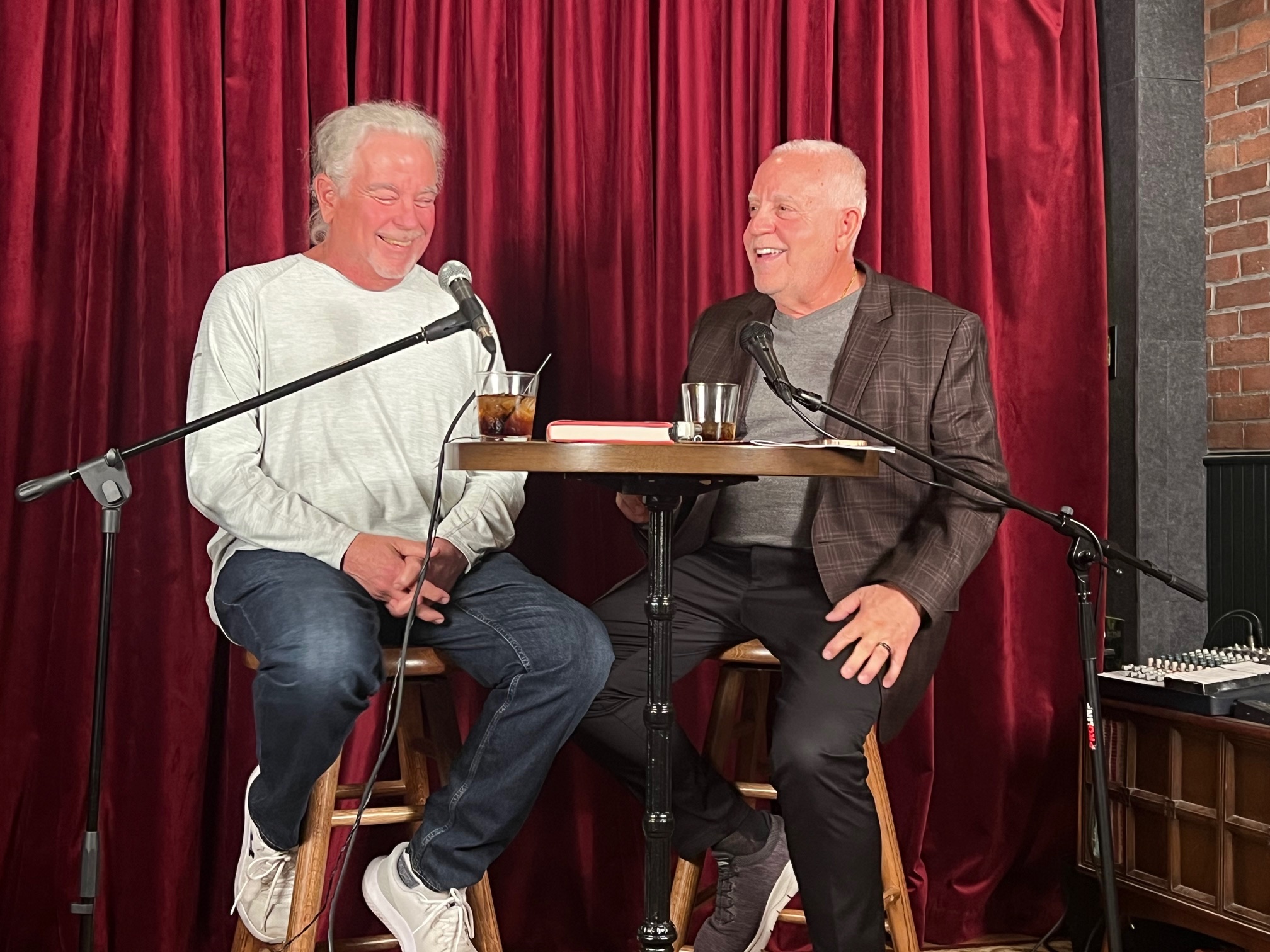
"They don't have any expertise in regulatory oversight of sports gambling," Manteris told gaming journalist Roger Gros during a taping of his Global Gaming Business podcast on Feb. 16. "The integrity of the game is a real concern of mine."
Manteris retired from the sports betting business in 2021 after a more-than-five-decade career that saw him manage and build sportsbooks for some of the casino industry's legendary operators, including South Point owner Michael Gaughan, the late Caesars Chairman Henry Gluck and the late Hilton Chairman Barron Hilton.
He spent his last two decades before retirement with Red Rock Resorts (formerly Station Casinos), creating Strip-style sportsbooks for the company's locals customers.
Last month, he released his autobiography, The Bookie: How I Bet It All On Sports Gambling And Watched The Industry Explode. Written with investigative journalist Matt Birkbeck, the book is available at bookstores and online through Amazon and HarperCollins.com.
Manteris said proceeds from the sales will be donated to Blood Cancer United — one chapter in the book is dedicated to his grandson Michael, who died of a rare form of childhood leukemia — and the World Wildlife Fund.
During his career, which began in 1980 as a sports betting ticket writer, Manteris worked at some of the Strip's best-known sportsbooks, including the Barbary Coast (now The Cromwell), Caesars Palace and the Superbook at the Las Vegas Hilton (now Westgate Las Vegas).
One early experience came in 1981 during the Sugar Ray Leonard-Thomas Hearns fight at Caesars Palace. Barbary Coast sportsbook manager Jimmy Vaccaro left the youthful Manteris in charge as bets flooded in.
"I asked Jimmy how he could leave me there by myself," Manteris said. "He told me, 'I knew you were going to sink or swim.' He was right. I had massive lines. That was before the days of kiosks, when things were still handwritten. That was the best education that anybody could get in the business."
Manteris has lived for more than three decades in Boulder City. It seemed fitting to tape the podcast with Gros, also a Boulder City resident, in front of more than two dozen friends and family members in town.
Before the demise of PASPA, Manteris was brought in by former NBA Commissioner David Stern as a gambling consultant to the league, offering advice on the business of sports betting. He said he was shocked at how quickly the NBA and other leagues embraced sports betting once PASPA was overturned.
"Reversing that decision was a watershed moment that immediately wiped away a hundred years' worth of fierce opposition and moral outrage to sports betting," Manteris wrote.
Throughout the book, Manteris writes about his professional successes and challenges, including the creation of the first Super Bowl proposition wager — would Chicago Bears defensive lineman William "The Refrigerator" Perry score a touchdown? Caesars Palace lost $255,000 on the bet.
"I thought Mr. Gluck was going to fire me, but he said, 'Kid, we could not buy the kind of publicity that you generated for Caesars Palace,'" Manteris told Gros. "He thanked me, congratulated me and hung up. I was flabbergasted, but I did walk away knowing the power of sports marketing."

Landlord might consider additional funds for Bally's part in Vegas stadium site
The landlord of the 35-acre site where a $2 billion Major League Baseball stadium has been under construction for nearly a year suggested it might provide additional financing to gaming operator Bally's Corp. to develop its portion of the parcel.
Gaming and Leisure Properties President Brandon Moore said Friday the company wants Bally's to finalize its plans for the Strip location. Last September, the casino operator unveiled designs for a 500,000-square-foot entertainment district that would surround the 33,000-capacity ballpark.
"They've released a lot of renderings and some preliminary permit applications for the site," Moore said on Gaming and Leisure's fourth-quarter earnings conference call. "We'll consider investing more in the property as the details become more available."
Gaming and Leisure contributed $175 million to Bally's for the demolition of the Tropicana Las Vegas in October 2024. Roughly $125 million wasn't spent. Bally's hasn't said how it will use the funds. The company pays Gaming and Leisure $10.5 million annually to lease the site.
The Athletics aren't obligated for any portion of the rent. The team is using 9 acres for the stadium, which will open for the start of the 2028 Major League Baseball season.
The team's vice chairman, Sandy Dean, said last week that they have been in constant dialogue with Bally's about the project. He said Bally's is required to help fund "three significant components" — the plaza at the southeast corner of the Strip and Tropicana Avenue, which will serve as the main entrant for the ballpark, a parking garage in the southwest corner of the site and the central utility plant, which helps in the production of the air-conditioning system for the enclosed-roof stadium.
Dean said he expects to have a progress report for May's Las Vegas Stadium Authority Board meeting.

Caesars CEO: The company has no interest in prediction markets
Caesars Entertainment CEO Tom Reeg expressed his opposition to prediction markets during his company's quarterly earnings conference call last week.
"This is clearly gambling," Reeg said. "In the current regulatory environment, you shouldn't expect us to be participating in prediction markets."
Caesars operates more than 50 resorts nationwide, including 15 in Nevada. The company also offers sports betting in more than two dozen states through its Caesars Sportsbook.
"Some of our most valuable assets are our gaming licenses in each of the states that we operate," Reeg said. "It's been made clear to us that if we pursue [prediction markets], some of our licenses could be at risk. You shouldn't expect us to do that."
What I'm reading and listening to
👂 American Gaming Association CEO Bill Miller on the 'Straight to the Point' podcast — Steven Ruddock
"A bunch of hoodie-wearing crypto bros who believe that somehow or another they're going to use a loophole in this Commodity Exchange Act, which was designed to hedge crop futures and price of cereal, in order to establish the CFTC as the chief federal regulator of gambling."
💸 Kalshi prediction market data earns vote of confidence in Fed paper — Nathan Bomey, Axios
The paper delivered a credibility win for Kalshi and the broader prediction market industry and a setback for state regulators that argue the platforms are little more than speculative betting.

News, notes and quotes
💹 'Bitcoin takeover' planned at Circa Casino Resort
Nevada gaming regulators prohibit the use of cryptocurrency at slot machines and gaming tables. However, Circa Resorts CEO Derek Stevens has long accepted Bitcoin at his three downtown casinos for various non-gaming transactions. Last week, he announced a promotion for a property-wide Bitcoin takeover, April 27-29, to coincide with a conference on the currency. Guests will find Bitcoin integrated across Circa Casino Resort — from branded environments and digital touchpoints to themed food and beverage offerings available at bars and lounges. "We want guests to see firsthand how seamlessly Bitcoin can be part of the Las Vegas experience," said Stevens, who had cryptocurrency exchange kiosks installed at D Las Vegas and Circa.
🤝Longtime gaming executive to lead regulatory trade association
Kevin Mullally, who spent two years as lead gaming regulator for the United Arab Emirates (UAE), was named the first CEO of the International Association of Gaming Regulators. The association represents gaming regulatory authorities worldwide and serves as the leading international forum on industry issues. Before joining the UAE's start-up gaming market, Mullally spent almost two decades overseeing government affairs for Gaming Laboratories International, which certifies gaming equipment. He is also the former executive director of the Missouri Gaming Commission.
Support Independent Elections Coverage and Journalism in Nevada
You’ve enjoyed unlimited access to our reporting because we’re committed to providing independent, accessible journalism for all Nevadans.
But sustaining this work — informing communities, holding leaders accountable, and strengthening civic life — depends on readers like you.
Nevada needs strong, independent journalism. Will you join us?
A gift of any amount helps keep our reporting free and accessible to everyone across our state and funds our elections coverage.
Choose an amount or learn more about membership