
It's a mild winter in Nevada. Here's how that could end up hitting your pocketbook.

Last year was the third-warmest year on Earth since recordkeeping began in 1850.
Nevadans felt it.
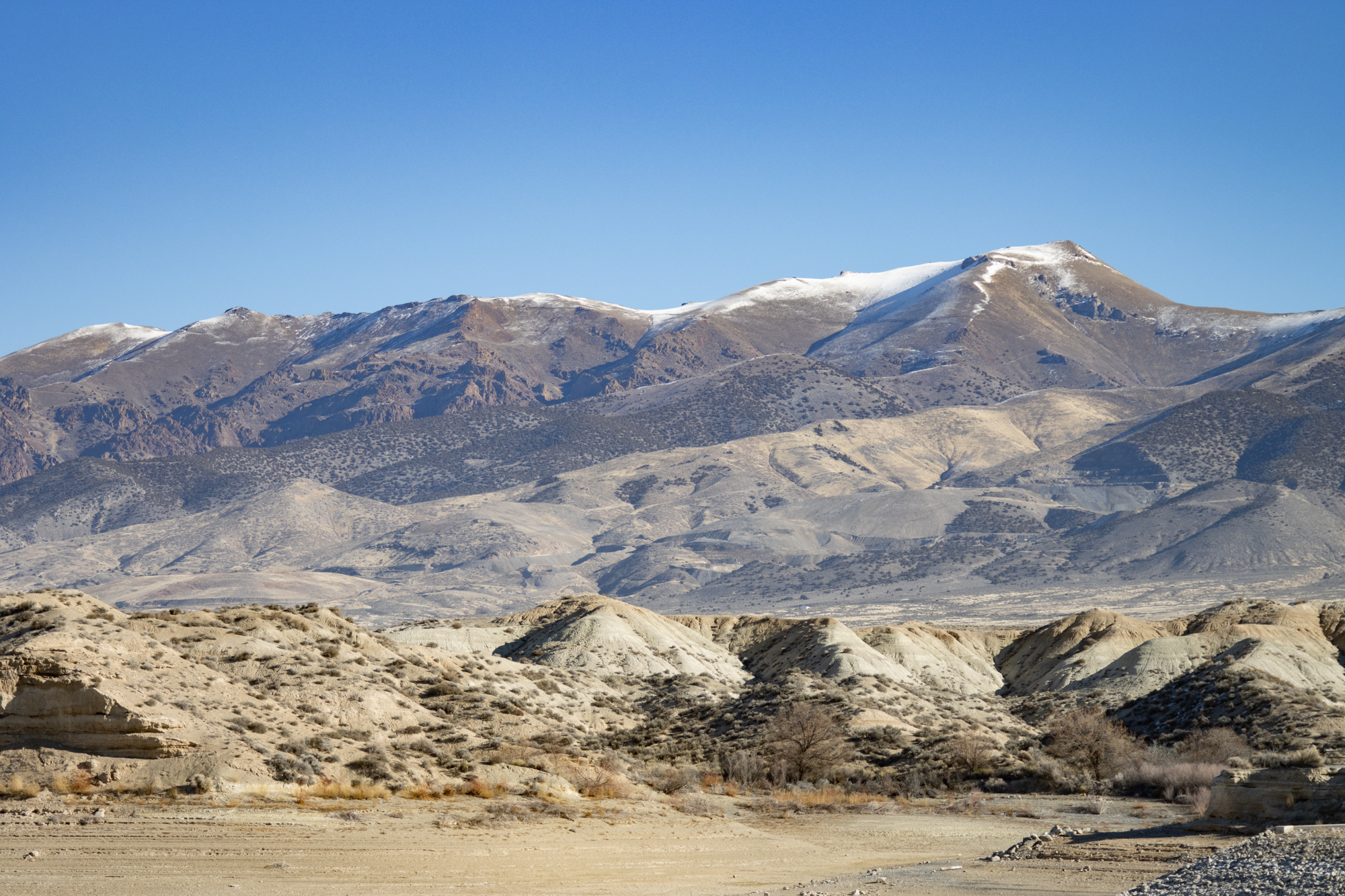
Temperatures across Nevada averaged 6 degrees above usual in November, as I wrote the other day. Some days, temperatures were 10 degrees over normal.
And as we rolled into and through the holiday season, I read social media posts from gardeners who were befuddled, and excited, about flowers blooming well out of season. While skiing near Lake Tahoe, people on the chairlift commented on the beautiful weather as the lift transported them over rocky terrain usually buried under snow.
I agree the mild conditions are pleasant — I'd rather walk around in a sweater than bundled up in layers, I'm enjoying not shoveling "Sierra cement" (our notoriously dense and wet snow) out of the driveway and the energy bill for our old, not-as-efficient-as-it-could-be house is lower than it has been over the past couple winters.
While Nevada is renowned for its lack of precipitation, there's a hidden cost behind the seemingly endless streak of mild days and clear blue skies we're in the midst of that's preventing me from fully enjoying the weather.
Last year, I wrote how low water levels and declining aquifers led to conflict between farmers and conservationists in rural Nevada.
In Southern Nevada, wildlife officials had to haul water into parched areas to assist wildlife unable to escape the dry conditions.
And wildfires are burning longer, bigger and closer to residential areas.
These issues have measurable and immediate costs, as I wrote earlier this month, with thousands of Nevadans, and the state's largest electric utility, struggling to find wildfire insurance.
In 2022, 264 Nevada homeowners, primarily in wildfire-prone areas such as around Lake Tahoe or Elko, had their policies canceled because of threats from wildfire and another 2,400-plus applicants were declined because of the risk. The following year, 481 homeowner policies were canceled and nearly 5,000 applications were declined.
To combat this, lawmakers last year passed legislation allowing insurance companies to carve wildfire coverage from their plans and offer it under a separate, second policy, hoping to spur companies to continue doing business in Nevada. But, some opponents say, the move could drive insurance costs up for Nevadans.
Also last year, NV Energy reported it was struggling to find ways to increase its level of commercial insurance and asked state energy regulators to let the utility establish a self-funded wildfire insurance plan. The company asked to tack on additional customer charges totaling $500 million over a decade to create a reserve fund in case of a catastrophic wildfire sparked by the utility's infrastructure.
While the charges would be small — a few dollars a month in the north and less than a dollar a month in the south — they are additional costs some customers would struggle to pay as prices and bills continue to rise. (State energy regulators agree the utility needs to increase its coverage, although they haven't confirmed yet if the company will be able to pass that cost on to customers.)
So while the clear blue skies and warm afternoons are great for puttering in the garden or heading out for a hike, I can't help but be a little on edge. It's been nearly a month since our last measurable rain or snowfall, and for each day of warm, dry weather now, Nevadans are robbing Peter to pay Paul — and at some point, we will have to pay up.

In the weeds:
Happy anniversary, Great Basin! — Great Basin National Park is celebrating its 40th anniversary with a monthly virtual speaker series. Learn how packrat nests provide insight into the park's climate history, a diverse alliance of rural Nevadans won a battle in the water wars of the West and more through the series.
"Toadally" messy situation — The Center for Biological Diversity (CBD) and the Fallon Paiute-Shoshone Tribe are pushing back against a lawsuit filed by the geothermal company Ormat seeking to remove the Dixie Valley toad from federal Endangered Species Act protections. The two groups are seeking permission from a federal judge to be able to join the U.S. Fish and Wildlife Service in defending the toads against Ormat's lawsuit.
Dixie Valley toads live in a single hot spring-fed wetland of just a few hundred acres in Churchill County. Independent scientists commissioned by the wildlife agency agreed the geothermal project could cause the toads to go extinct; they were protected under the Endangered Species Act in 2022.
Friend and foe — CBD is also suing the U.S. Fish and Wildlife Service to protect the Amargosa toad and the Oasis Valley speckled dace (a type of fish), whose aquatic habitats could be depleted by groundwater pumping for nearby gold mines, according to the center.
The Amargosa toad and the Oasis Valley speckled dace only live in a small number of springs along the Amargosa River near Beatty, where AngloGold Ashanti, one of the world's largest gold mining companies, has multiple projects under permitting or exploration.
Members of the center have been working to protect the toad since 1994. In 2025, the service found that protections for the fish and toad may be warranted but failed to act within the one-year deadline.
Preventing a silent killer — In recognition of National Radon Action Month, UNR's Nevada Radon Education Program is offering free, short-term radon test kits through Feb. 28 at locations throughout the state. Radon is a naturally occurring, radioactive gas that comes from the ground, accumulates in homes and other buildings, and raises the risk of lung cancer. It is prevalent across Nevada. More Americans die each year from radon-caused lung cancer than secondhand smoke.

Here's what else I'm reading (and listening to) this month:
Don't like President Donald Trump's face on your 2026 national park pass? Putting a sticker over it could invalidate it, SFGate reports.
The Trump administration says it will "review" the nation's wildlife refuges and fish hatcheries for those that no longer align with federal goals. More from The Hill.
POLITICO Pro writes that the Bureau of Land Management has approved a massive power line, once planned to carry renewable energy and now touted as a necessary upgrade for an overstressed regional power grid, between Utah and east central Nevada.
From the Las Vegas Review-Journal: A new lawsuit claims a ban on "useless grass" has killed 100,000 trees in Southern Nevada.
Also from the Review-Journal: Data center owner Switch buys 176 acres in North Las Vegas
Grist dives into federal efforts to keep the coal industry up and running, asking the question, "How long can it last?"
A Colorado River court showdown could cost taxpayers millions. The Review-Journal ponders whether Nevada is prepared.
A closer look:

If it's overcast, can you still see your (rain) shadow?
Support Independent Elections Coverage and Journalism in Nevada
You’ve enjoyed unlimited access to our reporting because we’re committed to providing independent, accessible journalism for all Nevadans.
But sustaining this work — informing communities, holding leaders accountable, and strengthening civic life — depends on readers like you.
Nevada needs strong, independent journalism. Will you join us?
A gift of any amount helps keep our reporting free and accessible to everyone across our state and funds our elections coverage.
Choose an amount or learn more about membership