
License plate reader cameras abound in Nevada. The state has no laws to regulate them.


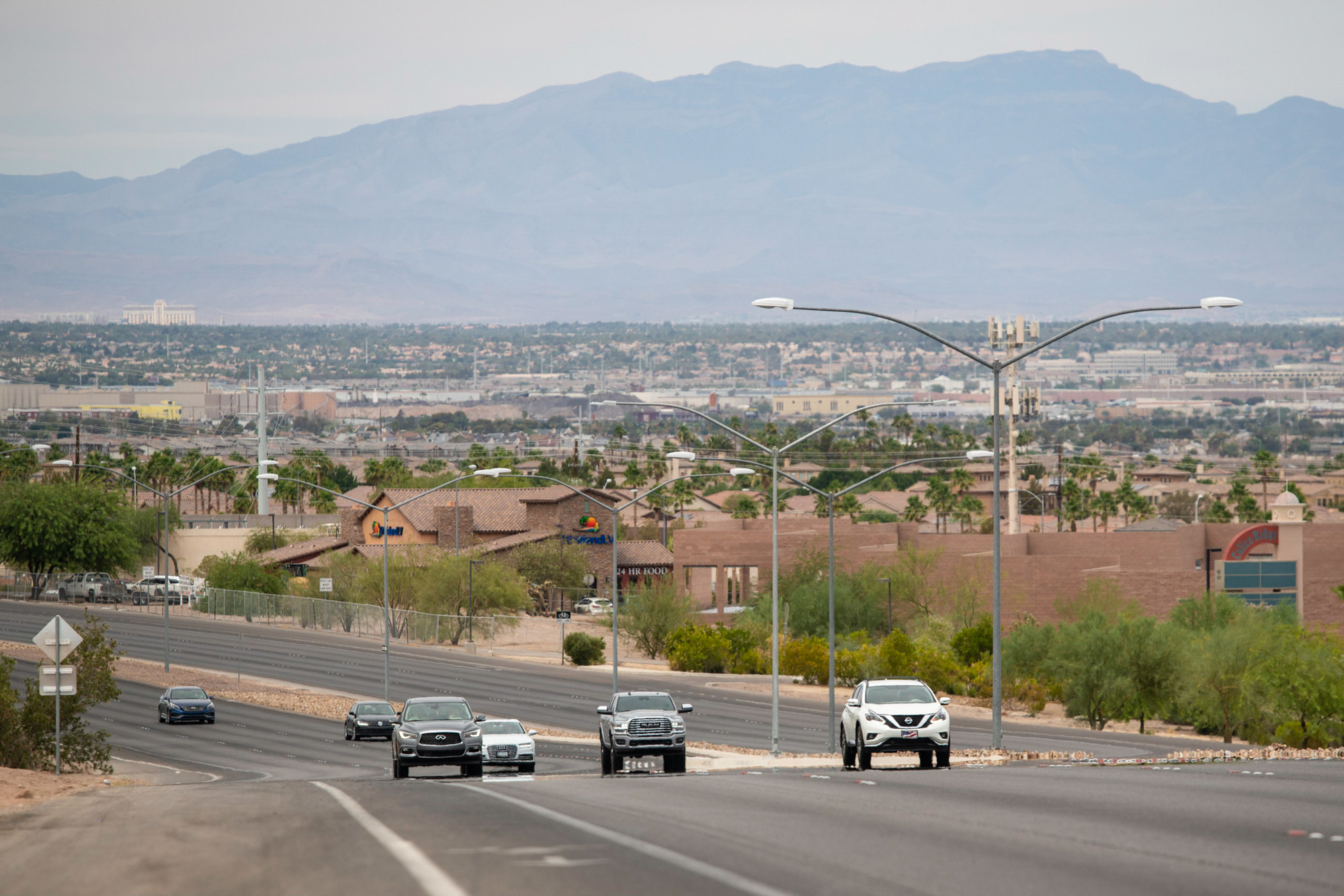
At least five cities and counties in the state — including Clark County, Reno and Sparks — have penned agreements with an automated license plate reader company called Flock Safety in the past three years.
It's brought in a new wave of cameras that collect data such as license plate information and the make and model of passing cars, then plugs that information into a national database police can use to search the location of specific vehicles, even beyond their own jurisdictions. In Clark County, there are at least 200 of these cameras, and in Washoe, there are at least 180, according to publicly available data from police departments.
But as networks of cameras blanket the state, little has been done by state lawmakers to address mounting privacy concerns, especially as the Flock network allows for the tracking of a vehicle's location virtually in real time. Policymakers told The Indy that it's been difficult to keep up with the pace of the technology and it's unclear just how ubiquitous the devices are. Information on where the cameras are located is not publicly available, and some jurisdictions, such as Las Vegas Metropolitan Police Department (LVMPD), entered into the agreements without public discussion.
Only 16 states nationwide have implemented legislation addressing the use of such cameras, with five explicitly prohibiting their use by anyone other than law enforcement.
Nevada is not among them, and a search of legislation doesn't turn up any bills discussing the issue in 2025.
"It's a challenge," said Assm. Selena Torres-Fossett (D-Las Vegas), who has worked on legislation on other types of automated camera systems. "It's hard for lawmakers to legislate what doesn't currently exist."
Regulating technology
The ever-changing nature of the technology field — Flock, founded in 2017, only came to Las Vegas in 2023 — has been a struggle for lawmakers across the country, on both the local and national level. However, residents and lawmakers agree something needs to be done.
Torres-Fossett, who pushed for a bill that would have authorized the use of automated traffic enforcement cameras, such as red light cameras, this past legislative session, said there have been several conversations among lawmakers to address rising privacy concerns from the technology.
She said she was particularly concerned about Flock cameras being used for immigration enforcement reasons or about the potential of data being sold to third parties, adding that to her knowledge, no state policies prohibit such use. Although current state law prohibits the government from using photographic or digital equipment to gather evidence to issue a civil or traffic citation, it provides limited exceptions for law enforcement.
"I don't want law enforcement to be able to access my data without my consent," Torres-Fossett told The Nevada Independent in an interview. "It's very Big Brother."
Assm. Skip Daly (D-Reno) — a vocal critic of the state's use of AI — said he wasn't sure if he would introduce a bill on the topic, but added he was incredibly concerned about the technology and is interested in protecting the data of Nevada residents from being shared and sold by tech companies. Right now, he said, residents don't realize how invasive and ubiquitous the technology is.
In 2025, for example, the Washoe County Sheriff's Office purchased 120 cameras for deployment in "high-crime areas," integrating not only Flock cameras but county-owned park cameras and cameras operated by "other partners." In a public meeting, the sheriff's office said they hope the cameras will help lower burglary rates but they "don't want to intrude on the private affairs of people."
Despite concerns, police jurisdictions have touted cameras as a tool to enhance public safety. Sparks Police Chief Chris Crawforth said that a recent expansion of the city's Flock will help them identify suspects in a "much more timely fashion so we can bring those people to justice" and that they are focusing on the vehicle, not the person. A spokesperson for Las Vegas police told KSNV News 3 that the technology was a "wonderful investigative tool."
And it's not just Flock. Jurisdictions have also struck deals with other automated license plate reader companies, such as a little-known company called Vigilant Solutions. In 2018 alone, Sparks police scanned 420,506 license plates using that technology, according to data from a public records request. Sparks police did not immediately respond whether that agreement was still active.
"Some people will say 'Oh it's great, anything to help law enforcement because I'm never going to do anything wrong,'" Daly said. "Sooner or later, people will wake up to it."
Either way, Daly said a reckoning is on the horizon.
"I do believe there is a clash coming with privacy rights over all this," Daly said. "How exactly that gets done, where the line is, I'm sure will be a source of a lot of income for lobbyists."
Public frustration
Though the technology is relatively new, some experts in Nevada have been sounding the alarm on Flock and other technology issues for years. Dave Maass, director of investigations for Electronic Frontier Foundation and instructor at UNR, said he's been frustrated by the lack of guardrails in the state.
"Nevada in particular, they've been bad on fighting stuff," Maass said, adding that Nevada's 2019 effort to protect data privacy was "a joke" among those concerned with protections against tech. That bill, sponsored by Sen. Nicole Cannizzaro (D-Las Vegas) and signed into law by Gov. Steve Sisolak (D), requires owners of certain websites to create a portal where consumers can submit a request for them not to sell their information.
"They watered it down to such an extent that it really applies to nobody," he said.
Brandon Bunce, a Las Vegas resident and an IT professional who started speaking regularly at Clark County Commission meetings this year to protest the Flock cameras, said it was "impossible" to keep up with the technology.
Though he's been appealing to local leaders, Bunce said he would love to see any legislation from the state on the issue to limit or stop private companies such as Flock from storing and sharing data on citizens.
"I'm absolutely frustrated," Bunce said of the lack of legislation in the state. "I think it's a classic case of tech accelerating ahead of governance."
Surveillance technology goes just beyond automated license plate reader technology. In late 2025, the Sparks Police Department unveiled a new program that lets residents register their at-home camera systems and allow police to tap into the feed in case of an emergency. The City of Reno has a similar program in place with more than 700 cameras registered.
Does Flock work with Nevada's libertarian streak?
Maass said Flock's implementation was at odds with what he knew of Nevada, a state with a healthy skepticism of government.
"My sense of people in Nevada is that they're very skeptical of the government and they value their freedom and liberty," Maass said. "I think license plate readers — on a very philosophical and fundamental level — really harm that."
Other states have taken steps to protect citizens against Flock overreach. In February, the New Mexico Legislature passed a bill curtailing police agencies' ability to share the data with out-of-state, third-party agencies unless they are able to confirm it will not be used for federal law enforcement purposes, for prosecuting medical procedures that are legal in New Mexico, such as abortion, or for infringing on civil liberties. The bill will take effect this summer.
Another idea on curbing Flock overreach is requiring officers to search its database using valid case numbers — LVMPD officers typically only document a reason for each search, sometimes writing only "investigation" in their logs. In January, Arizona came close to enacting SB1111, which would require regular reviews of searches and mandatory training and access controls for people authorized to search license plate technology systems such as Flock.
Bunce, a former libertarian Republican who now identifies as an independent, said the issue was key in his decision to shift more to the center of the political spectrum. A native Nevadan raised in a conservative household, he said he was confused with conservatives' hesitation on speaking out about Flock and other surveillance technologies.
"I've only been able to get through to people on the left, which is super weird to me because I thought the right would be against this sort of thing," Bunce said. "It's not a left versus right thing. This is a company making billions off of our data."
Bunce said legislators don't understand that the data farmed from companies like Flock is "digital gold" to investors.
"It's Nevada's next gold rush," Bunce said. "It's a completely unregulated gold rush at our expense."
Support Independent Elections Coverage and Journalism in Nevada
You’ve enjoyed unlimited access to our reporting because we’re committed to providing independent, accessible journalism for all Nevadans.
But sustaining this work — informing communities, holding leaders accountable, and strengthening civic life — depends on readers like you.
Nevada needs strong, independent journalism. Will you join us?
A gift of any amount helps keep our reporting free and accessible to everyone across our state and funds our elections coverage.
Choose an amount or learn more about membership