
Mark Amodei has one last chance to pass a legacy-defining lands bill. Can he do it?


With retirement just months away, Rep. Mark Amodei (R-NV) spends breakfast, lunch and dinner focused on one bill.
"Every morning when we get up, we're working on this," he said in an interview with The Nevada Independent. "When we're having lunch, we're working on this, at dinner you're working on this, and before you go to bed at night, you're figuring out what you're going to do the next morning on this."
He has been working on his Northern Nevada lands package for a decade. This year, it could become his crowning achievement and bring significant changes back home.
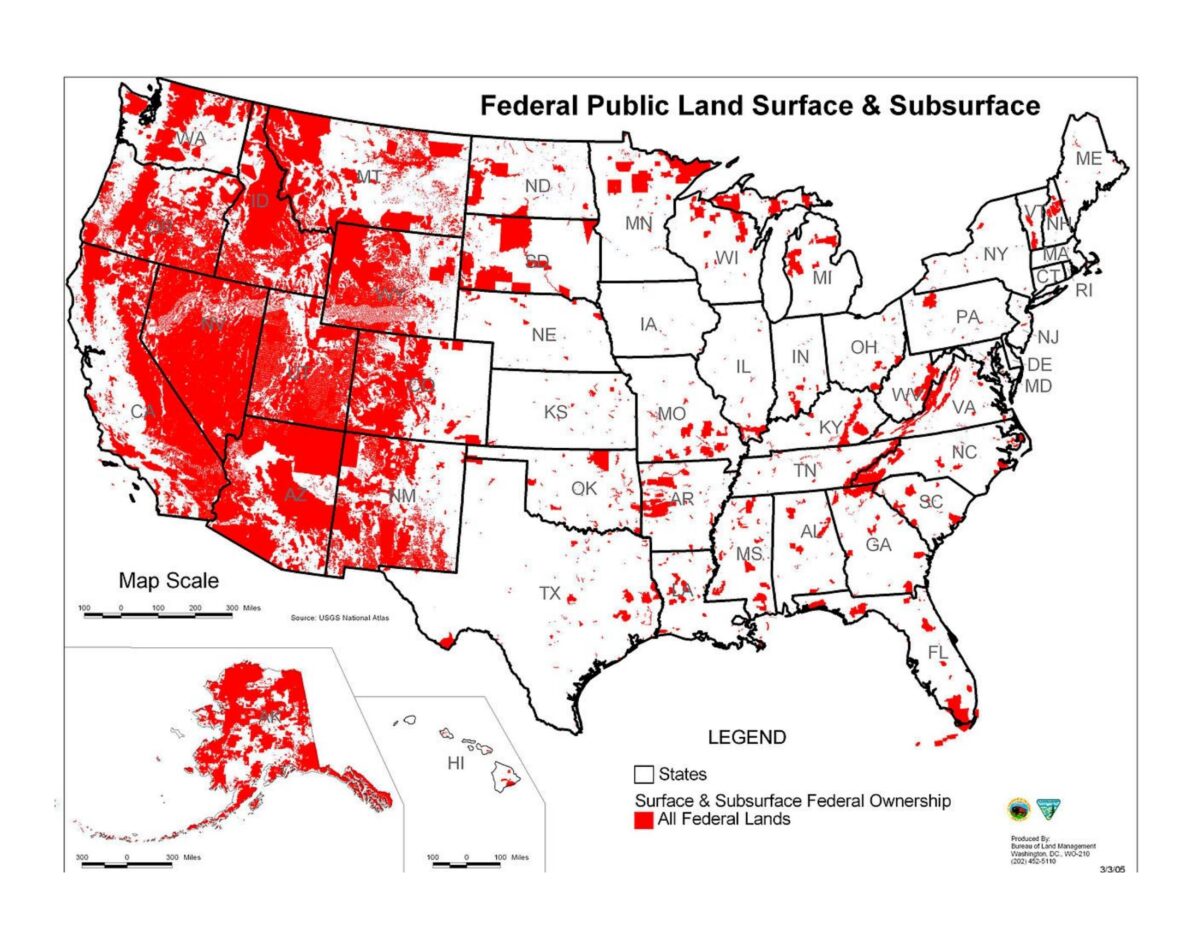
Nevada has the highest percentage of federal land of any state in the country, meaning its growth has been dependent on what happens in Washington. In 1998, Congress passed the Southern Nevada Public Land Management Act (SNPLMA), which ushered in a boom for Las Vegas. The late Senate Majority Leader Harry Reid (D-NV) passed several other lands bills through 2006 designating thousands of acres for development and thousands more for wilderness.
After a nearly two-decade break, Congress passed its last major Nevada lands bill in 2022, opening up development for the Fallon Range Training Complex, but introducing other problems. Congress hasn't passed another big Nevada lands bill since then.
With a Republican president, a Republican majority and a fire under him thanks to his impending retirement, Amodei could change that. His Northern Nevada Economic Development and Conservation Act would address a myriad of development issues throughout Northern Nevada and preserve land for wilderness.
In Nevada, the effort has a wide array of supporters, including the affected counties, the Washoe Tribe of Nevada and California, Friends of Nevada Wilderness, The Coalition for Nevada's Wildlife and Gov. Joe Lombardo (R). Sens. Catherine Cortez Masto (D-NV) and Jacky Rosen (D-NV) have introduced bills very similar to Amodei's proposals for Douglas and Pershing counties. But Amodei is walking a tightrope in trying to win over Republicans and Democrats.
"I think this is a really good opportunity in a Congress that's pretty dysfunctional," said Friends of Nevada Wilderness Executive Director Shaaron Netherton, who has worked closely on the bill for years and supports Amodei's effort. "It's a bit of a Hail Mary. Who knows what will happen after the midterms. … If the entire delegation of a state wanted something, they used to not fight that. But now everything's being fought ideologically."
He's faced additional challenges after his surprise attempt last year to sell off public lands to replace lost tax revenue during budget reconciliation — which enraged the rest of the Nevada delegation and spooked even some Republicans.
Amodei has suggested he put forward that controversial 2025 plan because Republican leaders wanted it. At the time, he said it helped him build goodwill among GOP leaders and win assurances that his Northern Nevada lands bill would be prioritized in committee.
"Of course, when they come to you and say, 'Well, it's in Nevada, will you carry it?'" It's like, 'Well, who else is going to carry it?'" Amodei told The Nevada Independent this month.
During the committee markup for his Northern Nevada bill in July, he assured lawmakers that this legislation is different.
"I want to allay any fears," he said. "We took up a Nevada lands bill during reconciliation. This is not that bill. This is a bill that is strictly in Northern Nevada, has been in process, actually was passed out of the House in the 115th session for the vast majority of it … if you want to give your communities in your district the ability to grow responsibly, you have to come to the Congress to get some land freed up."
How would the bill help Nevadans?
This bill is Amodei's top priority because he said it's needed to help Nevada grow and address some of the affordability concerns Americans are facing.
The most significant section of the bill centers on Pershing County, where it would resolve the problem of "checkerboarded" lands left behind by the construction of the Transcontinental Railroad. More than 100 years ago, the federal government granted railroad companies alternating square miles alongside the tracks, which they could sell to finance construction. But now, that pattern makes public land difficult to access and manage.
Allen Freemyer, who represents mining interests that want to purchase land under Amodei's bill, said Reid started trying to resolve the issue, "which has left the county in a very untenable position of really no development."
"Really it was Senator Reid's staff doing a sort of town hall meeting in Pershing County, looking for solutions," Freemyer said. "I think the bill has become much more focused on what is doable, what lands are most important for conservation, what lands their highest and best use is mining or development, and so that's become clearer over time."
He said the lands in question aren't particularly prized.
"When they built the railroad, they picked the flattest, driest place they could find," Freemyer said. "These are just not high-value lands for conservation or grazing or much of anything."
Netherton agreed.
"The railroad had been trying to sell those alternate checkerboard sections for 150 years, and what hasn't sold probably isn't really going to," she said. "If you can consolidate those parcels, block up some of the private land with the public land for wildlife habitat, things like that, it's a good deal."
Amodei explained his proposed resolution like this: "The federal government's still going to own the same number of acreage after it's blocked up, as is private. It's just going to be in blobs instead of a checkerboard."
The next-largest footprint of the bill would be in Douglas County. Netherton said those portions of the bill are also two decades in the making. The key provision would provide land to the county to help with flood control — flash floods over the past decade have damaged homes, deposited debris on private property and cost tens of millions in taxpayer dollars. The bill would also give the county land for public parks and convey significant cultural sites to the Washoe tribe.
"We feel that you know what Douglas County is asking for in that bill makes sense, seems logical," Netherton said. "They're not looking for a lot of development at all."

"We need a conservation element"
Getting the bill through the House Natural Resources Committee, which Amodei said has a "pretty partisan" culture, has not been easy. In November 2024, the bill made it through committee — with all the wilderness provisions struck out, eliminating any hope of Democratic support.
"Harry Reid always used to say, 'Hey, we need a conservation element,'" Amodei said. "And you know what? Providing a conservation element in all the stuff that I've been involved with over the last almost 15 years has not been a hard thing to do."
That December, Amodei got a special exception that allowed him to join the committee.
"That request was granted just so I could be closer to it in terms of shepherding it," he said.
This year, he's been focused on getting Republicans on board with the bill's wilderness provisions, including House Natural Resources Chair Bruce Westerman (R-AR) and Federal Lands Subcommittee Chairman Tom Tiffany (R-WI).
"There were people on the committee not from Nevada, not neighboring Nevada even, [saying] 'We can't have any wilderness,'" Amodei said.
He softened their view with a clearer communication strategy, help from leadership and a 1:1 ratio between conservation and land unlocked for development.
In committee, Westerman acknowledged Amodei's years of work on the bill and reaffirmed the ways it would boost development and job opportunities for local communities.
"While I will be voting to advance this bill out of committee today, I do remain concerned with the inclusion of restrictive land designations, including a significant amount of new wilderness," Westerman said. "Representative Amodei and I have talked about this, but he has worked very closely with his local officials back home."
Amodei said Democrats would have been happy to let the bill pass through the committee by voice vote. But Republican leadership insisted on a roll call. They wanted to know that the GOP members of the committee were on board, and they were. Now, Amodei said he has a commitment from leadership to get it on the House floor.

A favor from across the aisle
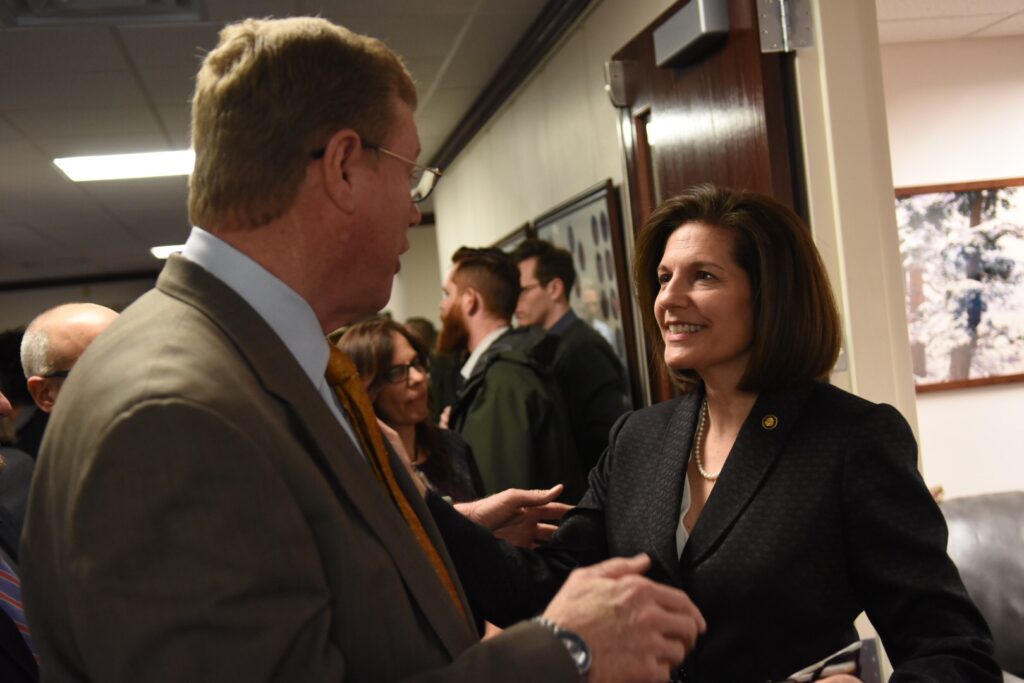
A month ago, Amodei spoke with Cortez Masto to make sure they were on the same page about the bill. He also asked for a favor. He hadn't been able to talk directly with Rep. Jared Huffman (D-CA), the ranking member on the House Natural Resources Committee, about the bill. Would she reach out?
Since then, Amodei has connected with Huffman. The Democrat voted against the bill in committee, saying that public lands deals should get thorough scrutiny.
"This is an impressive and comprehensive bill that reflects years of engagement, negotiation, compromise," Huffman said during the markup. "We'd love to be able to make that happen, but we have to do it right."
Others have also expressed concern. Patrick Donnelly, the Great Basin director at the Center for Biological Diversity, opposes the general approach of the traditional Nevada lands bills.
"Designating some wilderness doesn't make up for the harms of selling off public lands for sprawl, selling off public lands to mining companies," he said. "The environmental community became extremely divided about the lands bills. That's been going on for 25 years and continues to this day."
He said the government could pursue alternative solutions on the cost of housing, such as mandating all new construction be affordable. He's also concerned that Amodei's bill would allow mining companies to purchase the land they operate on and potentially dodge the environmental review they've been subject to on federal parcels.
Such worries, as well as confusion about last year's sell-off proposal, could dampen Democratic support. Even among the Nevada delegation, there's some hesitation. A spokesperson for Rep. Dina Titus (D-NV) said she was still evaluating the bill and withholding judgment.
Lawmakers from elsewhere will be even harder to win over.
"Members of Congress who are not from these types of places in the West have a really difficult time understanding the inextricable relationship between these small rural counties and federal land ownership," said Freemyer, the mining lobbyist. "There's a lot of members of Congress who simply believe that all federal land is sacred, and the types of things that people are trying to do in the West are somehow damaging the American public, and that's just not the case."
Getting it done
Negotiations are ongoing, but Amodei said he thinks the bill will make it to the House floor in September. He hopes to get enough support to pass the House with the fewest procedural hurdles possible, which would mean fast-tracking under suspension of the rules and getting it passed by a voice vote.
If it reaches the other side of the Capitol, Amodei said he hopes the work he's done coordinating with the state's U.S. senators will put the bill in a "position to go through the Senate fairly quickly."
It seems like a promising prospect. In a statement to The Nevada Independent, Rosen praised Amodei "as a member of the majority in the House of Representatives" who has been a "critical partner in our shared priority to pass lands bills that will benefit Nevadans. We've been able to work together on these bills for years by putting aside partisanship and putting Nevada first."
Senate Republicans could be the ones who gum it up, especially during elections season. Sen. Mike Lee (R-UT), the chair of the Senate Committee on Energy and Natural Resources, has tried repeatedly to strip conservation measures from other bills.
"Mike Lee doesn't want to see wilderness at all," said Donnelly. "So this whole grand bargain in Nevada of trading wilderness for sprawl doesn't fly in a far-right-wing Congress like we have right now."
Similarly, in late 2024, Rosen went to the Senate floor to try to pass her Washoe County lands bill by unanimous consent. Sen. John Barrasso (R-WY), the majority whip and chair of Senate Energy and Natural Resources' subcommittee on lands, objected.
"Congress should not enact another special deal for Nevada when other Western states are seeking similar legislation," he said then.
Spokespeople for the two Republican senators did not respond to The Nevada Independent's requests for comment.
But a lawmaker who's passionate about getting something done on a deadline can have a lot of sway. Amodei won over GOP hardliners on the House side and thinks his good relationships can help him do the same in the Senate. And if key Senate Republicans want to achieve their own legislative priorities this year — and House Republican leadership is willing to invest political capital in Amodei's bill — that will increase his chances further.
"We'll be talking with Chairman Lee over there and Barrasso and some of the folks that we've worked with before," Amodei said this month.
Does he have support from the Trump administration?
"We expect the full support of the Department of Interior," Amodei said. "These guys are running around saying, 'Yeah, we got to do something about affordable housing.' … Well, you can't do anything about affordable housing if it's in federal ownership."
Asked about the bill's chances, he effused about the commitments he's gotten from House Republican leadership, though he didn't make firm predictions.
"If you'd have told me a year ago that I'd be talking with you in August about it, and it hasn't been on the floor yet, I'd have been saying things like, 'Absolutely not,'" Amodei said. "I don't know that we got lemons in terms of the calendar, but we're working real hard on our lemonade recipe."

"He talks about this incessantly at crazy times of night"
Amodei has no suspicions that he'll grow restless when he retires next year. He told The Nevada Independent he's "ready to go back to being a full-time Nevada guy and working on my yard and some trucks and keeping the garage clean, just some normal kind of stuff."
But until then, he's all go-go-go, especially on this bill. Freemyer confirmed Amodei's dedication.
"He shows up at every meeting and he talks about this incessantly at crazy times of night," Freemyer said. "I'd be shocked if there was a member of Congress he has not talked to about this package."
The bill could open the door to other Nevada lands packages down the line — a reason the Democrats in Nevada's congressional delegation might invest political capital in it. Rep. Susie Lee (D-NV) was one of just a handful of Democrats who voted to move Amodei's bill through committee, and he is a co-sponsor of her Clark County lands bill.
"We're gonna try to put a bow around this one, so that we can move on to, you know, I think Nye County wants a lands bill," Amodei said. Later in the interview, he added, "I look forward to working with the Clark County folks to do what I can for them because they need to update SNPLMA, too."
Still, in a Republican Congress, there are limits to the number of wins Democrats can get on that front. Amodei knows it will take everything he has to pass his own bill before he retires.
"Until the thing's passed and signed, you're taking nothing for granted," Amodei said. "Instead of picking out my room at the rest home, we're going to be out there on the street paving and putting in curb and gutter and still working hard to get this thing wrapped up."
Support Independent Elections Coverage and Journalism in Nevada
You’ve enjoyed unlimited access to our reporting because we’re committed to providing independent, accessible journalism for all Nevadans.
But sustaining this work — informing communities, holding leaders accountable, and strengthening civic life — depends on readers like you.
Nevada needs strong, independent journalism. Will you join us?
A gift of any amount helps keep our reporting free and accessible to everyone across our state and funds our elections coverage.
Choose an amount or learn more about membership