
Nevada lithium mines forge ahead despite inflation, policy and legal headwinds

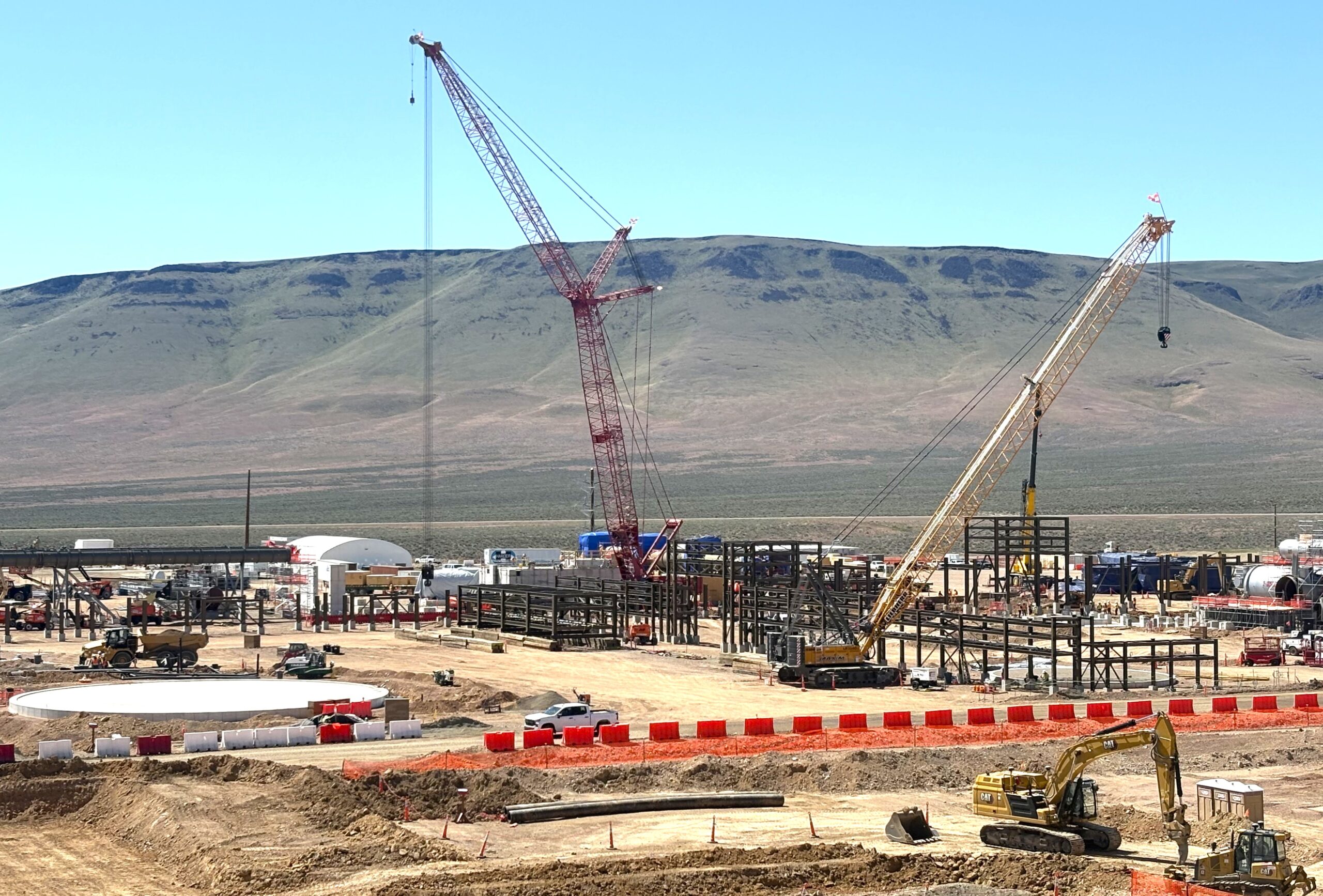
OROVADA — Deep in the heart of the remote Montana and Double H mountains near Nevada's border with Oregon, towering cranes stand sentry.
They hoist steel beams high into the air as they position them atop incomplete, multistoried structures that already dwarf much of the surrounding landscape.
Pickup trucks and commercial buses shuttling workers across the site kick up road dust as they weave between storage containers the size of football fields, heavy earth-moving equipment beeping and rumbling in the distance. The bustle of development stands in stark juxtaposition to the quiet, undeveloped desert landscape surrounding it.
This is Thacker Pass, a lithium mine and processing plant being built atop one of North America's largest deposits of the mineral that, when it starts production late next year, will include one of the nation's few battery-grade processing facilities.
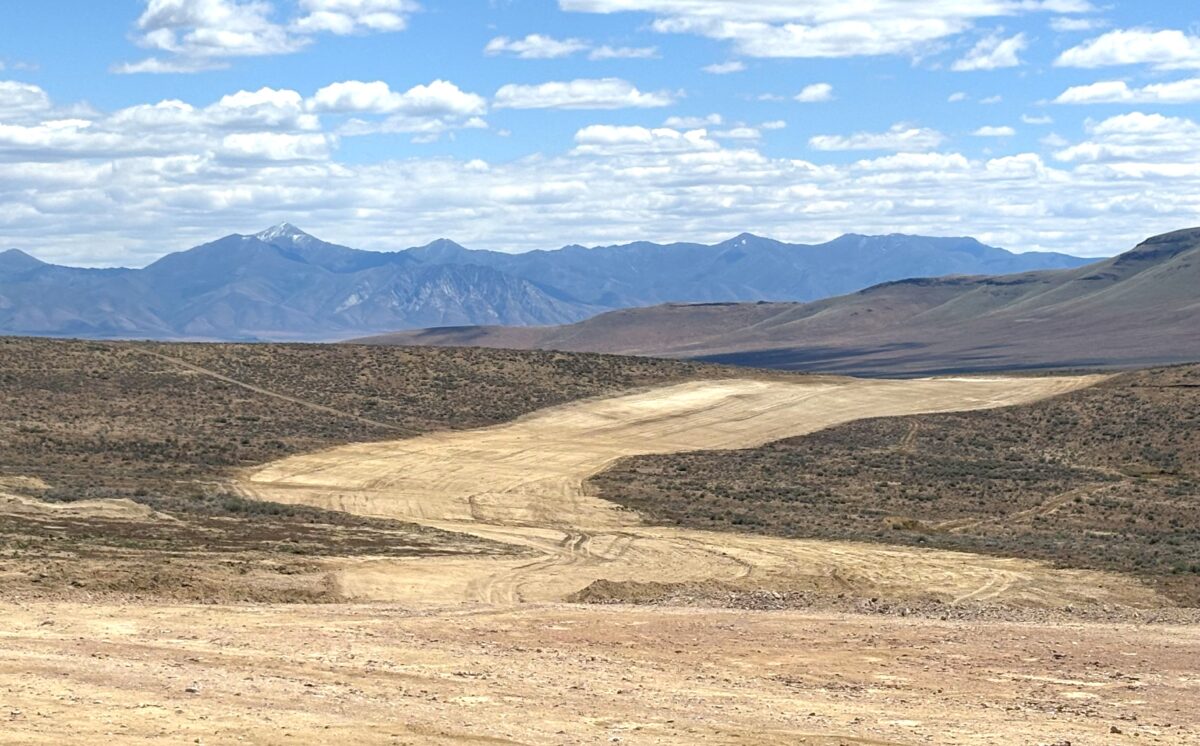
Hundreds of miles to the south, in the even more remote Silver Peak Range of central Nevada, earthwork has yet to start at Rhyolite Ridge, a proposed lithium and boron mine.
The company faced a roadblock when its funding partner backed out last year, but in a call with The Indy, Chad Yeftich, Ioneer's vice president for corporate development and external affairs, said the company expects to announce a new funding partner by the end of the month.
Yeftich indicated Rhyolite Ridge should be in production by the end of the decade, adding to Nevada's swelling lithium exports.
Combined, the two mines should produce about 10 times as much lithium as is currently produced in the country's only operating lithium mine, Abermarle's Silver Peak in central Nevada.
The U.S. currently relies on outside countries for lithium. China processes about 70 percent of the world's supply.
The federal government has touted the need for increased domestic production of critical minerals as vital to national and economic security, but President Donald Trump's administration has at the same time made moves to hamstring portions of the industry. And strings of lawsuits against both mines combined with increased costs from international tariffs and funding issues — Trump threatened to pull back a previously approved federal loan for Thacker Pass — have added to the uncertainty.
Now, despite the government's pro-mining rhetoric — it has touted the U.S. is on its way to becoming "a mineral powerhouse" — moves such as laying off government employees that work at permitting agencies are hampering the industry, according to Simon Jowitt, Nevada state geologist and director of the Nevada Bureau of Mines and Geology.
"They're trying, but I don't know if they understand what [the industry] needs to move the needle in a positive direction," Jowitt said. "There are overarching things that will dictate whether industry is interested in a particular mineral deposit … that are somewhat independent of what the federal government does."
'An armored vest without boron is just a dinner jacket'
Thacker Pass is a small mine by Nevada standards, mine manager Ben Gunn said as he bumped along in his pickup truck, pausing to watch as two chukar, a popular game bird, skittered through the sagebrush. The mine will move tens of thousands of metric tons of earth each day — a fraction of what moves daily at some of the state's larger mines.
But it will also be one of the nation's few battery-grade lithium processors capable of producing the type of lithium required for electric vehicle (EV) batteries.
Lithium ion batteries need more than just lithium — they need graphite, cobalt, iron phosphate and a host of other minerals that aren't coming from the U.S.
"There's a danger the U.S. is putting all its eggs in one basket, and that basket isn't complete," Jowitt said. "This is one thing that frustrates me when people talk about the Nevada lithium loop. We have loads of it. But lithium isn't the only thing you need to make a lithium battery."
Albemarle's Silver Peak produces lithium for the U.S. Navy, NASA and industrial uses including building products.
Ioneer, the company behind boron-producing Rhyolite Ridge, is banking on the federal government's claimed interest in increasing domestic critical mineral production.
In November, the United States Geological Survey added boron to its critical mineral list, a recognition that signifies "the importance of boron to defense and military applications," Yeftich said.
Rhyolite Ridge's combination of boron and lithium deposits are what make it attractive, according to the project's developers. Through its lifespan, Rhyolite Ridge is expected to produce around 135,500 metric tons of boron annually as compared to its 24,500 metric tons of lithium annually.
"The focus on boron has intensified with how geopolitics have trended," Yeftich said. "There is interest from our federal government for the boron that we need."
Boron is used in bulletproof vests and armor, as an anti-corrosive on weapons and on aircraft.
"An armored vest without boron is just a dinner jacket," Yeftich said.
Boron deposits are usually linked to volcanic activity and arid climates, and the United States and Turkey are the world's largest producers. But the United State's production from its only boron mine is waning — the Southern California mine's life is only expected to run until 2042.
That the nation only has one functioning boron mine could be why the mineral was added to the critical minerals list, Jowitt said.
"Part of the criticality assessment is if you have a single point of failure," he said.

A checkered history
At its inception, Thacker Pass was celebrated for the number of EVs — roughly 800,000 — that could be powered by the expected 40,000 metric tons of lithium slated for extraction each year.
The mine was originally permitted during Trump's first term in office, but prices for lithium tanked in late 2022 and early 2023 under his successor's administration, despite former President Joe Biden's clean-climate policies incentivizing EVs.
"That tells you there are global things at play that might override any policy decisions that may occur here in the U.S.," Jowitt said.
When Trump assumed office a second time, he not only quashed tax incentives for the rollout of EVs, he initiated roadblocks for Thacker Pass.
Late last year, the administration halted a $2.26 billion loan issued by the Biden administration to Lithium Americas, the company developing Thacker Pass, until the company agreed to divest of a 5 percent stake in the publicly traded company to the federal government, as well as 5 percent of the mine itself.
This year, tariffs and the conflict in Iran have added $120 million to Thacker Pass' already astronomical buildout costs — estimated capital expenditures are around $3 billion. More than 75 percent of the structural steel for the project is sourced from the United Arab Emirates. The Iran conflict and ensuing closure of the Strait of Hormuz forced the company to reroute shipments through Saudi Arabia's Port of Jeddah.
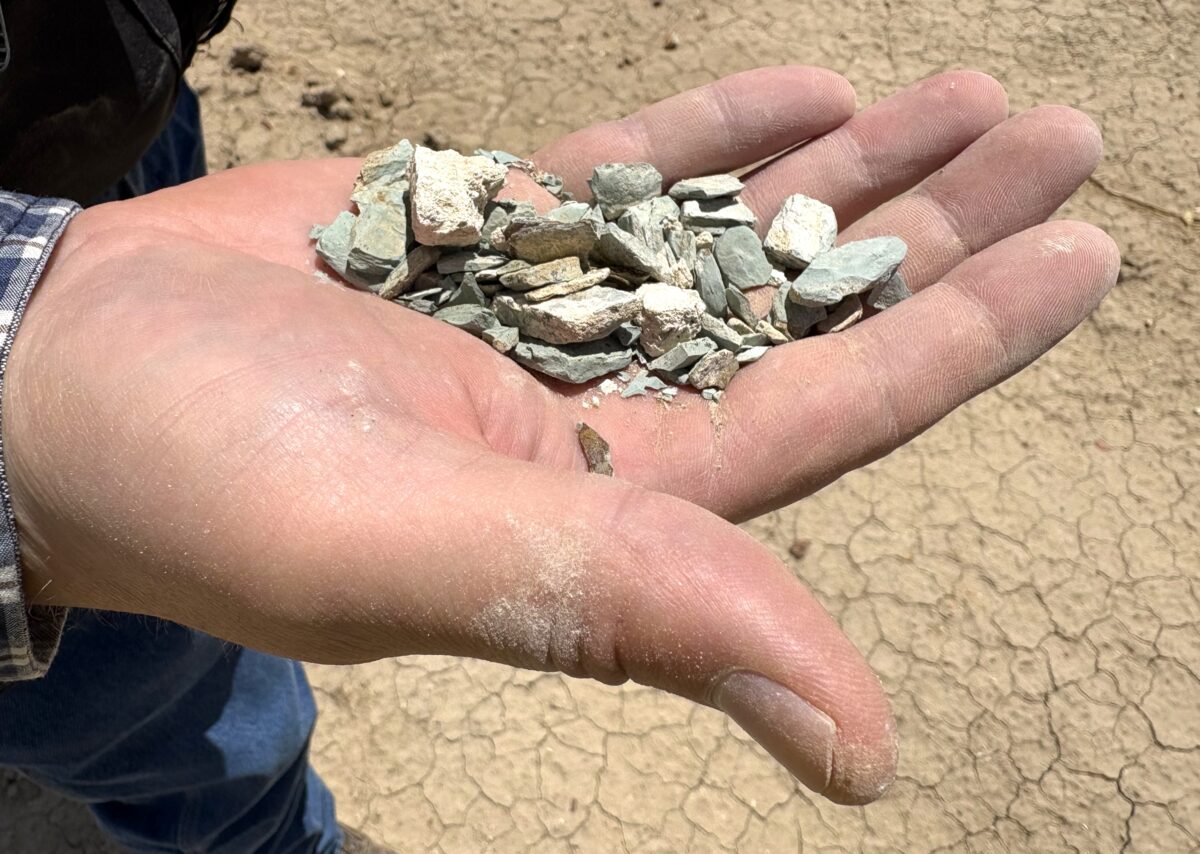
And production costs are likely to be substantially higher. Sulphur is needed to leach the lithium out of the clay soil. But sulphuric acid supply has dropped, and prices gone up, increasing production costs for products such as lithium.
Ioneer said that it won't have an estimate on how much the tariffs will affect its construction costs until later this year as the company gets closer to building.
'No one is asking for this'
Thacker Pass has faced a litany of lawsuits and obstacles. The mine is being built in an area where indigenous Americans say their ancestors were massacred. A local rancher sued the Lithium Americas over its water use, prompting the state engineer's office last year to issue a cease-and-desist order.
Resignation to the first phase of Thacker Pass has settled in among most protesters as progress on the project has ramped up, although calls to action are out to prevent up to four planned future phases. But Rhyolite Ridge is still battling conservation and indigenous groups concerned about the project's effects on the area.
The mine's 7,100 acres includes the habitat for Tiehm's buckwheat, a tiny perennial flower that grows nowhere else in the world and was designated as an endangered species in 2022, two years before the federal government gave Rhyolite Ridge the green light.
Ioneer has dedicated $2.5 million thus far to research and conservation efforts that include growing the flower in a greenhouse and replanting it around the mine. The company has identified roughly 50 acres to repopulate the flowers at two sites.
Initial science suggested the plants needed lithium and boron to grow, Yeftich said. Raising hundreds of them within a greenhouse debunked that, he said.
"It's experimental," he said.
Opponents of the mine liken the greenhouse experiment to killing off a species, putting the last few in a zoo and calling it a success story.
"The premise of putting Tiehm's buckwheat in a place it doesn't belong is inherently flawed," said Patrick Donnelly, Great Basin director at the Center for Biological Diversity. "There are reasons it doesn't live elsewhere."
The federal Endangered Species Act protects not just the buckwheat, but its habitat, Donnelly said.
"The whole thing is kind of an implicit recognition that this project will lead to extinction," he said. "In this case, extinction is a voluntary choice."
In April, the center, along with Western Shoshone Defense Project and Great Basin Resource Watch, appealed a federal court ruling upholding Rhyolite Ridge — a 2024 lawsuit had sought to halt the mine's development.
"My concerns are not about how they do this, it's that they'll do it at all. They're not technical, they're philosophical," Donnelly said. "No one is asking for this. We are the biggest advocates for Tiehm's buckwheat, and we are saying 'Don't do this.'"
Support Independent Journalism in Nevada
You’ve enjoyed unlimited access to our reporting because we’re committed to providing independent, accessible journalism for all Nevadans.
But sustaining this work — informing communities, holding leaders accountable, and strengthening civic life — depends on readers like you.
Nevada needs strong, independent journalism. Will you join us?
A gift of any amount helps keep our reporting free and accessible to everyone across our state.
Choose an amount or learn more about membership