
Nevada prisons blame overdoses on the mail. Skeptics question the state's research.

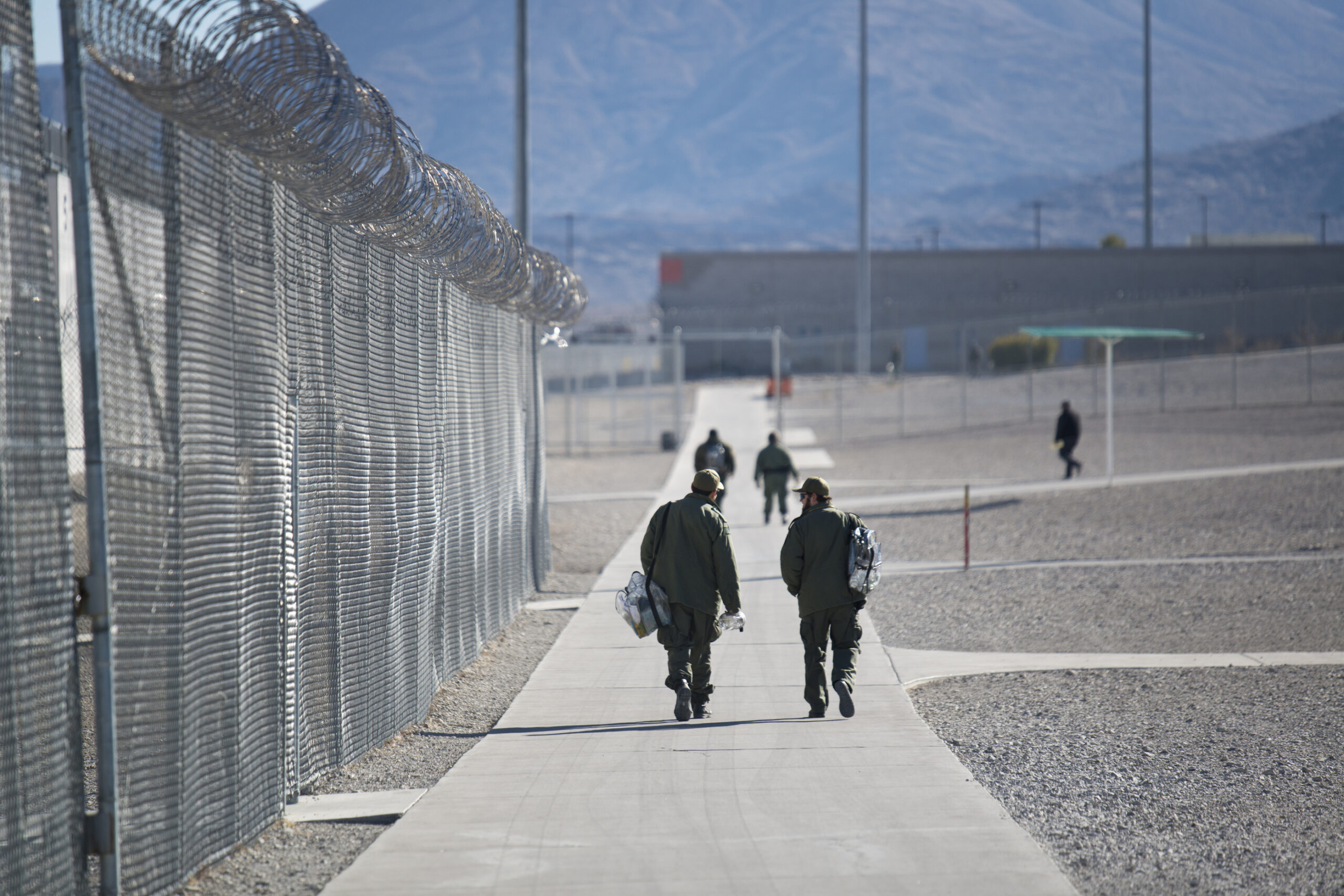
Overdoses inside Nevada's state prisons have surged nearly tenfold in the past five years, a rise officials partly attribute to drugs smuggled in through the mail.
Now, to curb drug use, the Nevada Department of Corrections (NDOC) is proposing restricting physical mail from entering facilities and replacing it with electronic copies — a move that has drawn sharp criticism from criminal justice advocates who see physical mail as a morale-boosting connection between inmates and the outside world. They argue the agency is bypassing public input and failing to meet a legal requirement to justify any curtailment on physical mail with an "evidence-based" study.
During a public meeting last week, NDOC referenced a study of High Desert State Prison — which houses nearly 30 percent of the state's prison population — as justification for the proposed change, which would still need final approval from a prison oversight board to take effect.
An NDOC study obtained by The Nevada Independent but not shared during the meeting found that mail is routinely used to smuggle drugs into the facility. Officials linked drug-laced correspondence to rising hospitalization rates and the growing costs of correctional officer overtime to staff those hospital stays.
It did not specify why people were hospitalized or provide detailed data proving that drug incidents caused the staffing shortages and overtime. The study consisted of a two-page summary, a PowerPoint presentation on mail, as well as logs on local hospital stays and mail found laced with drugs.
Similar attempts in other states, meanwhile, have not reduced the number of drug overdoses and have even seen rates jump after limits on mail were introduced.
The Nevada Department of Corrections did not immediately return a request for comment.
In a study conducted from February to October 2025, a mail scanner at High Desert State Prison intercepted synthetic drugs or a controlled substance 255 times in the first six months. Although it did not say the exact number of mail pieces received during the test period, it said that the facility receives about 500 mail pieces a day, stipulating that only about 20 percent of the mail was tested. A Nevada Independent calculation suggests an estimated 1 out of every 100 pieces of mail were positive for the synthetic cannabinoid K2, also known as "spice."
The study also found that hospitalization rates have risen dramatically across the department, jumping from 614 individuals sent to local hospitals in fiscal year 2023 to 970 people in fiscal year 2025. It did not specify why people were hospitalized, and prison officials acknowledged it is difficult to say when spice is responsible for an overdose because it is "nearly impossible" to detect in a person's system.
The department said that "due to the vast amount of evidence," the study ended in late October 2025 so it could begin taking emergency measures.
But advocates and some members of the public say the evidence behind the proposal remains incomplete — and largely inaccessible.
Nick Shepack, the Nevada state director of the Fines and Fees Justice Center, said that the study "leads to more questions than answers." He raised questions about the study's methodology, especially that drug scanning was done at a single institution, and the lack of data on why people were hospitalized. He also pointed out that several attachments to the study indicated that simply eliminating mail will not be sufficient to stop drug flow.
"It's very confusing in many ways," Shepack said. "The drug scanning was done at a single institution, which makes me question whether or not it's enough data to push for a complete ban."
The Nevada Legislature passed a law in 2023 mandating that prisons provide all of those incarcerated with physical and original copies of their mail. In order to adopt a regulation to change the requirement, the law mandates the prison director to submit a study "and any evidence or data" that justify the decision.
"I do believe the Department, when they say that there is a problem with drugs … but I think that what the legislation requires, and what the people who are gonna be impacted by this need to see, is that evidence," he added.
For the proposal to be implemented, it will have to be approved by the current Board of State Prison Commissioners, made up of Gov. Joe Lombardo (R), Attorney General Aaron Ford (D) and Secretary of State Cisco Aguilar (D). Shepack added that he has reached out to many legislators who have not received the NDOC study.
It's not the first time that state officials have attempted to crack down on mail. In 2022, Gov. Steve Sisolak shot down a proposal to prohibit certain mail, such as greeting cards and colored drawings, being sent to incarcerated people after NDOC officials failed to present data backing up the policy change. Sisolak said he worried the current policy would punish "the two or three who might break the rules" at the expense of thousands. The 2023 law came about after that push.
More than 30 states have introduced mail scanning policies over the past couple of years, but prior reporting indicates that they have failed to curb drug use in jails. After the Missouri Department of Corrections implemented a policy to bar physical mail, the system saw a 10 percent increase in overdoses. In Pennsylvania, positive drug tests tripled five years after the prison system adopted a mail scanning system.
Inmate rights advocates, such as Shepack, maintain that physical mail is a lifeline for some incarcerated people, who can feel isolated in prison. He said that a ban on mail may push people to rely more on prison tablets, which many incarcerated people have described as having "predatory" pricing.
"A night in prison can be extremely scary and lonely, and having that ability to hold the picture of your loved one with a letter from your loved one in your hands while you're in your cell at night, it goes a very long way," Shepack said.
Spiraling overdoses
In 2021, the department only reported 12 overdoses among the system's nearly 11,000 total inmates. In 2025, that number catapulted to nearly 150 overdoses, nine of which were fatal.
NDOC officials attribute the problem to a broader national trend of drug-laced paper making its way into jails. Nationwide, prisons are seeing synthetic drugs, such as fentanyl and complex cannabinoids, being laced in paper products, such as greeting cards. These new drugs are often harder to trace and much more potent and deadlier, according to scientists and law enforcement officers.
Although the department began deploying mail drug-detection scanners across facilities in 2025 to help crack down on the contraband, officials say the technology has not kept pace with the volume of incoming mail. Testing suspicious materials can also take months, they say.
The department has also linked overdoses to rising overtime costs, noting that six officers must take overtime for each day an inmate is in the hospital, and hospitalizations average five days apiece.
In June 2025, nearly 67 officers per day took overtime to help with medical transportation, according to the NDOC report. Within about half a year, the number of officers taking overtime daily for that reason jumped to 88. The study said that those numbers will continue to increase if mail reforms aren't made.
Lawmakers have questioned if overdoses are the explanation behind overtime expenses. The agency had received hundreds of thousands in federal pandemic relief funding toward operations and a mail scanner in recent years, while overtime rates have increased.
Updated at 11 a.m. on 5/4/26 to correct Nick Shepack's title. He is Nevada state director of the Fines and Fees Justice Center.
Support Independent Elections Coverage and Journalism in Nevada
You’ve enjoyed unlimited access to our reporting because we’re committed to providing independent, accessible journalism for all Nevadans.
But sustaining this work — informing communities, holding leaders accountable, and strengthening civic life — depends on readers like you.
Nevada needs strong, independent journalism. Will you join us?
A gift of any amount helps keep our reporting free and accessible to everyone across our state and funds our elections coverage.
Choose an amount or learn more about membership