
Nevada public lands $1 billion short for deferred maintenance needs


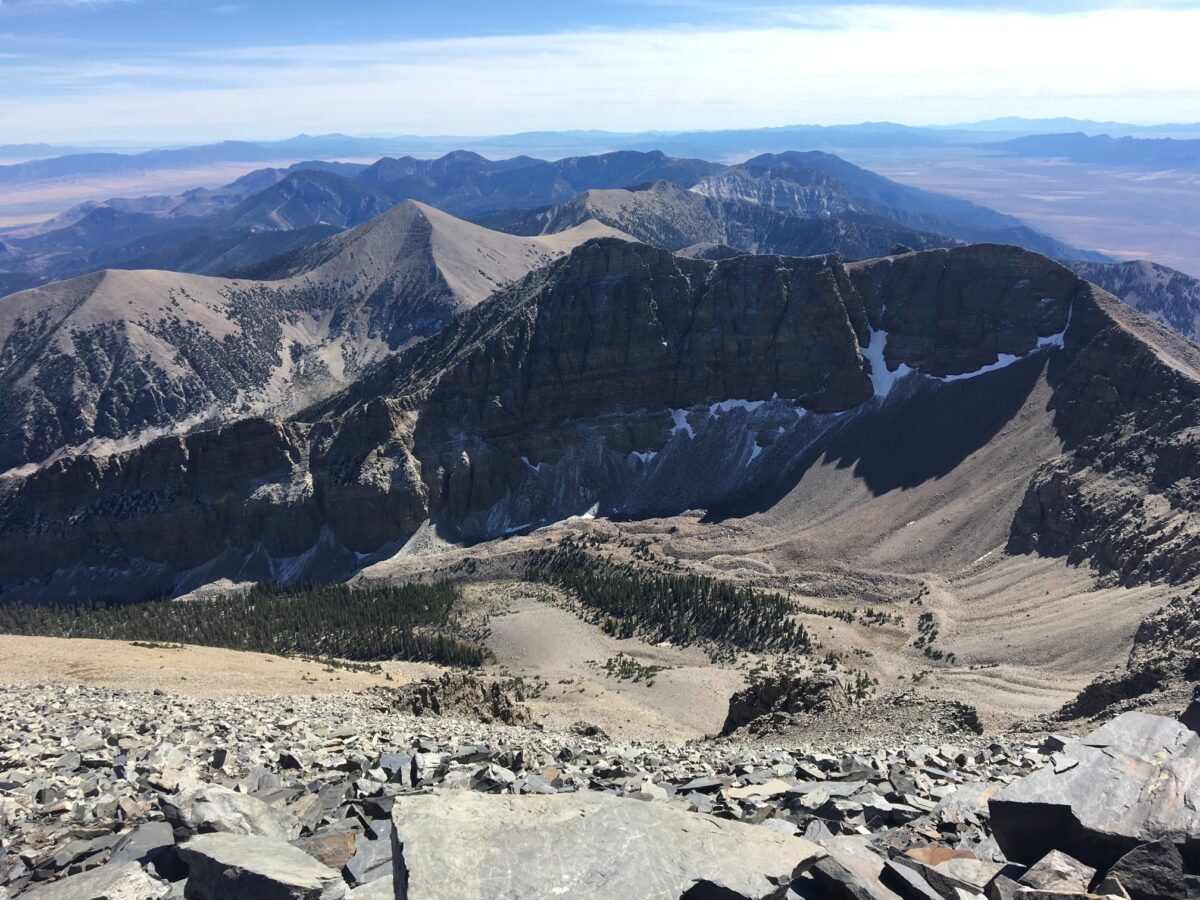
Great Basin National Park in remote eastern Nevada is known for its dark skies and ancient bristlecone forests. Hikers can visit Nevada's only glacier, tucked against a rocky slope at the base of Wheeler Peak.
In Southern Nevada, boaters skim across the Colorado River at Lake Mead National Recreation Area, despite declining lake levels in the reservoir that supplies drinking water to millions of Americans.
The parks are managed by the federal government. Combined, they draw nearly 6.3 million visitors annually.
But repairs to their infrastructure are lagging.
Together, Great Basin and Lake Mead face between $431 million and $501 million in deferred maintenance projects, according to federal estimates.
Zooming out to include all the state's federally managed areas, including Red Rock Canyon National Conservation Area and part of Death Valley National Park, Nevada's federal lands have almost $1 billion in deferred maintenance repairs, according to the Department of the Interior.
The reasons for putting off repairs to the parks' infrastructure vary, from funding shortfalls to staffing cuts and unforeseen emergencies. And the shortages don't account for basic modernization efforts such as expanding capacity as visitation grows or upgrading to meet modern building codes.
"Without this investment, asset conditions will continue to deteriorate, compounding long-term costs and increasing the deferred maintenance backlog," according to the park service.
The ballooning backlog of maintenance issues across Nevada's — and the nation's — national parks comes as the federal government continues to slash funds for the park service. When adjusted for inflation, the National Park Service's annual budget of $3.267 billion for fiscal year 2026 was 16 percent lower than it was a decade prior. Within that budget, money allotted for regular and deferred maintenance decreased 21 percent, when adjusted for inflation. The park service's backlog of deferred maintenance during the same time frame grew from $11.6 billion to more than $24.3 billion.
The growing logjam was magnified this year by the government diverting $90 million from national parks across the country to pay for repairs to park service facilities in the nation's capital ahead of America's 250th birthday.
"Public lands have always been underfunded," said Leisl Carr Childers, associate professor at Colorado State University, who specializes in environmental history and management of public lands. "We do not invest in them as if they were our backyard. They've also never been staffed properly. Maintenance is part and parcel with that.
"What should be happening is a more intentional, diversified funding structure that gives agencies money to fund the work and staff that they need."

Funding diversions indicate federal priorities
In Nevada, Great Basin National Park does not collect an entrance fee; Lake Mead, however, charges individual vehicles $25 to enter and walkers and bicyclists $15.
Under federal legislation, 80 percent (or more) of the revenue generated from national park entrance fees must stay in the park where they were collected. The remainder, however, can be diverted to other federal projects.
According to The Washington Post, at least $90 million in park entry fees was diverted this year to Washington, D.C., to fund fireworks displays and repair fountains, including to the Lincoln Memorial Reflecting Pool, ahead of the nation's 250th birthday celebration orchestrated by President Donald Trump.
Big picture, $90 million is far short of the tens of billions in deferred maintenance the country's national parks are facing nationwide, according to Michael Childers, an associate professor specializing in the American West and the environment who, like his wife Leisl, teaches at Colorado State University.
But it's "symbolic of where priorities are when it comes to national parks," he said. "They're ignoring the maintenance needed in Great Basin, Lake Mead … They're only focusing on the immediate [problems] out the front door."
When Congress established Wyoming's Yellowstone in 1872 as the nation's first national park, it was allocated "a really robust budget of zero dollars," he said.
Funding remained an issue at America's national parks until the mid-1960s when, to honor the National Park Service's 50th anniversary, the federal government invested heavily in upgrading visitor facilities and roads.
But that infusion was short-lived.
The Department of Interior estimates parks and recreation areas managed by the National Park Service in Nevada have $431 million in deferred maintenance repairs.
According to National Park Service fact sheets for the individual parks, the costs are much greater, with Lake Mead clocking an estimated $480 million backlog in maintenance needs and Great Basin behind an additional $21 million.
The discrepancy is "related to how deferred maintenance is attributed geographically," a spokesperson for the Department of the Interior said in an email. "Because Lake Mead National Recreation Area spans both Nevada and Arizona, a park-level estimate may include repair needs associated with assets in both states, while Nevada-specific totals include only assets attributed to Nevada."
The spokesperson did not answer any other questions posed by The Nevada Independent, including how deferred maintenance needs in Nevada are being addressed. The park service and Lake Mead's public affairs office did not reply to emails. Get Outdoors Nevada, the nonprofit friends group for Lake Mead, said its team "wasn't familiar" with the issue.
At both parks, roads, buildings and campgrounds are in dire need of work. Lake Mead has one of the highest estimates for backlogged maintenance projects. Its 182 miles of paved roads need $392 million in repairs; its unpaved roads could use an additional $10 million worth of repairs. Great Basin's 15 miles of paved roads could use $14 million in repairs.
Road repairs are costly. At Lake Mead, the park service recently spent $2 million repaving 3.7 miles of Willow Beach Road between its entrance station and boat launch area.
The federal government took a stab at catching up on national park repairs — the Legacy Restoration Fund created under the 2020 Great American Outdoors Act provided $6.5 billion through 2025 to address deferred maintenance at parks, including upgrading Great Basin National Park's aging water and wastewater systems.
Then the restoration fund expired. Meanwhile, the number of park service employees decreased by about a quarter since Trump took office and additional funding cuts were proposed. The proposed 2027 federal budget would cap National Park Service construction at less than $50 million, a 72 percent reduction over 2025 (although it also supports reauthorization of the Legacy Restoration Fund).
However, Congress is currently considering legislation that would reauthorize the Legacy Restoration Fund and divert $6.6 billion to public lands maintenance and infrastructure.
SNPLMA funds help Nevada's national parks
Despite the federal issues, Nevada's national parks can keep up with some maintenance issues using money from the Southern Nevada Public Lands Management Act (SNPLMA).
Through SNPLMA, the Bureau of Land Management sells public land around Las Vegas to the state; proceeds from the sale primarily go toward environmental, conservation and restoration projects in Nevada.
With SNPLMA funds, Great Basin is currently updating the aging lighting system in its famed Lehman Caves. It also used funds from the act recently to remove aging sections of its cave tour path, upgrade its Bristlecone Recreation Area and trailhead system and expand one of the park's popular campgrounds.
In 2024, Lake Mead received $8.66 million in SNPLMA funds to address illegal roads and off-road vehicle trails created by visitors trying to get to the lake's receding shoreline.
"If a park doesn't have access to these types of resources, they don't have anywhere to go," said Aviva O'Neil, executive director of the Great Basin National Park Foundation. "Sometimes you have a very strong philanthropic nonprofit group … but most of the parks really struggle to have higher dollar things completed."
It's often easier to procure funding for projects through SNPLMA than through federal avenues, she added.
"The deferred maintenance backlog has been an issue in national parks for decades. SNPLMA has really made a huge difference."
Support Independent Elections Coverage and Journalism in Nevada
You’ve enjoyed unlimited access to our reporting because we’re committed to providing independent, accessible journalism for all Nevadans.
But sustaining this work — informing communities, holding leaders accountable, and strengthening civic life — depends on readers like you.
Nevada needs strong, independent journalism. Will you join us?
A gift of any amount helps keep our reporting free and accessible to everyone across our state and funds our elections coverage.
Choose an amount or learn more about membership