
Nevada sportsbooks see lowest Super Bowl betting in a decade. Prediction markets to blame?

Nevada sportsbooks reported their lowest collective wagering totals on the Super Bowl in 10 years, according to data released late Monday by the Gaming Control Board.
The announcement led some analysts to speculate that prediction markets had taken away wagers that normally would have made it into Nevada casino coffers.
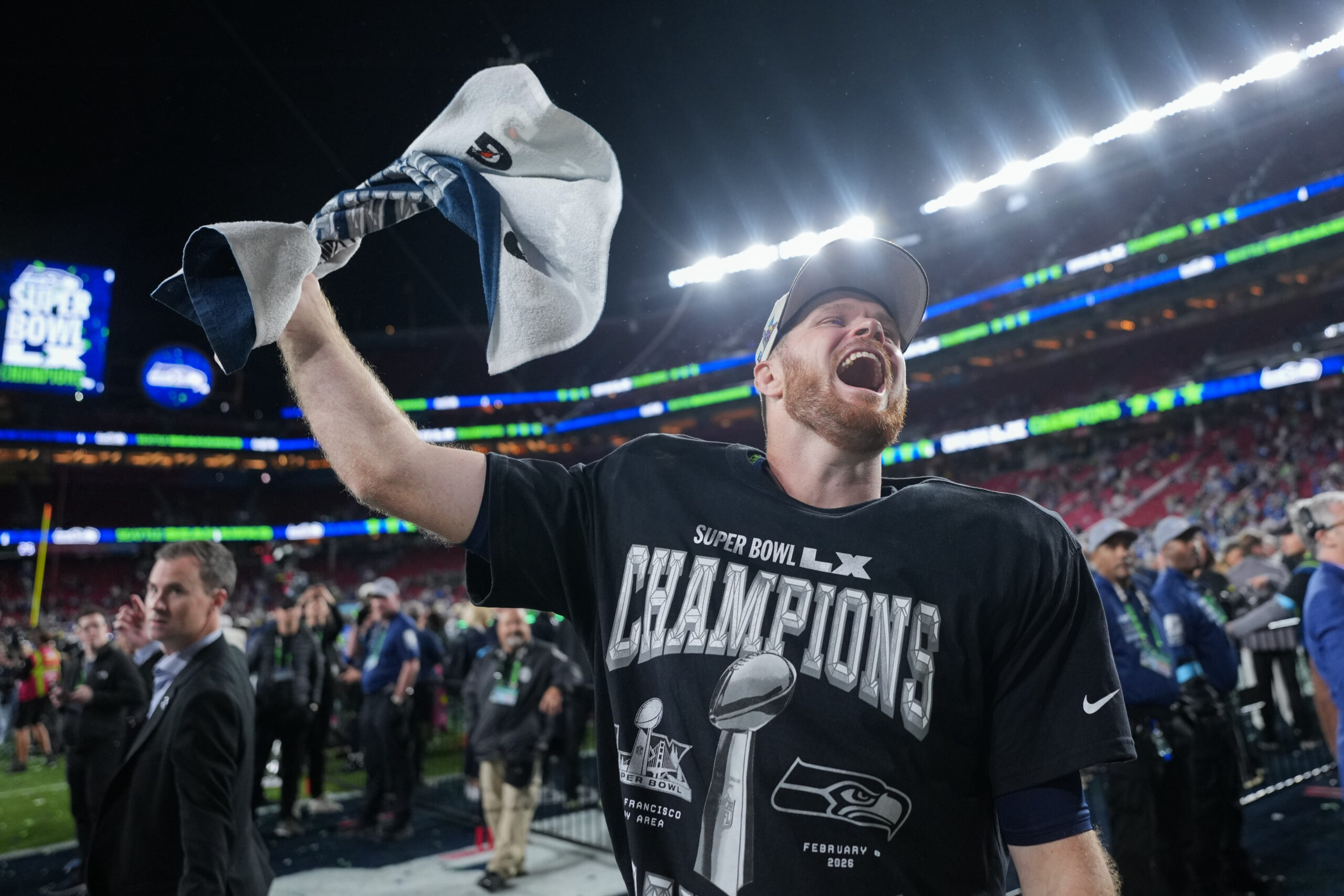
Total wagers for the 2026 Super Bowl fell 11.7 percent to $133.8 million, compared with a year ago. Still, sportsbooks won almost $9.9 million — 7.4 percent of all bets — in the game in which the Seattle Seahawks beat the New England Patriots, 29-13. The hold percentage was the second highest since 2022.
The wagering figure was Nevada's lowest Super Bowl total since 2016, when $132.5 million was bet on the Denver Broncos' 24-10 victory over the Carolina Panthers. At the time, Nevada was the only state with legally regulated sports betting.
A 2018 U.S. Supreme Court ruling allowed individual states to decide if they wanted to offer and regulate sports betting. There is now legal sports betting in 40 states and Washington, D.C.
However, prediction markets, overseen by a federal commodity-focused regulatory panel, have offered customers the opportunity to wager on the outcome of sports events in the form of "yes" and "no" contracts for more than a year.
Gaming regulators in more than 20 states, including Nevada, have filed legal challenges that have temporarily blocked several prediction market companies from offering sports contracts — the term used to describe wagers.
In November, a federal judge ordered Kalshi to stop offering sports contracts in Nevada, but the decision is being appealed and Kalshi was still available to Nevada customers on Super Bowl Sunday.
Gaming journalist Dustin Gouker, writing on his Closing Line Substack page, reported that Kalshi took in $871 million in nationwide volume on the Super Bowl, including bets on the Super Bowl's high-priced television ads and the halftime show featuring performer Bad Bunny.
"If the game had been closer, it clearly would have been more than a billion dollars," Gouker wrote, noting the information came through a tracking system he uses.
Meanwhile, Kalshi co-founder Luana Lopes Lara posted on X during the game that some deposits by customers were delayed "because of the amount of traffic" and the larger number of deposits.
"Your money is safe and on the way, it will just take longer to land," she wrote.
On Monday, Lara posted, "The traffic spike was way bigger than our most optimistic forecasts, so a portion of deposits got delayed." She added that Kalshi "reimbursed processing fees on those deposits and added credits to those who experienced delays."
Last year, Nevada sportsbooks won a record $22.1 million when the Philadelphia Eagles upset the Kansas City Chiefs 40-22. In 2024, when the Super Bowl was played at Allegiant Stadium, sportsbooks collected $11.2 million on the Chiefs' 25-22 overtime victory over the San Francisco 49ers.
The Gaming Control Board has been charting Super Bowl wagering results since 1991.
The state's sportsbooks last lost money on the game in 2008 when the 12-point underdog New York Giants beat the New England Patriots 17-14. The upset cost sportsbooks $2.6 million.
Nevada took a much smaller loss in the 1995 Super Bowl, when the San Francisco 49ers beat the San Diego Chargers 49-26, costing the sportsbooks roughly $400,000.
In a statement after Sunday's game, Caesars Sportsbook Head of Football Joey Feazel said a large volume of moneyline wagers — bets without a point spread — favored the Seahawks.
He said the individual wagers were "far more than we typically expect on the favorite for a Super Bowl."
Circa Sports reported a $1.1 million moneyline wager on the Patriots on Jan. 30, and a second million-dollar money wager on the same team on Sunday.
Gaming analyst and investor Chris Grove, writing on X, asked, "How did sportsbooks do on the Super Bowl? Channel checks suggest the outcomes were overwhelmingly positive for the major sportsbooks, with double-digit hold supported by a low-scoring game and most popular parlays failing to hit."
Support Independent Elections Coverage and Journalism in Nevada
You’ve enjoyed unlimited access to our reporting because we’re committed to providing independent, accessible journalism for all Nevadans.
But sustaining this work — informing communities, holding leaders accountable, and strengthening civic life — depends on readers like you.
Nevada needs strong, independent journalism. Will you join us?
A gift of any amount helps keep our reporting free and accessible to everyone across our state and funds our elections coverage.
Choose an amount or learn more about membership