
Nevada's carbon emission reduction efforts are plateauing. Now EPA says they don't matter


(Reporter's note: I owe Northern Nevada readers an apology. After my last newsletter, which I admit was a bit doom and gloom about the snow drought, we've experienced a winter's worth of storms in several days! As one of my editors jokingly pointed out, "This is all happening because of [the] snow drought story.")
A gray pallor hangs over my reporting this month.
It could be the cloudy days — storms have finally returned to Northern Nevada after a more than monthlong absence — or it could be a cloud of smog from the string of environmental policies being rolled back (I know it's not, but play along with me).
Earlier this month, President Donald Trump's administration made one of its most drastic moves yet by repealing the Obama-era "endangerment finding," a nearly 20-year-old rule that allows the federal government to limit greenhouse gas (GHG) pollution across nearly every sector of the economy, including emission standards for vehicles from 2012 onward.
The Environmental Defense Fund estimates that the repeal of the endangerment finding will increase the country's greenhouse gas emissions by 10 percent over the next 30 years.
The Environmental Protection Agency (EPA) disagrees.
"Even if the U.S. were to eliminate all GHG emissions from all vehicles, there would be no material impact on global climate indicators through 2100," according to the EPA. "Therefore, maintaining GHG emission standards is not necessary for EPA to fulfill its core mission of protecting human health and the environment."
Despite the EPA's claims, the Nevada Division of Environmental Protection found that transportation drives nearly 40 percent of the state's emissions and that unless more aggressive state and federal policies are adopted, transportation emissions will not decrease. Nevada is already failing to move the needle in any measurable way toward reducing its carbon emissions, despite orders from state lawmakers to do so.
The same day the EPA announced its greenhouse gas emission plan, Trump, an avid supporter of the coal industry who received the first-ever "Undisputed Champion of Coal" award and whose administration has dedicated $525 million to expanding a coal fleet that was largely being phased out, also ordered the Pentagon to secure long-term power purchase agreements from coal plants.
"President Trump has ended the war on American coal and is restoring common-sense energy policy," U.S. Secretary of Energy Chris Wright said in a press release.
Although many skeptics remain, scientists almost universally agree that humans have induced climate change, starting with the Industrial Revolution.
So the federal actions, as well as events unfolding in Nevada, fly in the face of broad consensus.
This month, Tesla (in theory, a critical component of the clean-energy movement), settled with the state's department of environmental protection after it was found operating a battery recycling facility without a permit. The $200,000 settlement will go into the state's Clean Trucks and Buses Incentive Program or another program geared toward air quality improvement. The Clean Trucks and Buses Incentive Program is still in the process of being created — the state is stalled as it awaits clarification from the Federal Highway Administration. Should we expect that in the next 2.5 years?
As I muddled through all this, a conversation I had several years ago with some fairly extreme environmentalists popped into my head. The environmentalists were opposed to a lithium mine being built in Nevada — the nation doesn't need lithium, or electric cars, they said — we should go back to the days of the horse and buggy.
As environmental regulations are peeled back, the problem is we aren't going back to the horse and buggy days — we're stepping back to the early days of the Industrial Revolution, where coal was king and pollution wasn't measured. We're about to see what that means for Americans' health. Former Nevada Sen. Pat Spearman (D-North Las Vegas) put it this way when I spoke with her earlier this month about the state's carbon emissions.
"It doesn't matter if you're in a red state, blue state, purple state or no state. You're talking about people's lives," she told me. "It's about science. It's not politics. It's about science and public policy."
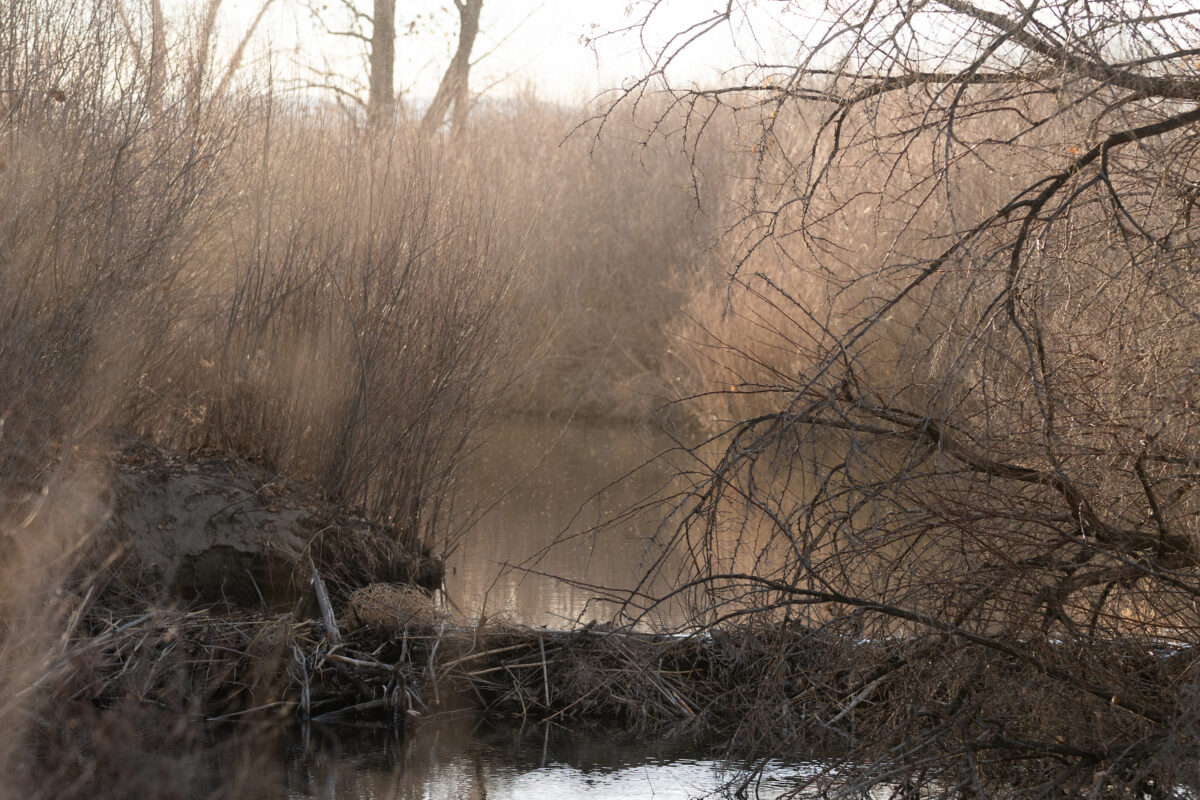
In the weeds:
Like Dave Matthews said, don't drink the water — Mercury levels in some waterfowl in the Carson River are up to 60 times federal safety thresholds, according to researchers at UNR, as contamination from 19th century gold mining continues moving through the river.
UNR researchers analyzed more than 15 years of feather samples from wood ducks, a nonmigratory species that live in the Carson River watershed and are commonly hunted for food. While health advisories warn against eating fish caught in the river, Nevada has no consumption advisories for ducks in the river, despite the elevated mercury levels.
The Environmental Protection Agency designated the Carson River as a Superfund Site in 1990 as the river has struggled to recover from the roughly 14 million pounds of mercury that were released into the environment during the Comstock Lode's heyday.
Generous gifters — A group of private Washoe County donors have launched the Washoe County Sustainability Fund, a community-based charitable fund to support Northern Nevada needs ranging from community gardens, circular economy initiatives and green infrastructure projects.
Green means 'go' — NV Energy is resuming construction on portions of its Greenlink West transmission line spanning from Las Vegas to Reno that were halted by concerns about potential effects to military airspace by the Department of Defense.
The company resolved the issue by installing additional lighting on segments of the 525 kilovolt power line that could affect operations at Nellis Air Force Base. It is expected to be in service by spring of next year.
Pear power — A team of researchers led by UNR scientists has received a $9 million grant from the U.S. Department of Energy to study the use of cactus pears as low-water-use biomass and potential biofuel. Over five years, a national team of scientists will conduct field trials across the country to identify varieties that produce the highest biomass with the least water.
Role reversal — Former Assm. Sarah Peters (D-Reno) will serve as the Sierra Club Toiyabe Chapter's new volunteer chair following the departure of Vinny Spotleson, who stepped down to run for Southern Nevada's Assembly District 41. Peters currently serves as the chief operating officer and senior project manager at a small environmental engineering firm; Spotleson previously ran for the state office in 2016.

Here's what else I'm reading (and listening to) this month:
From the Las Vegas Review-Journal: Lake Mead's Government Wash campsite to reopen after restoration clears 12,000 pounds of trash
Via Successful Farming: U.S. cattle herd dwindles to 75-year low, signaling ongoing high prices
As a major Colorado River deadline passes, reservoir levels keep declining, the Los Angeles Times writes
NPR shares how the Environmental Protection Agency has issued record low legal actions against polluters under President Donald Trump
From E&E News: New Hampshire considers classifying fossil fuels as "green energy"
Data center water and power needs, along with regulatory challenges, strain rural communities, according to the Nevada Current
Reuters reports that Ormat Technologies will develop 150 megawatts of geothermal power by 2030 to power Google's Nevada operations
A closer look:

Support Independent Elections Coverage and Journalism in Nevada
You’ve enjoyed unlimited access to our reporting because we’re committed to providing independent, accessible journalism for all Nevadans.
But sustaining this work — informing communities, holding leaders accountable, and strengthening civic life — depends on readers like you.
Nevada needs strong, independent journalism. Will you join us?
A gift of any amount helps keep our reporting free and accessible to everyone across our state and funds our elections coverage.
Choose an amount or learn more about membership