
Rosen calls for update to Census's confusing questions about Hispanic heritage

The Census Bureau has already acknowledged that the current, two-part question it uses to gather information about Hispanics in the U.S. can be confusing and yield vague or incomplete answers.
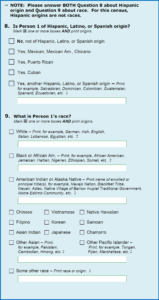
Traditionally, respondents are first asked about ethnicity and national origin: if they're Mexican, Cuban, not Hispanic or of some other origin. Then, they must answer a question about race, indicating if they're white, black, American Indian, Asian or some other race.
While the Census Bureau conducted testing in 2015, about a third of Hispanics answered the race question with "some other race" — a category that's meant to be a last-resort catch-all and isn't an official classification. When people don't answer the race question, perhaps because they don't consider themselves as white or black but only as Hispanic, the Census has to refer to data about their neighbors to guess what race they actually are.
It's that kind of confusion that's prompting Nevada Democratic Rep. Jacky Rosen to call for a single, combined race and ethnicity question: One that would simply ask if someone identifies as Hispanic and allows them a space to write a more specific description, such as Guatemalan.
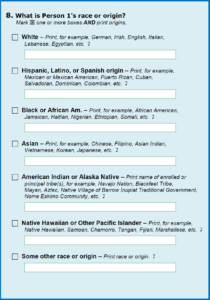
"The Census Bureau's current model for obtaining data on race and ethnicity is outdated and produces incomplete results," Rosen said in a statement provided to The Nevada Independent. "This commonsense change to the way we conduct our decennial census could save taxpayer dollars down the line and allow Congress to appropriately distribute funds and craft policy that best serves the diverse communities that make up our nation."
She's sending a letter that formally asks Mick Mulvaney, director of the Office of Management and Budget, to change the underlying policy that hasn't been updated since 1997. The office has until March 31, 2018 to submit final Census question wording to Congress.
"Census data supports the allocation of over $600 billion in federal funds annually to meet the needs of our country," she wrote to Mulvaney. "It is imperative that all populations be accurately represented in the 2020 Census."
Questions about Hispanic origin are of importance in Nevada, which the Pew Research Center estimates is 28 percent Hispanic — the fifth-highest proportion of any state in the union.
Race and ethnicity data gathered from the 2020 Census will be used when the state draws new boundaries for legislative and congressional districts. Mapmakers will decide what percentages of which racial and ethnic groups to include in voting districts — decisions that could ultimately affect a party's chances of winning in congressional districts like Rosen's.
Support Independent Elections Coverage and Journalism in Nevada
You’ve enjoyed unlimited access to our reporting because we’re committed to providing independent, accessible journalism for all Nevadans.
But sustaining this work — informing communities, holding leaders accountable, and strengthening civic life — depends on readers like you.
Nevada needs strong, independent journalism. Will you join us?
A gift of any amount helps keep our reporting free and accessible to everyone across our state and funds our elections coverage.
Choose an amount or learn more about membership