
Some Nevada unions love data centers. Now they just have to convince everyone else.

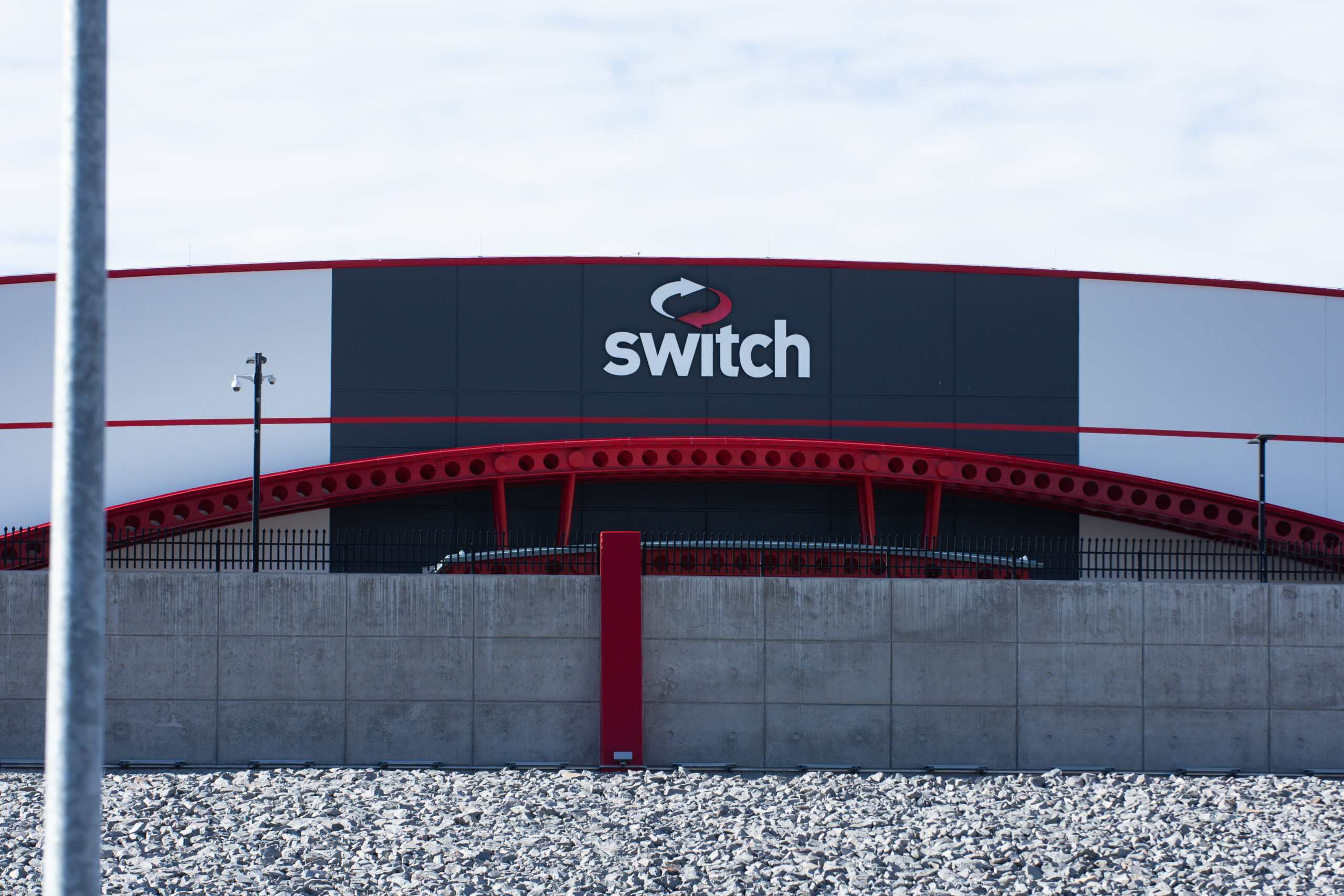
Data centers have fast become the political bogeyman of 2026, with nearly every candidate seeking to outfox their opponent in attacks on "Big Tech" and "dirty data centers." In a September poll, nearly 6 in 10 registered voters in Nevada said they oppose the construction of new data centers.
Not everybody in the state hates them, though: Electrical and construction unions that benefit from data center projects say the facilities can be a force for good in Nevada — and they're figuring out how they can prove it to everybody else.
"There is not a one-size-fits-all situation for how to move forward with this, but there are so many possibilities of how to do that and still check all the boxes of ensuring that ratepayers are protected, that we are good stewards of the earth," said Ronald Young, the political director for the International Brotherhood of Electrical Workers (IBEW) Local 357 in Southern Nevada.
Some unions see it differently. A few view data centers as threatening their members, doing more to fuel automation via artificial intelligence (AI) than to power Nevada's economy. Advocates for construction counter that while AI acceleration is scary, it's inevitable, making it pointless for Nevada to pass up on economic opportunities that would flow elsewhere. It's led to nuanced discussions as unions representing thousands of workers try to navigate the best approach on young, fast-moving technologies driving demand for new data centers.
As 2027's legislative session approaches, unions that work on data center projects say guardrails on their use of water and energy are necessary but that an all-out moratorium could cost Nevada.
"Everything's so expensive, and I think if we can turn this into something where locals are getting good-paying jobs, good-paying union jobs, that's a win on top of everything else, right?" Young said. "But it's got to be done smart."
Todd Vachon, a professor at Rutgers University who studies labor movements, said he believes concerns about AI will cause a split among organized labor nationwide.
"It creates this friction within labor itself," Vachon said, between the primarily blue-collar groups that construct the centers and the white-collar groups who feel threatened by them. "The data centers are actually going to undermine the livelihoods of the white-collar workers if AI advances rapidly and actually does start replacing professional jobs and administrative work, clerical work, writers, creative people, artists."
Fears of automation are not theoretical in Nevada, where some service-based workers in casinos and hospitals view AI as an existential threat. In August, Rep. Ro Khanna (D-CA) came to Las Vegas for a roundtable titled Workers over Machines, where he, Rep. Steven Horsford (D-NV) and leaders from trucking, hospitality and other industries discussed how to protect workers without being enemies to growth.
Leaders from a range of different unions emphasized in conversations with The Nevada Independent that questions over data centers aren't yet causing major fissures in Nevada's labor community, but there are some disagreements.
Brian Lenihan, a steward with the Service Employees International Union (SEIU) Local 1107 and an engineer with Clark County, said he is pro-innovation but is skeptical of rampant data center construction, especially in Southern Nevada.
He said he distinguishes between data centers that power the internet and "the superpower, water-intensive, noisy, horrific data centers that people don't like."
Kenneth Gillingham, an energy professor at Yale, told The Indy there are differences between traditional data centers that have been around for decades and data centers that are now being built to power AI. The latter have greater computational demands, said Gillingham, and therefore require more floor space, more power and more water.
Lenihan also said he doesn't find electrical unions' arguments about economic benefits very compelling, arguing those groups could get jobs elsewhere.
"Instead of saying we want data centers, what if they said we are going to do a tax cut for everyone to get solar?" he asked. "How much more money do you think IBEW could get from having more electricians wiring up solar facilities?"
The electrical unions' view
Electrical unions know data centers will be one of the biggest ticket items in the 2027 Legislature, and they say they want more regulations, too.
"I don't think the concern is misplaced entirely. … We are in a spot in time where we can either do great things or we could totally screw it up," said Young, adding he disagreed with both those calling for an all-out moratorium and those calling for no regulations. "You need to have some kind of guardrails, because it affects everybody."
Jacob Haas, business manager at IBEW Local 401 in Northern Nevada, told The Indy he believes data centers should have regulations similar to those governing "any other building."
That means ensuring data centers pay for their own power and don't pass energy price hikes onto consumers, he said. And it means ensuring all facilities use closed-loop cooling systems, a far less water-intensive approach that Southern Nevada has already required of new data centers since 2023.
But Haas and Young also emphasized the benefits of data centers when built responsibly.
"If data centers weren't here right now, I think Nevada would be in a huge recession," said Haas, adding that roughly 3,000 of his workers are currently staffed on data center projects. He also said the maintenance and upkeep of the centers is so labor-intensive that workers return to the facilities constantly, ensuring jobs aren't just temporary.
According to the online tracker Data Center Map, there are 76 data centers built or planned in Nevada.
Electrical union representatives said voters are unfairly punishing data centers for their fears over AI. Polling indicates Americans' top concerns about data centers relate to water and energy, but many also worry about the centers enabling artificial intelligence. In a September 2026 poll by The New York Times, nearly one-fifth of respondents cited "general distrust/dislike of AI" as the main reason they opposed more data center construction.
Imposing a moratorium on construction "doesn't get rid of AI," said Young. "AI is here and it gets integrated into more and more things by the day. How AI can be implemented in Nevada … how worker protections can be made around AI — that is its own issue compared to the development of data centers, because of the fact that data centers touch so much more than just AI."
Experts say the truth is more complicated. "The vast majority of the demand for new data centers is driven by AI," wrote Gillingham, the Yale professor, although he added that a data center moratorium wouldn't stop AI development overnight.
Young emphasized that he sympathizes with people's fears about AI, which stem from "these big corporations that are very openly talking about the reduction of labor. … Regular people, we're scared, right? We don't know what's going to happen, and things are moving so fast. So I think people are looking for some reassurance that they're not going to be left behind."
Young also said he doesn't want a "gutting" of the state's tax abatement program for data centers, although he's open to changes. Lombardo signed an executive order this month curtailing the abatements, requiring data center companies to pay taxes they were previously exempt from. Ford called Lombardo's order "weak" and says that if elected, he will pause all abatements until the state can conduct an audit on their effectiveness.
Data center advocates aren't in denial about the facilities' unpopularity.
In June, a group called the Data Center Alliance launched, led by Tray Abney, a longtime Nevada political strategist and lobbyist. It includes IBEW 401, Haas' union, along with other labor groups, data center developers and other stakeholders.
The alliance's primary goal currently is educating people and politicians on data centers and helping the industry in "telling their story," said Abney. He and Haas said many Americans are unaware that data centers have powered online activities for years, from Facebook to banking, all of which predates AI.
"It's not just ancillary, like, cherry-on-top nice-to-haves," said Abney. "These are basic, core building blocks of our modern life and economy."

Other unions' views
Unions nationwide are trying to find the right approach, with some arguing data centers are complicit in job loss while others say they view data center policy as distinct from AI policy.
The Nevada AFL-CIO, whose coalition of more than 120 unions includes construction and electrical workers, passed a resolution on data centers at its August convention. Submitted by IBEW 357, the resolution supports data centers in general but calls for protections around water and energy supplies, and says companies must be transparent and communicative with the public.
The AFL-CIO "supports responsible data center development" and "tax incentives when they are tied to measurable public benefits … and strong labor standards," wrote Susie Martinez, the union's executive secretary-treasurer, in a text message to The Indy. The union resolution did not reference AI or automation.
A handful of unions under the AFL-CIO umbrella have used more oppositional language, pushing for data center regulations in part due to their desire to slow down AI.
National Nurses United, which represents nearly 3,000 nurses in Nevada, supports a federal moratorium on data centers. The union's fact sheet on data centers lambasts "Big Tech" and says the moratorium "would enact a pause on A.I. development."
And at a recent meeting where the Reno City Council gathered public input on a proposed data center moratorium, multiple speakers said they had worked on data center projects previously yet still supported a pause — citing environmental and AI concerns.
But not all unions worried about automation view crackdowns on data centers as the solution.
Jason Gateley is secretary-treasurer for Teamsters Local 14, which represents Southern Nevada truck drivers. His union backed a bill in 2025 that would have banned fully autonomous trucks in Nevada for the next decade. When it died, Teamsters accused Assm. Howard Watts (D-Las Vegas) of killing it and backed a successful primary challenge against him.
Gateley doesn't think AI can be stopped, but he wants "responsible growth" rather than "reckless growth." He said this means finding ways to protect jobs and using AI to make jobs safer. And, like the electrical unions, he sees data centers as separate from AI concerns.
"As long as the data centers are union-built and they create good jobs, I don't have a problem with that. And after they're built, they should be forced to be good corporate citizens and pay their fair share of taxes," said Gateley.
Despite differences in opinion, though, unions said disagreements on regulation have not yet become tense.
"There really hasn't been a ton of backlash between any of the unions," said Haas. Ted Pappageorge, secretary-treasurer of the Culinary Union Workers Local 226, wrote in a statement that Culinary was looking forward to a "healthy debate" over data centers in next year's legislative session.
"There needs to be AI regulation," added Haas, calling it a job for the federal government. "But that's not a data center. A data center is something that stores information. And if we don't build these, it's going to be China and Russia, and all our information is going to be stored over there."
Support Independent Elections Coverage and Journalism in Nevada
You’ve enjoyed unlimited access to our reporting because we’re committed to providing independent, accessible journalism for all Nevadans.
But sustaining this work — informing communities, holding leaders accountable, and strengthening civic life — depends on readers like you.
Nevada needs strong, independent journalism. Will you join us?
A gift of any amount helps keep our reporting free and accessible to everyone across our state and funds our elections coverage.
Choose an amount or learn more about membership