
Why a Northern Nevada data center wants to build its own temporary natural gas power plant

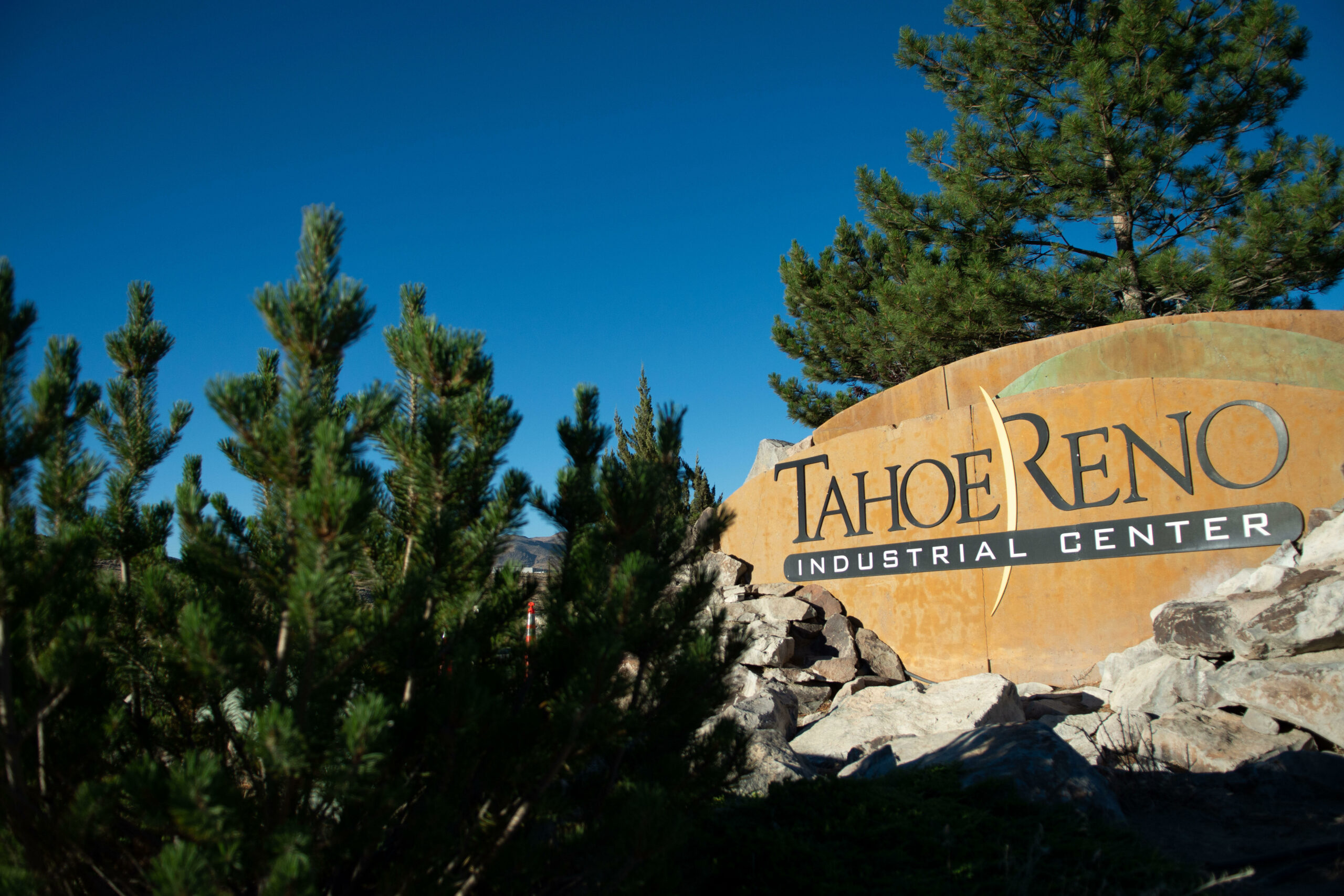
In what experts say is a first for Nevada, a data center developer is asking permission from state energy regulators to operate a new temporary natural gas power plant because NV Energy doesn't have the capacity to immediately serve it — potentially skirting parts of the state's regulatory process.
Fleet Data Centers wants to construct more than 350 megawatts (MW) of natural gas and diesel power for data centers it is developing at the Tahoe Reno Industrial Center (TRIC) in Storey County.
If approved, a temporary 144 MW plant would be built to power the South Valley data center campus, while a separate data center campus would be fueled by the 218 MW Peru Ridge Self-Generation Project, according to applications filed April 20 with state energy regulators.
Both projects would have dozens of natural-gas fueled engines and would require round-the-clock deliveries of either liquid or compressed natural gas
The temporary power sources are necessary because data center growth at TRIC is outpacing the ability of NV Energy to provide enough power, according to the applications.
NV Energy has estimated it needs 47 percent more energy statewide than it forecast just two years ago to meet the growing needs of data centers and other large-scale customers.
Without the temporary power facilities, the data centers would be delayed, stalling "a significant economic investment in Storey County and the broader Nevada economy," according to the applications. Representatives for the data center developer didn't return requests for comment for this story.
But the move is alarming to energy and environmental watchdogs who worry it could set a precedent for data center construction in Nevada — a state already struggling to meet emission reduction targets.
The state fell well short of its greenhouse gas emission-cutting goals last year and is poised to be even further behind when the bar raises again in 2030. According to the Nevada Department of Environmental Protection, the state's carbon emission reductions are projected to reach less than half of the goals lawmakers hoped to see by 2030.
Electricity generation drives more than a quarter of the state's greenhouse gas emissions.
The proposed temporary power plants will be "behind-the-meter" — meaning the plants would generate electricity used directly by the data centers without tapping into NV Energy's transmission grid.
Beyond air quality concerns, behind-the-meter power "locks the public out of the process," Sierra Club Toiyabe Chapter Director Olivia Tanager said, because state energy regulators wouldn't have the same level of oversight.
"This is exactly the sort of thing we've been concerned about," she said. "This is a massive scale gas power plant. It's a pretty good chunk of what the utility's proposing. … Broadly, the public deserves to know about these sorts of projects and the public should be able to engage with these sorts of projects."
'First mover advantage'
Fleet Data Centers describes itself as "a developer and operator of mega-scale, single-user data center campuses."
It is a portfolio company of Tract Capital, a "horizontal developer of master-planned data center parks, [that] has been expanding its footprint in and around the [TRIC] to support the rapid growth of cloud computing and AI data center deployments in the Reno/Sparks market."
Press releases from Tract don't list a planned tenant for the data centers, but Bloomberg reported earlier this year that technology company Nvidia plans to lease one of the Storey County sites with funds from a $3.8 billion junk-bond sale.
The general counsel for Fleet Data Centers declined to answer questions from The Nevada Independent.
Former state Sen. Dallas Harris (D-Las Vegas), a prior Public Utilities Commission attorney who was also listed as counsel for the applicant in her role at a private law firm, did not return a call before deadline to The Nevada Independent.
The temporary natural gas plants are expected to operate for two to three years, until NV Energy can deliver permanent service to the site.
If approved, the 350 MW generated would total more than one quarter the amount of natural gas power NV Energy expects to develop over the next few years. The company is proposing to build out 1,200 MW of natural gas over the next 20 years based on current customer requests, according to the utility.
"I think it's a sign of the times. Everyone is sharpening their pencils on what power is needed," Storey County Commissioner Clay Mitchell said in an interview. "Everyone is racing for first mover advantage."
Bypassing traditional power sources
It's not unusual for large-scale energy users in the state to bring their own, permanent power or to look beyond NV Energy.
In 2001, the state passed its so-called 704B law, allowing businesses with large electric loads to leave NV Energy and purchase power from other providers. Since then, some of the state's largest electricity users from MGM Resorts to mining companies have opted away from NV Energy's service, although they still rely on its infrastructure.
But those 704B customers must comply with the state's renewable portfolio standard, a state-mandated standard for renewable energy sources for utilities and electric providers.
Behind-the-meter customers do not.
This makes for a Wild West-type approach to power generation and environmental monitoring at TRIC, especially because the center's master plan makes it extremely easy to develop electric generating facilities by entitlement.
When the industrial park was launched,the master developer and the county agreed to authorize "over the counter" permits to streamline development for a broad range of uses across the "core area" of TRIC. Those projects do not go to county commissioners for approval.
Peru Ridge is within the core area of the park and is subject to the development agreement, said Mitchell, the Storey County commissioner. South Valley is outside the core area, near the border of Lyon County, and the proposed power plant could require a special use permit, he said, although he was unsure.
Calls to the Storey County Planning Commission to determine if it would require a special use permit were not returned before deadline.
Mitchell pointed out that large-scale energy production at the industrial park is not unusual. NV Energy's Tracy Generating Station and Nevada Gold Mines' Western 102 Power Plant are adjacent to the park, which is designed for heavy industrial uses.
"TRI is an industrial park, it's not an office park, it's not a business park. It was designed for heavy industrial uses," he said. "It's not unusual that power generation would be part of the mix."
But, he noted, "The element of people generating their own power may be a newer development."
Air quality permit applications for the projects have already been submitted to the Nevada Division of Environmental Protection.
If approved, construction on both projects would begin in early 2027 and conclude by the end of that year. The projects would not affect rates or service to existing NV Energy customers.
Support Independent Elections Coverage and Journalism in Nevada
You’ve enjoyed unlimited access to our reporting because we’re committed to providing independent, accessible journalism for all Nevadans.
But sustaining this work — informing communities, holding leaders accountable, and strengthening civic life — depends on readers like you.
Nevada needs strong, independent journalism. Will you join us?
A gift of any amount helps keep our reporting free and accessible to everyone across our state and funds our elections coverage.
Choose an amount or learn more about membership