Why Trump's new plan to stop corporate homebuying resonates in Nevada

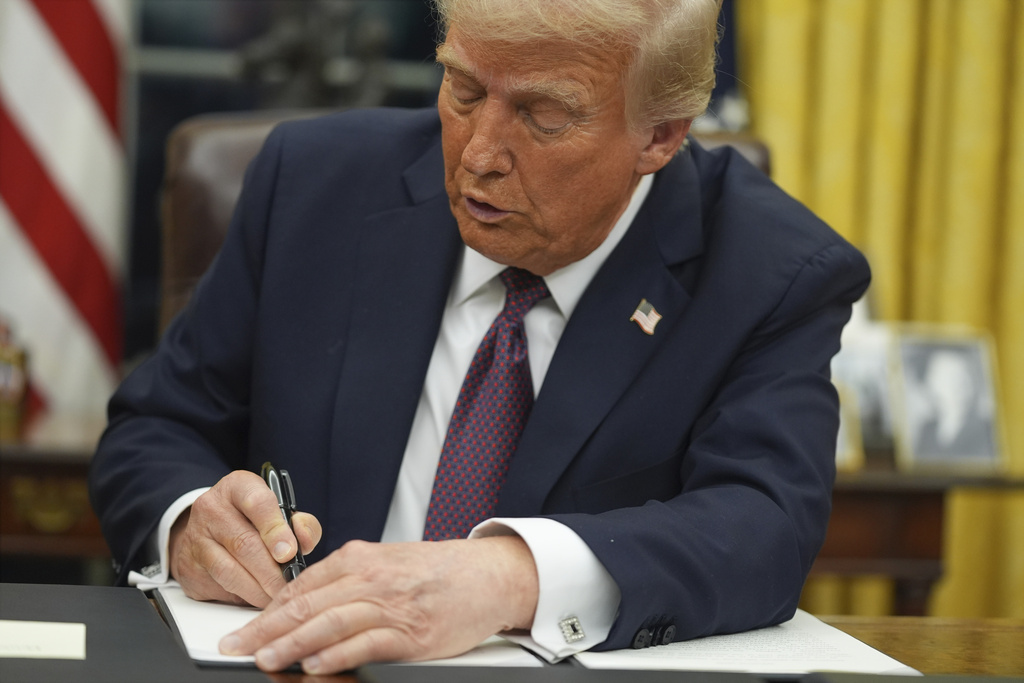
When President Donald Trump announced plans this month to stop corporate investors from buying up single-family homes, the populist proposal spooked many lawmakers of his own party. But for many Nevadans, especially Democrats, the idea was long overdue.
"My initial thought process was, 'OK, is he working with both sides of the aisle to come together for a bill?'" Nevada Housing Coalition Executive Director Maurice Page told The Nevada Independent in an interview this week. "Because this has been a bipartisan issue, especially in the state of Nevada, for a while now."
Trump furthered his promise this week with an executive order to keep the government from facilitating sales of single-family homes to large institutional investors. The order also provides for members of his administration to review rules related to corporate ownership, enforce antitrust laws against institutional investors and prepare legislative recommendations on the issue.
"People live in homes, not corporations," the president wrote. "My Administration will take decisive action to stop Wall Street from treating America's neighborhoods like a trading floor and empower American families to own their homes."
The policy is especially resonant in battleground Nevada. Recent polling showed that many residents consider housing affordability the most important issue facing the state, second only to the economy.
At the national level, members of both major parties have blamed institutional investors snapping up single-family homes for rising costs, and one 2025 survey found that 93 percent of Americans think corporate landlords are making homeownership less accessible.
According to the Government Accountability Office, these purchases have been concentrated in the Sunbelt. A new report suggests one-quarter of Nevada's single-family houses are investor-owned.
State efforts to address the issue have failed repeatedly. In 2023, Gov. Joe Lombardo (R) vetoed a bill to cap corporate ownership, then reportedly blocked a 2025 effort that would have imposed even stricter limits. A bill to limit corporate home purchases to 1,000 units in total died in the Legislature late last year after a bipartisan group of lawmakers added it to the special session agenda.
State Sen. Ira Hansen (R-Sparks) co-sponsored that measure, and state Assm. Alexis Hansen (R-Sparks) worked across party lines to help advance it. But ultimately Alexis Hansen cast the deciding vote against it after critics complained the bill was rushed. The two of them issued a joint statement Wednesday in support of Trump's order.
Whether the Trump administration's plan would actually pay dividends for Nevadans is unclear. Brian P. Bonnenfant, project manager at UNR's Center for Regional Studies, pointed out that the executive order does not specify a single-family corporate ownership threshold, that Nevada companies can create new limited liability companies to work around any such limits, and that the order could backfire by reducing investor demand for properties and lessen new construction.
Bonnenfant also argued that most of the institutional investment that was going to happen likely already happened.
"They're really late to the party," he said in an interview with The Indy. "When we are now in the area of 2 percent appreciation rates, it really doesn't make sense for corporate investment in single family homes."
White House listening to Nevada congressional Dems
That isn't stopping Nevada politicians from targeting corporate homebuyers at the federal level.
Sen. Jacky Rosen (D-NV) and Rep. Steven Horsford (D-NV) seized on the president's announcement by sending him a letter urging him to back their Housing Oversight and Mitigation Exploitation (HOME) Act. The bill would make it illegal to charge unreasonable prices for housing and empower the Department of Housing and Urban Development (HUD) to analyze data on institutional investors.
"My bill, the HOME Act, is the only ready-to-go legislation that accomplishes what his post talked about," Horsford, whose seat Republicans are targeting this year, said in an interview with The Indy. "We are constantly reaching out to the administration, whether it's directly to the president or his representatives … and I will continue to do so."
Horsford expressed support for Trump's executive order, which includes some planks of his bill, but said it didn't go far enough. The bill, unlike Trump's order, would create permanent limitations on government investments in companies driving up prices and empower HUD to investigate the biggest institutional investors.
"I'm pleased to join with Sen. Rosen to make the president aware that this is a serious problem and that regardless of whose idea it is, it needs to get done," he added.
Rosen also emphasized her longtime commitment to the issue.
"Affordable housing is out of reach for far too many Nevadans, and part of the problem is bad actor corporate investors who buy up homes and drive up prices," she wrote in a statement to The Indy. "I've been working for years to crack down on this corporate price gouging with my HOME Act, and I'm glad to see Donald Trump is finally taking this important issue seriously."
Rep. Susie Lee (D-NV), who represents the state's most competitive district and has co-sponsored Rosen and Horsford's bill, agreed.
"While the President's decision to take action to protect families and expand access to homeownership is a step in the right direction, we must provide more than temporary assistance," Lee wrote in a statement to The Indy. "Congress must pass the HOME Act to go after more of these Big Corporate Landlords so we can lower costs and protect our families, seniors, and veterans from predatory practices."
The White House did not answer a question from The Indy about whether the administration was open to partnering with Rosen and Horsford. But a Rosen spokesperson told The Indy that the White House had responded to her letter with Horsford, telling her office that they want to stay engaged with her team on the topic.
In a statement, White House spokesperson Davis Ingle wrote, "President Trump pledged to improve housing affordability for Americans still reeling from Joe Biden's economic disaster, and the Administration is committed to exploring every tool possible to deliver for the American people."
The GOP's primary campaign arm agreed.
"After four years of Bidenflation, President Trump is lowering costs and making the American Dream affordable again," Republican National Committee Western Regional Comms Director Nick Poche wrote in a statement to The Indy. "From buying a house to no tax on tips, Republicans will continue to deliver for Nevadans."
Corporate landlords are easy bogeymen for leaders across the political spectrum, but the path forward on affordable housing in Nevada is complex. Bonnenfant stressed that a lack of supply is a key part of the problem and members of both parties have previously stressed the importance of unlocking federal land for development.
Asked in a December interview with The Indy if corporate ownership was part of the housing affordability problem, the state's sole congressional Republican, Rep. Mark Amodei (R-NV), suggested it was a piece of the puzzle.
"If somebody's got an idea for a better mouse trap, it's like, listen, we'll look at anything," he said.
Democratic gubernatorial candidates side with Trump
Outside of federal elections, Trump's new proposal could also influence the state's most competitive race: the fight for the governor's mansion.
"The President's Executive Order will have to be reviewed in further detail, but I believe any work to limit corporate homeownership is a step in the right direction towards making housing more affordable in Nevada," Attorney General Aaron Ford (D), who is widely considered the front-runner for his party's nomination, wrote in a statement to The Indy. "While Governor Joe Lombardo has repeatedly blocked efforts to do this legislatively, the President and I agree that Nevadans live in homes, not corporations, and my Affordable Nevada housing plan is centered around limiting corporate homeownership."
The governor said in a statement this month that he has been developing a working group to address the issue at the state level. Lombardo spokesperson Elizabeth Ray has told The Indy that the governor supports Trump's efforts.
In a Wednesday interview, gubernatorial candidate Alexis Hill (D) emphasized to The Indy that Ford and Lombardo have held power while corporate investors bought up homes and the affordability crisis worsened. She said she supports Trump's executive order "in concept."
"I'm a little concerned about how much enforcement is actually going to be happening and is this to look like there's some action being taken," she said. "But hey, if actual individuals can get in on foreclosures prior to hedge funds and corporate entities — that's one piece of this executive order — that's a plus."
The president has given the Treasury secretary 30 days to develop definitions to help implement the order. But while there are still many blanks to fill in, ordinary voters likely aren't too hung up on the details.
"When I talk to folks, regular Nevadans, they just want to see things go down in cost," Page said.
Support Independent Elections Coverage and Journalism in Nevada
You’ve enjoyed unlimited access to our reporting because we’re committed to providing independent, accessible journalism for all Nevadans.
But sustaining this work — informing communities, holding leaders accountable, and strengthening civic life — depends on readers like you.
Nevada needs strong, independent journalism. Will you join us?
A gift of any amount helps keep our reporting free and accessible to everyone across our state and funds our elections coverage.
Choose an amount or learn more about membership