
State punts plan to curtail water in Nevada's largest river basin amid severe drought


Six months after the state's highest water regulator had raised the nuclear option and proposed cutting water for Northern Nevada's Humboldt River Basin, the state now says it has no plans to issue a curtailment order.
It breaks from plans initiated by the former state engineer, who was ready to issue a draft order over the winter outlining potential cuts to the basin until he was fired by the state late last year.
"The draft curtailment order is on hold at this time, and no new release date has been set," according to Jenny Jackson, spokesperson for the Department of Conservation and Natural Resources (DCNR), which oversees the state engineer's office.
It isn't the first time the idea of curtailment has flopped — in fact, Nevada has never successfully implemented it. Efforts at cutting back water use in other basins have ended up in litigation, something the state fears for the Humboldt, and almost all parties involved in the issue say is inevitable.
Upstream and downstream water users in the Humboldt River Basin, including some of the state's largest mining operations and agricultural producers, have battled over water allocations for years. Some downstream water users who have priority water rights allege groundwater pumping by upstream users is robbing them of their share of water, an issue exacerbated by ongoing drought.
Because the basin is contained in Nevada, the nearly 17,000-square-mile river system is subject only to state jurisdiction. Amid terrible drought in 2015, the Pershing County Water Conservation District sued the state engineer's office, challenging its management of the basin.
Following the lawsuit, models were then created to measure how much snowmelt the basin captures annually. Stakeholder working groups were convened. And last winter, the former state engineer floated the idea of curtailment as a way to bring together basin decision-makers.
But he was pushed out before the draft order was issued — and the basin proceeded to experience its overall worst snowpack on record, meaning some water users will be strapped this summer.
Still, "curtailment remains a last-resort tool," Jackson told The Nevada Independent in an email.
Jackson said the state has identified a range of solutions for the Humboldt, including allowing for the buying and selling of surface water rights, requiring users to find surface water to replace the groundwater they've been pumping, and creating a sub‑conservancy district. But she said more work is needed to refine the strategies.
"This is a deliberate process, and taking the time to get it right is critical to long-term, durable success," she said.
But, according to those involved in the basin, some of the measures the state is proposing can already be done; others won't work without the threat of curtailment. And for some basin water users, delays by the state translates to lost income.
"It's kind of been this pervasive kick the can down the road," said Micheline Fairbank, a natural resource attorney and former deputy administrator at the state engineer's office.
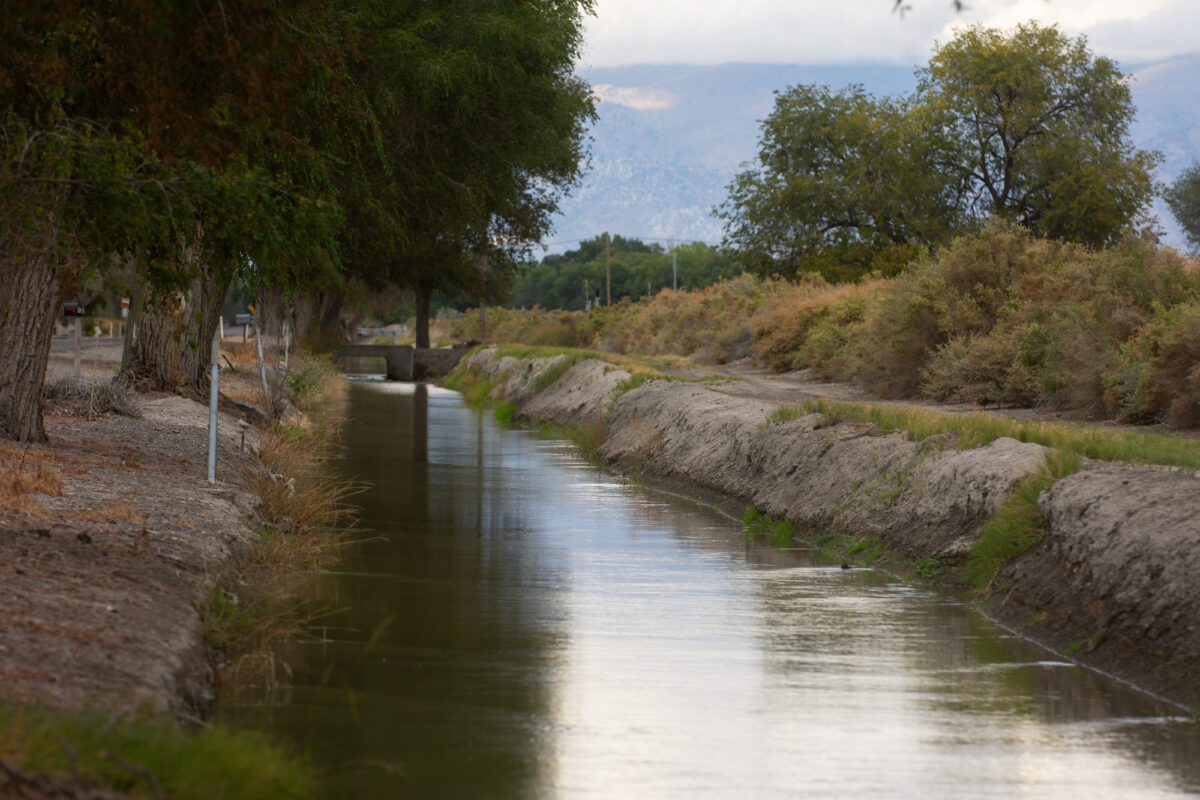
"You pick the best stuff and water … and hopefully get something"
The Humboldt Basin's predicament has become more acute as drought conditions plague the West. Some years, senior decreed water users — most of whom are at the lower end of the system in Pershing County — don't receive full water allotments. Other years, they receive no water.
In 2022, the 100 or so irrigators served by the district received no water, the third dry year within a decade. They also received no water in 2014 and 2015.
This year is only marginally better.
Irrigators in the county's water conservation district relying on surface water will receive an allotment of just a ¼ acre foot of water, far shy of the usual 3 acre feet. An acre foot of water equals a little less than 326,000 gallons.
In such a low water year, "you pick the best stuff and water … and hopefully get something out of it," said Phillip Schmith, manager of the Pershing County Water Conservation District.
The Upper Humboldt Basin spans across eight counties, drawing water from mountain ranges including the Ruby, Jarbidge and Independence ranges.
Those mountain ranges, along with much of the West, saw record-low snowpacks this year followed by an extremely warm March. What the U.S. Drought Monitor called the "snow-eater heat wave" led to abrupt, rapid snowmelt.
The amount of water contained in snow usually peaks around April 1, but this year, the upper Humboldt Basin recorded a snowpack that was just 7 percent of median while the lower basin's snowpack was just 1 percent of median.
Near the bottom of the river sits Rye Patch Reservoir. This year, storage in Rye Patch had just 25,100 acre-feet of water as of late April — a little over 10 percent of its capacity and about one-fifth the water it held at the same time last year. River flows throughout the rest of spring and early summer look to be abysmal.
Irrigators at the lower end of the river basin will face "a lean season," according to federal water officials.

'The primary tool available'
In 2015, the second consecutive year senior lower Humboldt Basin water rights holders received no water, the Pershing County Water Conservation District filed a petition against the state engineer's office, claiming that in half of the previous 20 years, senior surface water rights holders received less than 50 percent of their full allotment while other, more junior, groundwater rights holders received full allotments.
An agreement was eventually reached that the state would find a way to protect senior water right holders. It issued an interim order halting any new permits, launched the Humboldt Working Group and contracted with the U.S. Geological Survey and the Desert Research Institute to develop water capture models for the basin — basically, how much snowmelt was being collected in the basin and flowing into the Humboldt River.
More than a decade later, one of the models has yet to be released and another has raised concerns, including from former DCNR Administrator James Settelmeyer, who left the department earlier this year to run for the congressional seat being vacated by Rep. Mark Amodei (R-NV). As head of DCNR, Settelmeyer questioned the science behind the model but never ordered a new model, although Jackson said Nevada's Division of Water Resources (NDWR) is now working internally to update it.
Meanwhile, the state engineer's office inched closer to issuing a draft curtailment order.
"Curtailment is the primary tool available to protect senior rights and manage overuse," the division wrote in a one-page memo. "That's why NDWR is preparing to release a draft curtailment order — not as a final decision, but as a starting point for public input and local solutions."
The proposal outlined implementing cuts starting five years after a final order was issued. Those cuts would have extended to all groundwater rights junior to 1938 in the portions of the basin known as the "capture management zone," where the basin pulls its water from. The draft also gave the engineer the ability to withdraw the curtailment plan.
Then-state engineer Adam Sullivan was fired before the draft order was issued. He was replaced by Joe Cacioppo, a civil engineer with three decades working in water and resource management.
Read more: 'It was a shock': Nevada water regulator speaks on why he was fired
The idea of curtailment "was too big of a hammer for the situation," said Reed Cozens, general manager of the Carson Water Subconservancy District and president of the Nevada Water Resources Association. "But I don't know what other levers are available to get people together to talk."
Curtailment is still an option, according to NDWR, but there are no plans for it in the basin at this moment.
"Everyone feels we've taken 10 steps backward," Schmith said.
'An agreement between everyone'
As drought conditions have grown worse across the West, the idea of curtailment has sprung up more often. But it's never been successfully implemented in Nevada.
"Curtailment is the blunt tool available to the state engineer," said Fairbank, the former deputy administrator.
Orders issued in 2015 and 2016 for the Mason and Smith valleys were overturned in court after a group of local irrigators united to protest them.
Also in 2015, central Nevada's Diamond Valley was threatened with curtailment if water usage wasn't cut back. A first-of-its-kind plan was approved to reduce consumption, but the plan was immediately appealed by local irrigators who argued it would harm their priority water rights. A District Court judge agreed, noting the state's plan ran "contrary to Nevada water laws."
The threat of lawsuits, Settelmeyer said when he was still leading DCNR, were top of mind as the state moved forward with how to address the Humboldt Basin situation. The former state engineer's agreement with the science that the models used, he worried, would open the state up to litigation, he said in a deposition.
"The state's going to be sued no matter what," Fairbank said, echoing the sentiment of many involved in the matter. "This has languished for so long that the fear of litigation is misplaced."
Support Independent Elections Coverage and Journalism in Nevada
You’ve enjoyed unlimited access to our reporting because we’re committed to providing independent, accessible journalism for all Nevadans.
But sustaining this work — informing communities, holding leaders accountable, and strengthening civic life — depends on readers like you.
Nevada needs strong, independent journalism. Will you join us?
A gift of any amount helps keep our reporting free and accessible to everyone across our state and funds our elections coverage.
Choose an amount or learn more about membership