


OPINION: Harry Reid changed the game — but what was the game?

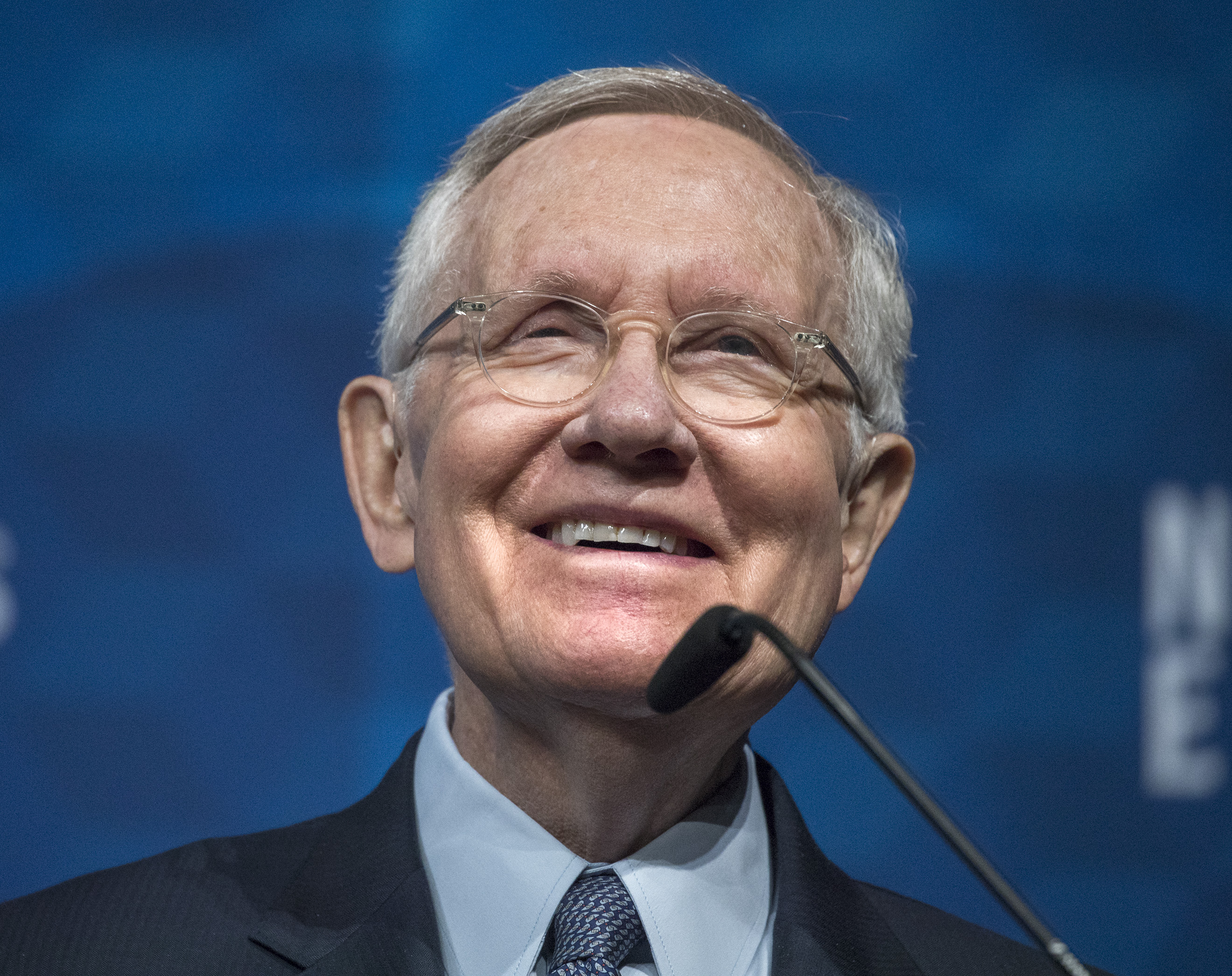
As I read Jon Ralston's The Game Changer last month, my thoughts repeatedly turned toward the "game" Harry Reid changed.
While Reid was escaping the crushing poverty of his upbringing in Searchlight, the New Deal coalition — a political movement that successfully made the case for leveraging an industrial-scale government against the Great Depression and the nation's enemies during World War II — began to fracture.
The institutions designed during the Great Depression to develop and regulate the economy were, in the eyes of many, captured by the businesses they were ostensibly supposed to monitor. Soviet spies stole the secrets of the atomic bomb from the same military and scientific establishment that was celebrated for defeating the Nazis and the Japanese. Americans, reading about Operation Northwoods, COINTELPRO and the Pentagon Papers, learned that their federal government was habitually lying to them and surveilling them. The Civil Rights Movement highlighted the openly corrupt and violent political machines that still operated at the state and local level in many parts of the country — as did the open tolerance of the Mafia in Nevada's casinos.
By the time President Richard Nixon put together his enemies list and sent operatives to break into the Watergate Hotel, trust in the government's ability to act in the public interest was plummeting. Activists such as Jane Jacobs, Rachel Carson and Ralph Nader began to develop the public advocacy organizations that, as Paul Sabin described in Public Citizens, would entangle all levels of American government in legalistic red tape for decades.
Harry Reid's political career spanned what followed, which Liberal Currents describes as the Long '90s — a period that peaked with the termination of the Cold War in 1991 and ended with the re-election of Donald Trump in 2024 — during which a specific set of political, economic and cultural assumptions were dominant.
***
Culturally, as Americans recovered from the riots, disorder, assassinations and terrorism of the Civil Rights era, the Long '90s featured something of a gentleman's agreement that racism and the patriarchy were "solved." Women and non-white people could, at least on paper, coexist equally with white men in offices, board rooms and legislatures.
As Ralston highlights on several occasions in The Game Changer, Reid's willingness to live up to this cultural ideal, for lack of a better euphemism, evolved.
In 1986, during Reid's first senatorial campaign, he complained that President Ronald Reagan's immigration amnesty bill was "a bad, bad piece of legislation." According to Reid, "it grant[ed] amnesty to millions and millions of people who came here illegally. That's wrong." He then added, "How can we as a country justify an illegal act and reward them with the greatest thing we can reward anyone with and that is citizenship in this country?"
In 1993, Reid introduced the Immigration Stabilization Act. "To curb criminal activity by aliens, to defend against acts of international terrorism, to protect American workers from unfair labor competition, and to relieve pressure on public services by strengthening border security and stabilizing immigration into the United States," Reid's bill sought to outlaw birthright citizenship for children born from mothers living here without legal permission.
By 2010, however, Reid became an open supporter of the Development, Relief, and Education for Alien Minors (DREAM) Act, which would give a path to citizenship to a subset of immigrants lacking permanent legal status. His support for the measure was controversial even among his own team, who worried it would motivate white, rural voters to vote against his re-election campaign. In hindsight, it worked out.
The Game Changer also highlights occasions when Reid explicitly "wanted a Black woman" or "an Asian" to serve on the federal judiciary to replace "all these judges, all white men" that he saw in the federal judiciary.
To his credit, Reid's overt focus on demographics allowed him to find and recommend otherwise overlooked potential nominees. Johnnie Rawlinson, Nevada's first Black federal judge, was later promoted to the 9th U.S. Circuit Court of Appeals. Gloria Navarro, another Reid nominee, would later declare a mistrial in the case against the Bundy family following the Bunkerville standoff. Miranda Du, meanwhile, was appointed as the first Asian American and Pacific Islander federal judge — she would later rule against abolishing Nevada's legal brothel industry.
Unfortunately, Reid's lack of pretense — which wasn't unique among his colleagues — fed into a growing sense among some who benefited from such race- and gender-focused hiring practices that they were being hired to "cure racism" instead of the job they were hired for. Others among the left, meanwhile, developed a grinding cynicism about the seeming unwillingness of Democrats, such as Reid, to meaningfully address the historical and systemic issues that plagued women and minorities.
Should there have been more Black women slaveowners before the Civil War? Would Jim Crow have gone differently if there were more gender-fluid parents from disadvantaged communities collecting poll taxes and grading literacy tests? Should there be more intersex people of color with intercontinental ballistic missile launch codes? To ask these questions is to reveal that the answers optimize and reinforce systems we should never have had in the first place.
In more conservative circles, meanwhile, the overt logic used by Reid and others like him is now being used by the Trump administration to fuel a narrative of "DEI hires" and "white replacement." That in turn is being used to seize control over education, Scouting America (formerly known as the Boy Scouts) and, most trivially, even changing the default font used by the State Department.
***
Economically, Reid's political career came of age at a time when the policies of the New Deal coalition were beginning to unravel. Stagflation — a phenomenon of high unemployment, stalling economic growth and growing inflation — plagued the nation through the 1970s. The Central States Pension Fund, which was created by the Teamsters Union as a retirement fund for its millions of members and was used by union president Jimmy Hoffa to finance several early Las Vegas casinos, was collapsing after years of mismanagement. President Jimmy Carter, a Democrat, adopted a policy of aggressive deregulation to increase competition and reduce prices for Americans, only to lose his re-election campaign to someone who was even more skeptical of the government's involvement in the economy than he was.
It's no surprise then that, according to The Game Changer, Reid was largely "more of a Wall Street Journal guy" through most of his political career. Though Reid was "a Democrat by choice" who believed in working people and helping the poor, he also believed in "Nevada know-how" — and Nevada know-how meant fighting every single gambling and mining tax that reached the Senate floor. Reid blocked a tax on the winnings of foreign nationals, a 4 percent tax on casinos that was proposed by fellow Democrat President Bill Clinton and any attempts to reform the General Mining Act of 1872.
Facing the challenges of the Great Recession toward the end of his career, Reid became an enthusiastic supporter of President Barack Obama's economic stimulus and health care bills. Even with those measures, however, he wasn't dogmatic. When he realized the votes weren't there to include a public option in the Affordable Care Act — Nevada became the second state in the nation to enact one in 2021, more than a decade after the act's passage — he didn't push. He let the public option die and successfully fought to ensure the passage of the rest of the bill.
***
This finally brings us to the political assumptions of the Long '90s — the very same ones that Reid mastered during his career — that we're still living with today.
President Ronald Reagan once remarked that, "The nine most terrifying words in the English language are: I'm from the government and I'm here to help." In the context of what Americans learned about their governments — federal and local — in the 1960s and 1970s, this joke hit home. Supported by a growing and eager army of bureaucrats, the New Deal coalition and its descendants built a machine that brought the world to the brink of armageddon, leveled the jungles of Vietnam and spied and conspired against its own citizens.
To bring the government to heel, reformers such as Nader demanded that the government hold itself accountable — and took it to court if it didn't. The National Environmental Policy Act was passed to require the federal government to evaluate the environmental impacts of its actions and decisions. The Privacy Act of 1974, designed to be an "American Bill of Rights on data," was passed to prohibit the government from sharing data and information with itself without the written consent of the individuals it's collecting data on. The Paperwork Reduction Act was passed to require agencies to measure the paperwork burden of any proposed information collection effort prior to collecting data.
Thanks to these reforms, the federal government must now generate paperwork on paperwork burden before it can generate paperwork that collects information on anything other than paperwork burden. Additionally, even if one federal agency already collects information other federal agencies are interested in using, they can't use it — instead, each agency has to design its own data collection form, generate paperwork on the paperwork burden imposed by said form and then, once that burden has been measured, collect its own data. Finally, if a federal agency fails to evaluate the environmental impact of that paperwork burden or data collection before it decides to generate additional paperwork, it can be taken to court.
This is the sort of tail-chasing bureaucracy you end up with in a country of citizens who don't trust each other, much less any government supported by a majority of these untrustworthy Americans we're all surrounded by.
By the time Reid was elected to federal office in the 1980s, the lack of public trust in its own government dampened any enthusiasm for using the power of the government to aggressively solve problems for anyone. Instead, the defining ethos of the Long '90s was to get politics out of government — and government out of our lives.
To help signal that Democrats got the message, Vice President Al Gore led an effort to reform and reinvent government in the 1990s. His efforts led to the largest reduction of the federal workforce until Trump arrived with Elon Musk and his Department of Government Efficiency — 377,000 employees were removed from the federal payroll.
Consequently, Reid focused on small ball, on scoring political base hits that nudged toward his desired outcomes. Chapter after chapter of The Game Changer shows Reid fighting against — against Indian gaming, against taxes on casinos or tips, against additional taxes or regulations on the mining industry — but seldom shows him fighting for much. When he did fight for something, it was for infrastructure projects in the state — pork, in other words — or for wilderness areas that rural Nevadans never forgave him for.
What else could he do? What else did anyone actually want him, or anyone else in Congress, to do?
***
In many respects, The Game Changer highlights how Reid — the most powerful and successful politician in Nevada history — gained and secured his power not by overturning or meaningfully challenging any of the assumptions of the Long '90s, but instead by faithfully working squarely within them. His successes, failures and limitations can therefore be seen as indicative of an age, one which achieved undeniable progress on issues where people needed freedom from the government — freedom from the government's unwillingness to protect personal and property rights for women and minorities, freedom from the government's unwillingness to recognize interracial or same-sex marriages and so on — but struggled with imagining what any collective institution could deliver anyone the freedom to do.
Reading The Game Changer left me wondering: What would Reid have accomplished in a more trusting and more optimistic age? What would it take to build that age today?
David Colborne ran for public office twice. He is now an IT manager, the father of two sons and a recurring opinion columnist for The Nevada Independent. You can follow him on Mastodon @[email protected], on Bluesky @davidcolborne.bsky.social, on Threads @davidcolbornenvor email him at [email protected]. You can also message him on Signal at dcolborne.64.
Support Independent Elections Coverage and Journalism in Nevada
You’ve enjoyed unlimited access to our reporting because we’re committed to providing independent, accessible journalism for all Nevadans.
But sustaining this work — informing communities, holding leaders accountable, and strengthening civic life — depends on readers like you.
Nevada needs strong, independent journalism. Will you join us?
A gift of any amount helps keep our reporting free and accessible to everyone across our state and funds our elections coverage.
Choose an amount or learn more about membership