
'Difficult and daunting': Nevada prisons struggle to address inmates' medical needs

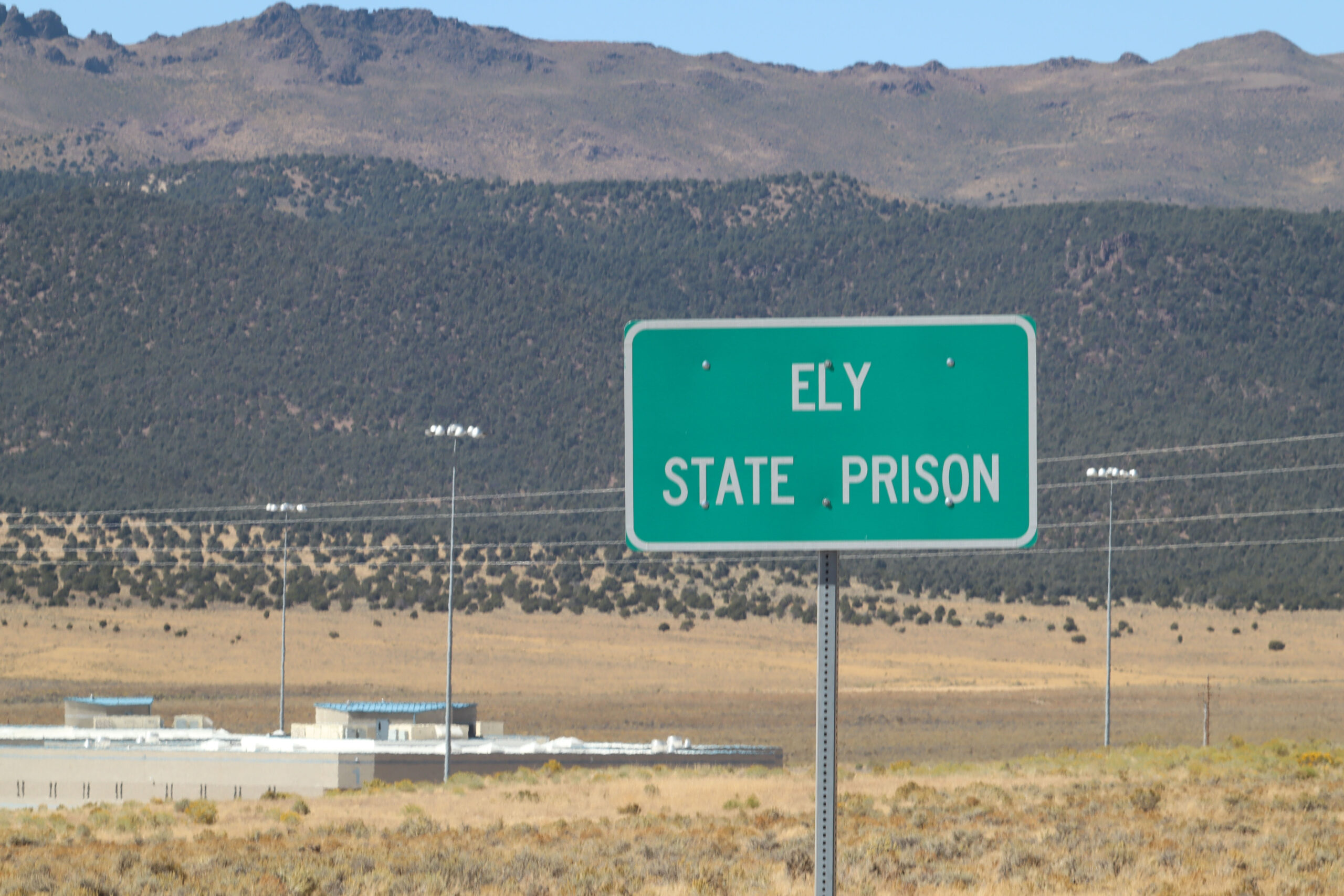
Julius Ludwig has been in a Nevada prison since 2011, serving a life sentence for multiple burglary convictions. He has spent the last decade of that sentence with severe chronic pain in his legs that began in his left hip and eventually spread to his right side. Only 55, for years he has used a walker to get around.
Ludwig claims in court documents that a Nevada Department of Corrections (NDOC) doctor ordered his hip replacement surgery on his left hip in 2017. He finally got the surgery six years later.
Now, he is suing NDOC for violating his Eighth Amendment rights against cruel and unusual punishment. A federal judge in Nevada recently approved his request for a court-appointed lawyer, finding he "has demonstrated he is likely to succeed on the merits if his case proceeds to trial."
Ludwig is one of dozens of people incarcerated in NDOC prisons who believe the department is neglecting their medical needs. The Nevada Independent surveyed lawsuits, complaints and medical records to examine how state prisons have fallen short in meeting incarcerated patients' medical needs, revealing lapsed prescription refills, delayed or unscheduled surgeries and inconsistently applied, nontransparent treatment policies.
Ludwig, who's incarcerated at Northern Nevada Correctional Center in Carson City, said at first he believed his medical care was poor because he was in prison, but now he believes it is because NDOC has failed to do its duty.
"At first you just say, 'Oh, this is the way it is.' I didn't realize that they were doing anything entirely wrong. I thought, 'I'm locked up, and this is how it's supposed to be,'" Ludwig said. "But it's really not."
Nevada is in the minority of states where the prison agency manages its own system of medical care and does not contract with a private company to provide healthcare. State officials have publicly said on multiple occasions they are struggling to maintain a prison medical workforce that can meet the complex health needs of Nevada's aging prison population.
The prison agency's medical administrator, Russ Alfano, said it was "extremely difficult and daunting to recruit and retain" medical practitioners for prisons during an April presentation to the Interim Finance Committee — a group of lawmakers that approves payments to state agencies while the Legislature is out of session.
During that meeting, the board appropriated $4 million to help increase medical staffing and authorized NDOC to transfer $1.8 million to its medical department from a prison fund reserved for protecting the well-being of its prison population. In June, another $960,000 was requested to extend medical contracts with external providers, and is now awaiting approval from the finance committee. These are just some of the moves the agency has pursued this year to recruit staff and improve medical care, including rehiring retired correctional officers, using outside medical providers on short-term contracts and implementing a telemedicine system.
But some advocates and lawyers, pointing to the state's yearslong struggles to administer quality medical care, say they're dubious about promises of improvement. Nevada has long spent significantly less on incarcerated individuals in general, and especially on their healthcare, than other states.
"They don't have systems in place, despite these issues being pretty long-standing," said Las Vegas-based lawyer Cristina Valentine, who's won multiple medical neglect settlements on behalf of inmates. "It's never clear who's supposed to be doing what. ... Everybody's always pointing fingers."
Seventy-six people died in Nevada's correctional facilities last year — a record for a non-pandemic year. While some deaths were due to overdose, suicide or homicide, more than half stemmed from medical issues.
"We do not have the latitude" to meet the medical needs inside the prisons themselves, Alfano said during the finance committee meeting. "We have to send people out."
He said prisons schedule medical appointments for incarcerated patients as quickly as possible, whether they need an internal or external clinic visit. But he explained that a lack of adequate staffing internally means the state must send offenders to outside medical providers — a last resort that lengthens wait times for necessary medical procedures and drives up the cost to taxpayers.
Data provided by NDOC to The Indy shows that across the board, prisons have seen an increase in the number of inmates submitting requests for medical care — known as kites — while the number of in-prison clinic visits declined. At High Desert State Prison, the number of kites doubled between fiscal years 2024 and 2025, while the number of in-prison clinic visits was cut in half.
Instead, incarcerated patients are being taken to medical facilities outside the prison for care. These visits can be time-consuming, so the more there are, the more it costs the department in overtime pay for the correctional officers transporting and monitoring the patients.
An external audit of NDOC prisons in 2025 concluded that the staffing crisis was putting incarcerated patients' lives at risk and reported that some of the agency's longtime medical employees said they had "concerns about their ability to meet healthcare standards."
"This is a systematic problem in NDOC," said Paola Armeni, a Las Vegas-based civil rights attorney that handles medical indifference claims. "Its medical department is horrible, and the state's going to just keep on paying out millions and millions of dollars a year unless something changes."
Overburdened, underpaid staffers
State officials say a staffing crisis is to blame for the healthcare issues and that it's especially hard to fix in Nevada, where rural prisons and lower pay make the medical jobs less attractive.
NDOC spokesperson Teri Vance wrote to The Indy in a statement that "staffing challenges remain a high priority" at all prisons.
Vance also wrote that the system could "facilitate greater efficiency" in addressing incarcerated patients' medical needs if it had "higher reimbursement for providers, state employment for pharmacy contractors and electronic medical records."
Nevada's medical spending per offender was $5,900 in 2025, roughly equal to the average annual state medical spending per offender back in 2015, the most recent year for which comparable data across states is available. At the time, Nevada ranked third to last nationwide. Comparatively, California spent nearly five times this amount — more than $26,000 — on each inmate's medical care in 2025.
Alfano told the finance committee in April that prison medical practitioners in Nevada receive a "noncompetitive salary," citing Oregon as an example of a state that boosted pay to correctional staff in an effort to improve prison healthcare.
Along with inadequate pay, Alfano said he's heard medical staffers are turned away from prison roles because Nevada's major correctional facilities are in places such as Ely and Lovelock, hours from urban centers.
The job itself is difficult regardless of location, requiring doctors and nurses to work with a population of patients that can be difficult to treat and sometimes violent. Incarcerated individuals are significantly more likely than average Americans to struggle with chronic diseases and need complex medical care, often due to years of medical neglect, substance abuse or mental health issues before entering prison.
"The state cannot keep their medical positions in prisons filled because they are underpaying people, or they're in rural areas, or the prison conditions are just unsuitable for someone who has a degree or licenses or certifications," said Justin Iverson, a UNLV professor who studies incarceration.
Iverson said it means the prison system doesn't always attract the highest-quality professionals.
Incarcerated individuals and lawyers who spoke to The Indy said that in their experience, the medical staff within prisons tend to be unsympathetic and combative. When incarcerated patients are able to see medical providers outside the prison, they say the care is far superior.
"There is undoubtedly a substantial problem with the lack of staffing for the positions. There is more work than can be equitably and reasonably done," said Travis Barrick, a Las Vegas-based lawyer who has won multiple medical neglect settlements against NDOC.
"But there are also problems with the people that are staffing the positions," Barrick added.
Alfano, the agency's medical administrator, told lawmakers in April that NDOC's in-unit medical practitioners don't always have the specialized knowledge necessary to treat more complex conditions.
This staffing gap means prisons must send more incarcerated patients to hospitals or outside providers and fill vacant medical positions with short-term hires.
Between fiscal years 2019 and 2023, the number of internal clinic visits dropped by more than 100,000, while the state spent roughly four times as much on contract, short-time medical staff.
But Nevada's generally weak healthcare system means even when incarcerated patients are approved to receive outside specialized medical care, they may have to wait months or years before they are actually treated.
That's because Nevada has widespread shortages in nearly every field of medicine, with some of the lowest rates of specialized doctors nationwide.
Even if the right doctor exists for the job, Alfano told state leaders that it can be hard to convince hospitals or doctors to take incarcerated patients — an issue the state has struggled with for years.
Overtime issues
With more and more incarcerated patients being sent outside of prisons for medical care, NDOC is facing new transportation and safety concerns and an explosion in the agency's overtime costs.
Correctional officers are required to transport and monitor the patients when they go to external medical appointments, which can sometimes involve an overnight trip. But because these duties aren't in many correctional officers' job descriptions, the state must pay overtime for this work.
Outside medical visits can further stretch prisons' staffing capacities due to the more stringent oversight requirements for offenders who leave prison grounds. Minimum security offenders must have one prison guard with them at all times while being transported to external medical treatment, while maximum security offenders require two guards at all times.
One NDOC administrator wrote in a January 2026 report that prisons were "severely understaffed" when it came to supervising offenders in the hospital, even as demand for coverage is rising. An NDOC overtime audit from 2025 found that the number of overtime hours officers spent bringing incarcerated patients to medical appointments rose 23 percent from 2020 to 2024; this correlated with an additional $2.25 million in overtime costs.
Cost is not the only problem. Correctional officers say the long hours make it more likely they'll fail to spot a sudden medical emergency.
"When you have burned-out officers, when you have people that are exhausted, that can't see straight from doing double shifts, when you have an overtime crunch … what that gets you is less eyeballs paying attention and less ability to respond in a quick manner," said Paul Lunkwitz, president of the correctional officers' union in Las Vegas.
Prescriptions
There are particular bottlenecks in incarcerated patients' access to prescriptions.
After years of complaints over late or delayed prescription refills, the Legislature in 2023 enacted a law, AB121, enabling prescriptions for inmates to automatically refill.
But that didn't speed up the process for when inmates run out of their refills and need the prescription renewed. Barrick and other lawyers say this makes sense from a health and safety standpoint but creates critical gaps in care.
"People are on important medications, and they need to be uninterrupted, and the doctor doesn't show up to renew it," Barrick said.
According to NDOC policy, only doctors or pharmacists can prescribe medications, not nurses. The prison agency told The Indy in June that of the six prisons that host the vast majority of Nevada's prison population, only two — High Desert and Ely — have full-time senior physicians on staff. The remaining prison facilities are staffed only by nurses.
That gap dramatically slows the administration of prescriptions, inmates and lawyers say, forcing them to miss prescription refills or wait months for renewal.
As part of NDOC's push to mitigate the fallout from its staffing issues, the agency launched a new virtual telemedicine option in May for inmates at Lovelock and Northern Nevada Correctional Centers, as well as High Desert, located about 45 minutes outside of downtown Las Vegas.
"It is our hope and prayer that those take care of some of the more common chronic clinical things, such as refilling prescriptions or follow-up after a treatment or a procedure," Alfano said at the recent meeting with state leaders.
Medical records from one incarcerated patient at High Desert, who's in the process of suing NDOC in federal court, show that prison employees repeatedly failed to deliver his prescriptions, ignored his attempts to seek clarity on his lapsed prescriptions and did not comply with a preliminary injunction for prescription renewal issued in the case's earliest stages.
Representatives of NDOC "seem to think partial compliance with a court order is okay; it's not," the federal judge in the case wrote in her decision.
An unpopular solution
The state is trying different ways to fix medical care in prisons, including by transferring funds around and rehiring old staffers. But state officials and experts say the best fix would be substantially greater investment in NDOC's medical system, which would in turn save the state money on costly lawsuits.
"It's an unpopular opinion, but the only way to dramatically improve prison medical conditions is to place greater funding into prisons," said Iverson, the UNLV professor.
He said such a proposal is unpopular "on both sides of the aisle," explaining that Democrats tend to view increased spending on prisons as rewarding a failed system while Republicans view it as spending tax dollars on criminals.
Barrick, the lawyer, also said the answer is more funding.
"To have civilized, non-barbaric healthcare, there's not enough money for that," he said. "A large infusion of money would not fix all the problems, but it fixes a lot of them."
Agency director James Dzurenda is "a good person and has the right intentions with an extremely difficult job," said Barrick, but added that the agency needs more accountability, including through litigation.
Dzurenda has overseen the agency as its vacancy rate declined from its 2023 peak, although nearly 1 in 5 positions remain unstaffed.
In February, two rural prisons were deemed to have "critical labor shortages," enabling them to start rehiring retired correctional officers and physicians.
Despite these efforts, advocates say there's still a long way to go before prisons have adequate and reliable staffing.
"There are problems that are not rooted in heartlessness on the part of NDOC," said Jodi Hocking, executive director of the prison-focused nonprofit Return Strong. "Nevada's laws and practices make healthcare difficult to access in the first place.
"Now complicate that with somebody where we've removed their freedom, their insurance, their ability to advocate for themselves, and getting them access to care is that much more difficult. That's a choice the state makes."
Support Independent Elections Coverage and Journalism in Nevada
You’ve enjoyed unlimited access to our reporting because we’re committed to providing independent, accessible journalism for all Nevadans.
But sustaining this work — informing communities, holding leaders accountable, and strengthening civic life — depends on readers like you.
Nevada needs strong, independent journalism. Will you join us?
A gift of any amount helps keep our reporting free and accessible to everyone across our state and funds our elections coverage.
Choose an amount or learn more about membership