
Here's why two billionaires want to take the Strip's biggest casino companies private

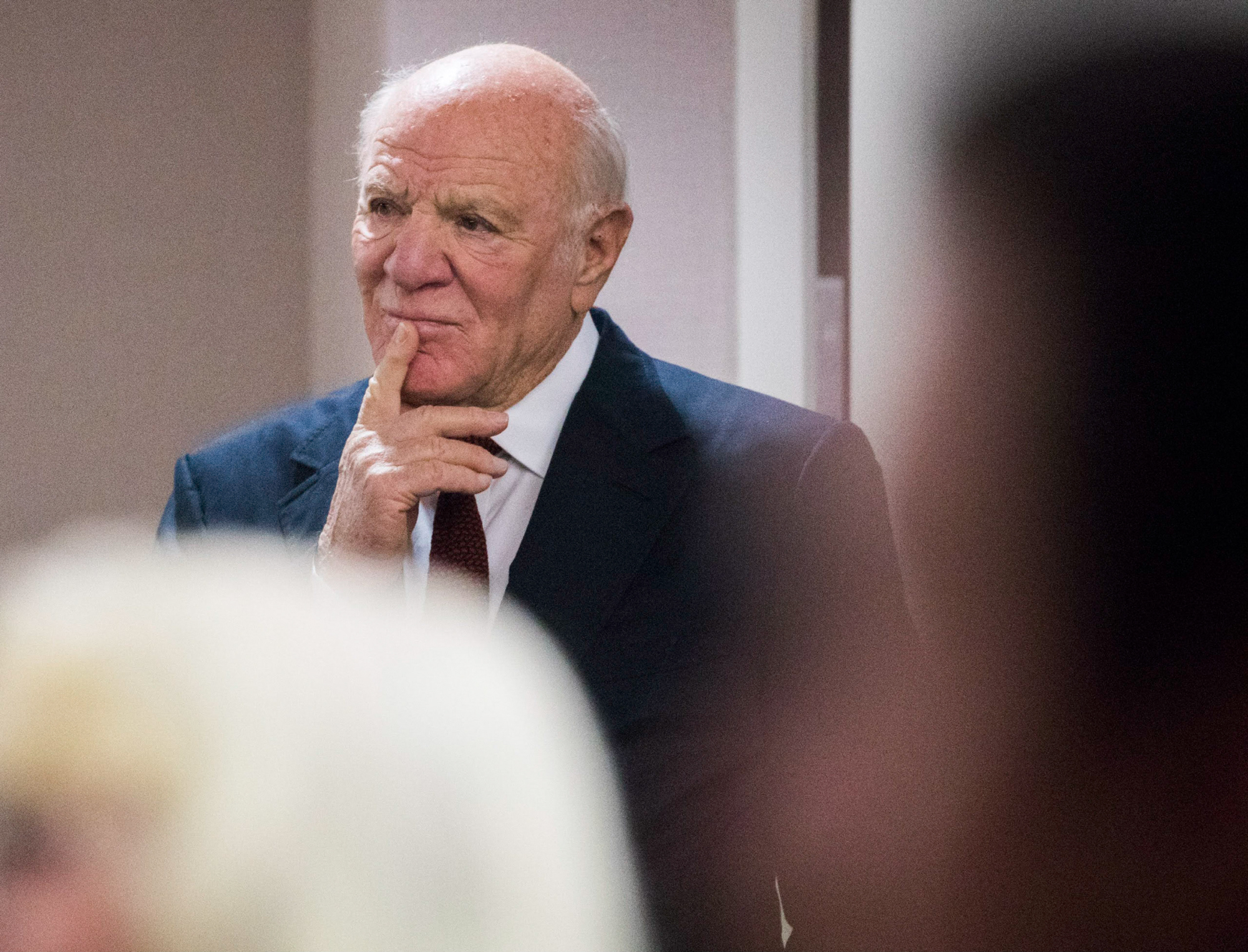
A pair of billionaires could soon take ownership of two of the largest gaming companies and control 25 resorts in Nevada — including 16 properties on the Strip.
Proposed deals for MGM Resorts International and Caesars Entertainment, the Strip's two largest casino operators, have a combined value of $35.6 billion and have properties in more than a dozen states.
In late May, Caesars Entertainment announced it was being acquired by billionaire Tilman Fertitta's entertainment company for $17.6 billion, which includes cash of more than $5 billion and the assumption of nearly $12 billion of Caesars' outstanding debt.
A week later, billionaire investor Barry Diller, whose company, People Inc., owns 26 percent of MGM Resorts International, announced his intentions to buy the remaining 74 percent of the gaming giant for $18 billion — $48.30 per share.
While the pending transactions will create two privately held casino conglomerates, most analysts said they aren't concerned, given the mergers could free up the operators from having to deal with investors and the stock markets. The businesses would no longer be required to release pertinent financial information publicly, such as quarterly and annual revenue figures and salaries for top executives, as required under Securities and Exchange Commission guidelines.
"Being a public company is tough," Macquarie Securities gaming analyst Chad Beynon said in an interview. "You have to meet the quarterly expectations, and if you miss, you're in the penalty box. It's a tough operating environment."
Beynon added that the pressure to meet those expectations often results in "parking fees or resort fees or adjusting promotions" that affect customers.
There is some recent precedent — last year, hedge fund Apollo Global Management paid $6.3 billion to acquire IGT and Everi Holdings, two of Nevada's largest gaming equipment providers, merging the companies under the IGT name and removing both from the New York Stock Exchange listings.
In a January interview with The Indy, IGT CEO Hector Fernandez said overseeing a private company allows executive management to focus on operations and build a corporate structure without having to deal with Securities and Exchange Commission-required disclosure requirements.
"A lot of organizations spend months writing a strategy with hundreds of trees being killed to publish that strategy," Fernandez said. "You're lucky if five people understand it."


Largest mergers in two decades
The deals are the largest involving Nevada companies in more than two decades. MGM acquired Mandalay Resort Group in April 2005 for $7.9 billion. Two months later, Harrah's Entertainment paid $9 billion for Caesars Entertainment, taking on the Caesars name in 2010. However, both merged companies remained listed on the New York Stock Exchange and the Nasdaq.
The unprecedented ownership shake-up also involves real estate investment trust (REIT) VICI Properties, which owns the land and buildings of 30 properties operated nationally by Caesars and MGM. The two companies are responsible for a combined $2.3 billion in annual rent payments to VICI — 70 percent of the trust's total annual income.
Phil Satre, a longtime casino executive and Wynn Resorts' independent, non-executive board chairman, isn't a fan of the REIT structure. Wynn owns its real estate in Las Vegas covering Wynn Las Vegas and Encore, including the vacant former Frontier site across the Strip from the company's flagship resort.
"I'm more worried in some cases about the inability to invest capital because of the rent payments," Satre said in an interview following a June 24 presentation at the Economic Club of Las Vegas meeting at ParkMGM. "When you [consider the REIT] transaction, I think there is the potential to have a more significant impact on your competitiveness because that investment of capital is critical."
Absent the REIT structure, Satre thought the mergers were good for Las Vegas.
Analysts and regulators said it will take well into 2027 before the deals are finalized given the multiple state gaming regulatory agencies, including Nevada's, that will need to sign off the agreements. In addition, the Federal Trade Commission (FTC) will want to ensure that antitrust issues are not a concern.
Las Vegas-based gaming industry adviser Brendan Bussmann suggested the deals could kick off a wave of related transactions.
"While the current trend may be to go private with some of these entities, the pendulum can swing back just as quickly the other way in a few years as stakeholders look to maximize the investment or chart new waters for their company," Bussmann said. "We could see more [mergers and acquisition] activity as this cycle may still not have seen its peak. There will be plenty of opportunity for companies that aren't currently on the front burner."
Culinary Workers Union Local 226 Security-Treasurer Ted Pappageorge put out similar statements after both deals were announced, saying the organization represents a combined 35,000 Las Vegas workers at MGM and Caesars properties and the Golden Nugget Las Vegas.
He said the union doesn't know all the details of the two deals but, "We are confident that based on our relationships with companies, we will continue to have a positive relationship going forward."
Diller has steadily increased his ownership stake in MGM Resorts since 2020. He does not have any other gaming holdings in his portfolio. People is the operating business of his IAC holding company and owns more than 40 media properties.
Diller's initial interest was improving the foothold in the company's digital operations, including BetMGM, its online and casino sports betting business. Outside of Nevada, MGM operates casinos in six states.
"MGM is simply a different ownership structure than Caesars," Truist Securities gaming analyst Barry Jonas said in an interview. "I don't think there will be any FTC issues given [Diller] doesn't own any casinos, and he's already licensed as part of his MGM ownership. I think it will be business as usual, unless as part of the new strategies, they will look to unload any properties."

'Risk is minimal'
Caesars, which operates more than 50 properties in 19 states, may face more antitrust scrutiny. Fertitta owns eight Golden Nugget casinos in five states, including in two Nevada markets: Laughlin and South Lake Tahoe.
Fertitta's Houston-based Fertitta Entertainment controls more than 600 restaurants under multiple brands worldwide, and is the owner of the NBA's Houston Rockets. He is a cousin of Frank Fertitta III and Lorenzo Fertitta, the majority shareholders of Red Rock Resorts. They do not have a financial interest in the deal.
Last week, Texas Capital Securities gaming analyst David Bain quashed rumors that Fertitta might be outbid for Caesars. The agreement includes a "go-shop" period through July 11 in which Caesars could find a better deal.
"The current proposal has already obtained committed financing from [roughly] one dozen of presumably the largest banks, limiting the pool of resources [for] an alternative transaction," Bain wrote in a June 25 research note.
A combined Caesars-Fertitta operation would control three of Stateline's four casinos: Golden Nugget Lake Tahoe, Harrah's Lake Tahoe and Caesars Republic.
Laughlin has eight casino properties. Two are operated by Caesars: Harrah's Laughlin and Tropicana Laughlin. Fertitta owns the Golden Nugget Laughlin. Would that trigger an antitrust concern?
"There could be an issue, but we think the risk is minimal and don't anticipate any forced asset sales," CBRE Equity Research analyst John DeCree wrote in a May research note following the Caesars announcement. "There is geographic overlap across the casino portfolios in several markets. However, we have few, if any, antitrust concerns."
"A typical concern of one company operating many properties in a geographic area is that it could reduce competition, which may lead to increased prices for consumers or decreases in promotional offers," said Brian Tyrrell, a business professor specializing in hospitality and tourism at Stockton University in New Jersey.
Tyrrell said four of the nine casinos in Atlantic City would be controlled by one company after the Caesars-Fertitta merger, noting each property in Atlantic City has a unique brand and target audience.
"Atlantic City casinos not only compete with each other but also with casinos in Pennsylvania, Maryland, New York and Delaware," Tyrrell said. "So, the [Caesars and Golden Nugget properties] will still need to remain competitive."
Analysts also don't view any antitrust issues in Las Vegas given that Fertitta has owned the Golden Nugget since 2005 and downtown is considered a separate destination from the Strip.
Fertitta owns a 6-acre parcel at the southeast corner of the Strip and Harmon Avenue that he purchased for $270 million and where he intended to build a 43-story, 2,420-room hotel-casino. However, that project was put on hold after he became the U.S. Ambassador to Italy last year.
Although he turned over the operations of his corporation to his ex-wife and a top executive, most sources said he was calling the shots from Italy on the Caesars transaction.
Fertitta is also the largest individual shareholder in Wynn Resorts, with a 13 percent stake in the Las Vegas-based casino company. Satre said there has been no discussion between Wynn officials and Fertitta "since he made the decision to acquire Caesars." Prior to the May announcement, there had been "periodic interaction" with Fertitta's company, "but not with him."
VICI, the real estate trust created out of the 2017 Caesars bankruptcy reorganization, would be the big winner in the Caesars-Fertitta merger. VICI owns 10 gaming and non-gaming properties on the Strip with six operated by MGM and two run by Caesars — Caesars Palace and Harrah's Las Vegas.
VICI did not provide any public comments on the transaction and a spokesperson did not return a message from The Indy. The company is expected to provide commentary on the deals during its July 29 quarterly earnings conference call.
Three years ago, Fertitta told Jonas he wasn't interested in the REIT business model. In a March 2023 research note, Jonas wrote that the Houston-based billionaire "prefers to own his own real estate" and that selling the Golden Nugget's land and buildings then leasing back the operations didn't make much sense to him.
Analysts suggested any sales could involve several of the Golden Nugget casinos.
"It depends how married Tilman is to the Golden Nugget brand," Jonas said in an interview.

Privately held gaming companies
A sole operator buying a publicly traded resort or company is not unusual in Nevada's gaming history.
Phil Ruffin, a 91-year-old billionaire, has always owned his casinos without shareholders.
He bought the Frontier in 1997 for $165 million, selling the Rat Pack-era resort 10 years later for $1.2 billion to an Israeli development group that demolished the property but lost the site during the recession. Ruffin acquired two casinos from MGM Resorts in separate deals 10 years apart, paying $755 million for Treasure Island in 2009 and $825 million for Circus Circus in 2019.
In a 2020 interview with The Nevada Independent, Ruffin hinted that being a private operator allowed the deal to move quickly. "They had some other offers, but (the buyers) couldn't have been licensed for more than a year," Ruffin said.
Alex Meruelo owns the Sahara Las Vegas and Grand Sierra Resort in Reno through his privately held Meruelo Group that has numerous other business interests, including banking, real estate and media.
In 2022, The Venetian and Palazzo became privately owned when Apollo and VICI paid Las Vegas Sands a combined $6.25 billion for the two resorts. Apollo paid $2.25 billion for the resorts and VICI paid $4 billion for the 63 acres, but receives annual rent payments of $308.7 million from Apollo.
Support Independent Elections Coverage and Journalism in Nevada
You’ve enjoyed unlimited access to our reporting because we’re committed to providing independent, accessible journalism for all Nevadans.
But sustaining this work — informing communities, holding leaders accountable, and strengthening civic life — depends on readers like you.
Nevada needs strong, independent journalism. Will you join us?
A gift of any amount helps keep our reporting free and accessible to everyone across our state and funds our elections coverage.
Choose an amount or learn more about membership