
Las Vegas DREAMer continues pursuing his dreams, but this time from Mexico
This story has been translated and edited for clarity from its original Spanish version.
MEXICO CITY — On a cold day last December, after living in Las Vegas for 11 years, Ariel Rodriguez packed his bags and his memories and headed back to Mexico.
He left behind his job as a waiter, his car and his classes at UNLV, where he graduated with a journalism degree. Now he uses public transportation, writes for a website, and — for the first time — is able exercise his right to vote.
Those are just a few of the life changes for Rodriguez, an undocumented immigrant from Las Vegas.
"I think he's scaring away a lot of people who have potential and talent, who although they don't have legal documents, that doesn't mean they don't have moral values," said Rodriguez, who came to the U.S. when he was 15. "Beyond the United States, there are many opportunities."
Against the backdrop of a gray sky, the churn of crowds and the incessant sounds of traffic, Rodriguez recently spoke with The Nevada Independent about his emotions and experiences as a DREAMer both inside the United States and abroad.

Life in Las Vegas
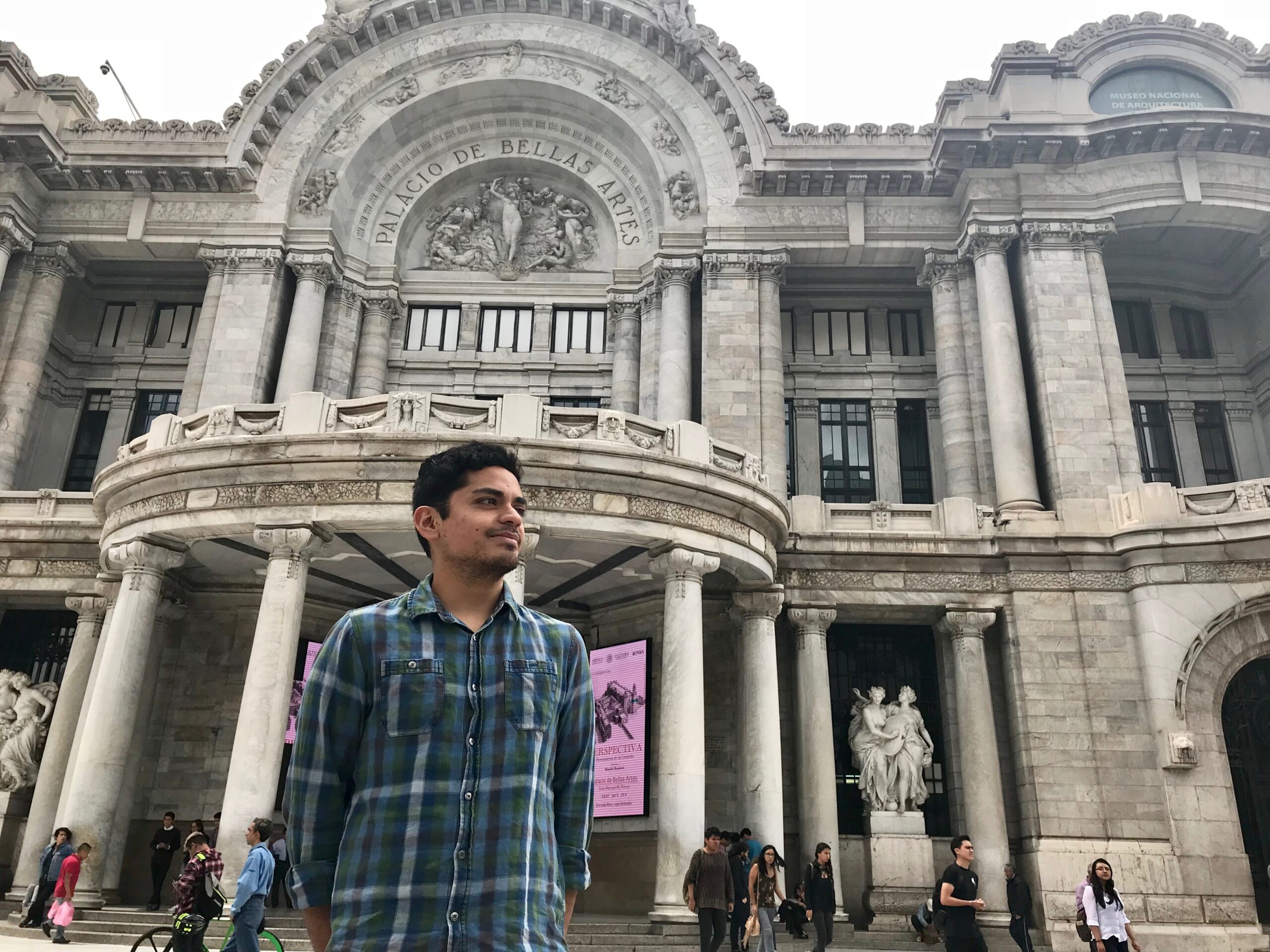
Rodriguez, 26, tells his story as he sits at one of the flower beds surrounding the majestic white walls of the Palace of Fine Arts, a Mexico City landmark in the heart of a country undergoing changes about as seismic as the ones in his own life.
On one side of the street there are vendor stalls with crafts, books and traditional handmade candy for sale. In the distance are the sounds of an organ grinder — a woman who rents this heavy instrument for 150 pesos a day and walks through the streets, hoping to keep alive a tradition that began over 100 years ago.

Scenes like these are now part of a new normal for Rodriguez, who joined his family when they came to Las Vegas as tourists. They didn't leave once their short-term visas expired.
"We stayed because of family reasons, but this turned me into an undocumented immigrant," Rodriguez said.
Although they consulted with lawyers, they learned that Rodriguez had missed — by a matter of days — the cutoff for protections under President Barack Obama's Deferred Action for Childhood Arrivals (DACA) program.
"I spent five years with my school friends who had DACA and I didn't have anything," said Rodriguez, whose days consisted of tiring work shifts, piles of homework and financial struggles, but also encouragement from his family to pursue his journalism career at UNLV.
"There was a person who dispelled the myth that you need papers to go to UNLV, although it's very expensive because you don't qualify for financial aid," Rodriguez said. "So you're paying up to $800 dollars per class, and to be considered a full-time student, you have to take four classes per semester."

Rodriguez said 2016 was a turning point, not only for U.S policy, but also for his life and his family.
The Trump administration made many changes to immigration policy, including suspending Temporary Protected Status (TPS) for natives of a handful of hard-hit countries and the cancellation of DACA last September.
Although President Trump asked Congress to come up with a DACA fix by March 5, the date came and went with no fix. The 13,000 beneficiaries of the program in Nevada continue to lose their status one by one as time passes -- and with those permits goes their permission to work.
The Rodriguez family decided it was time to go back to Mexico as soon as the young DREAMer obtained his degree at UNLV.
"Even though I tried, I knew I wasn't going to go to certain places. I would never be able to work in the United States," Rodriguez said. "There was a point where I became desperate and decided to take a chance. I feel I made the right decision."
Then graduation day came. Rodriguez described it as a very sad time for him because, although he was with his friends and an aunt, his parents and siblings had decided to return to Mexico earlier than planned.
"If Trump hadn't been elected president, that would've really changed the decision to remain in the country," Rodriguez said. "More than anything there was the fear that many people live with right now, that overnight you can lose everything. We didn't feel we deserved that. We didn't want to wait."

On Mexican soil
The reality of returning to Mexico after spending 11 years in Las Vegas kicked in as he prepared to board the plane at McCarran International Airport.
And as soon as he set foot on Mexican soil, he knew there was no turning back, but the familiar warmth, the flavors of Mexican food and the joy of the holidays made up for the sadness of leaving Las Vegas behind.
"It was very much a matter of dignity, and I really respect those who decide to stay," he said. But, "if we took a chance to go to the United States why not take a chance and come to over here again?"
Rodriguez said that when he arrived in Mexico he not only had the support of his loved ones, but a UNLV professor helped him publish an opinion piece in The Washington Post about his experience moving back.
The young DREAMer said that he has found a rich culture and a great diversity in viewpoints in Mexico.
"You meet a person at a party and you realize he has a master's degree, a doctorate; it's impressive meeting people," Rodriguez said. "If I had waited to see what would happen in the United States, I wouldn't have experienced many things that right now are shaping me. This would've also happened to me if I had stayed here in Mexico."
During the six months he has lived in Mexico — a place he says isn't as bad as outside observers might think — Rodriguez has not only taken courses related to journalism, but he's already writing Spanish articles for Hola Doctor, a health website similar to WebMD.
"Over here I have the same rights as everyone else. If I ask for a job, I don't have to worry about having papers or not," Rodriguez said. "Obviously it's not the same, but ... I already graduated from college, I didn't want to continue working as a waiter. There's nothing wrong with being a waiter, but I didn't study four years to not be able to practice my profession."
As part of his new life he also met some other DREAMers who were deported or whose only option was to return with family members who had to leave the United States.
Although he emphasizes he can't speak for all of them, Rodriguez said that these young people generally do want to go back to the United States and they hope the new president of Mexico will do his best to help them.
Unlike in the U.S. Rodriguez was able to vote in Mexico, and he exercised that right for the first time in the nationwide elections of July 1.
"I think I came over here at a super important time for Mexico," the young DREAMer said. "[Presidential nominee Andres Manuel Lopez Obrador] is a candidate who has made a promise [about things] that make a lot of immigrants from Mexico worry: violence, corruption and the economy."
After growing up in two countries, nostalgia comes and goes, but Rodriguez said he feels no resentment at all over leaving behind his life in the United States. Although he has no need to do so, someday he would like return to the United States under different circumstances.
"I think I benefited from two worlds," Rodriguez said. "The fact that I was able to go and come back, and not cling to one country, has made me grow as a professional ... and as a person."
Support Independent Journalism in Nevada
You’ve enjoyed unlimited access to our reporting because we’re committed to providing independent, accessible journalism for all Nevadans.
But sustaining this work — informing communities, holding leaders accountable, and strengthening civic life — depends on readers like you.
Nevada needs strong, independent journalism. Will you join us?
A gift of any amount helps keep our reporting free and accessible to everyone across our state.
Choose an amount or learn more about membership